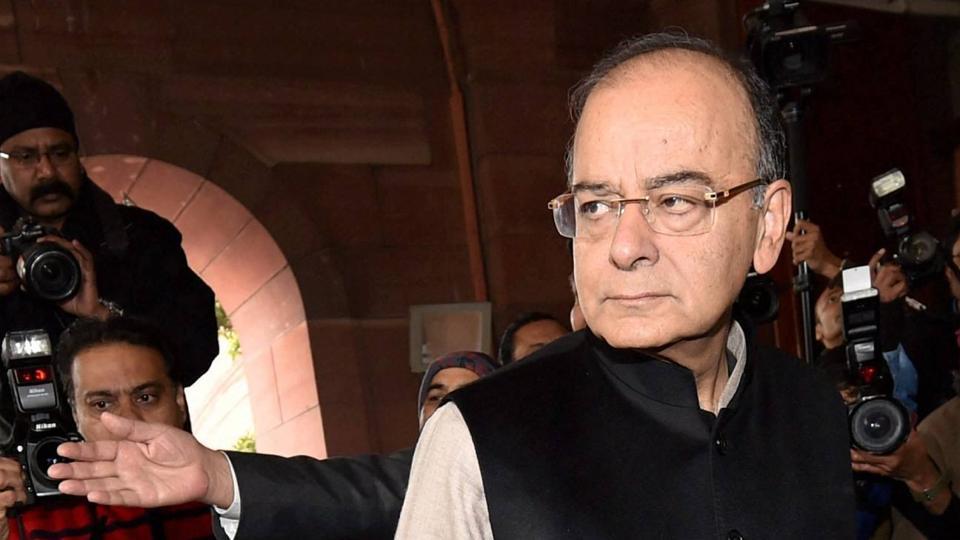
From railways to education and health, 10 takeaways from Jaitley’s Budget 2017
In his fourth budget, finance minister Arun Jaitley had a lot for rural India as well as the infrastructure sector. Ten big takeaways:

1. Two AIIMS proposed in Jharkhand and Gujarat. Additional 5,000 post-graduate seats to improve availability of doctors. Targets enhanced for infant and maternal mortality rates.
2. Action plan to eliminate kala azar and filariasis by 2017, leprosy by 2018, measles by 2020 and tuberculosis by 2025
3. Good quality institutions to have more autonomy and colleges to get autonomous status. For youth, a system of measuring annual learning to be put in place, with special focus on science. Steps to be taken to improve learning levels in schools in rural India
4. Allocation for rural, agricultural and allied sectors for 2017-18 is Rs 187223 crore, 24% higher than last year. A new micro-irrigation fund to achieve goal of “per drop more crop” with an initial corpus of Rs 5000 crore.
5. Allocation for scheduled castes increased from Rs 38,800 in 2016-17 to Rs 52,000 in 2017-18
6. Budget allocation to MGNREGA increased to a record Rs 48,000 crore for 2017-18, up from Rs 37,000 crore in 2016-17.
7. Pradhan Mantri Awas Yojana allocation 2017-18 will be Rs 23,000 crore, up from Rs 15,000 crore in last budget. All villages to be electrified by May 1, 2018.
8. Transport sector allocated Rs 2.41 lakh crore and Bharat Net Project Rs 10,000 crore. Allocation for highways increased from Rs 57,676 crore in 2016-17 to Rs 64,000 crore in next fiscal.
9. Service charges on railway e-tickets will be withdrawn and all coaches fitted with bio-toilets. A new metro rail policy to be announced, will create jobs for youth
10. Rail safety fund with corpus of Rs 100,000 crore will be created over a period of five years. Four focus areas for railways: Passenger safety, capital and development work, cleanliness and financial and accounting norms.
ABOUT THE AUTHORChetan ChauhanChetan Chauhan is the National Affairs Editor looking into all aspects of news and features from across India. A Chevening scholar with over three decades of experience in reporting and news management, Chetan has extensively covered all important aspects of the social sector, political economy, environment and climate change nationally and internationally. He did a journalism course at the Reuters Institute of Journalism in Oxford and Digital Media training at Nanyang Technological University in Singapore. He started as a reporter with The Statesman in 1996 and joined the Hindustan Times in 2000 in the metro bureau covering environment, crime and Delhi politics. He covered hot local news, from the Jessica Lal murder case to the rebellion of Delhi Congress MLAs against then Chief Minister Sheila Dikshit, to the replacement of toxic vehicle fuel with cleaner compressed natural gas (CNG) in the national capital. Some of his stories on air pollution became part of the Supreme Court’s landmark MC Mehta versus Government of India case in the National Capital Region (NCR), forcing the government to take corrective measures. As part of the national political bureau since 2004, he covered important central sectors such as environment, education, social justice, labour, rural development, water resources, renewable energy, agriculture, broadcasting and the Planning Commission for more than a decade producing several exclusive and investigative breaking stories. His specialisation is the environment, having covered at least a dozen United Nations global conferences on climate change, biodiversity and wildlife including climate summits in Paris, Copenhagen and Bali. He also covered India’s two five-year plans ---11th and 12th and reported on drafting and execution of right based laws such as Right to Education, Right to Information and rural job guarantee law, MG-NREGA, now being introduced in new format as VG-RAM-G Act. He has in-depth knowledge of social sector issues. He was one of the first to report on tigers vanishing from Sariska and Panna wildlife reserves in 2004 and 2008, respectively, leading to the setting up of the National Tiger Conservation Authority (NTCA) and the introduction of stringent penal provisions for poaching. He has written extensively on the rising human-animal conflict in India and the degradation of India’s biodiversity hotspots because of mining and other activities. Since 2004, Chetan has covered Parliament comprehensively and participated in training on the nuanced coverage of Parliament proceedings. He has travelled extensively across India to cover national and provincial elections since 1998, especially in the Hindi heartland states, considered India’s road to power. He writes a regular column for Hindustan Times, Ecostani, on important national politics, economy, Himalayan ecology and environmental issues. His other responsibilities include providing inputs for edits and edit page articles for the publication, apart from managing news flow from across India.Read More

E-Paper