
 E-Paper



10 Afghans dead, response warned: Why are Pakistan, Afghanistan on edge again
Taliban, which governs Afghanistan, said on Tuesday that Pakistani invading forces bombed the house of a local resident, killing 10.

 Prefer HTon Google


Taliban authorities in Afghanistan vowed on Tuesday to "respond appropriately" to a series of overnight border strikes, they blamed Pakistan for, that left 10 people dead, sparking fresh tensions in the wake of a suicide bombing in Peshawar the previous day.
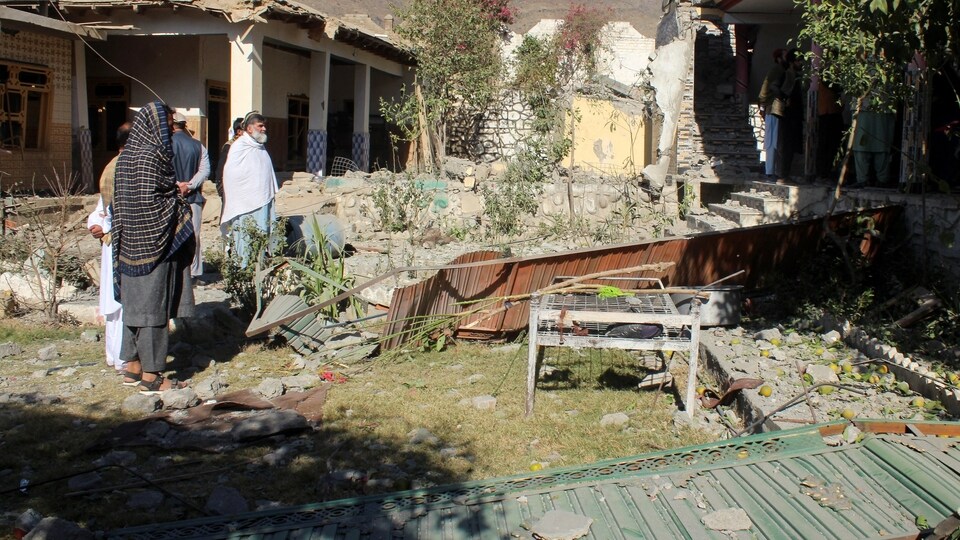
Zabihullah Mujahid, spokesperson of Taliban, which governs Afghanistan, said the attack killed nine children.
"The Pakistani invading forces bombed the house of a local civilian resident," he wrote on social media platform X. He added, "As a result, nine children (five boys and four girls) and one woman were martyred" in Khost province.
In a separate statement, Mujahid said, "The Islamic Emirate strongly condemns this violation and reiterates that defending its airspace, territory, and people is its legitimate right, and it will respond appropriately at the right time."
Additional air strikes in the border regions of Kunar and Paktika injured four more civilians. Mustaghfir Gurbuz, spokesman for the Khost governor, said drones and aircraft carried out the attacks.
In Jige Mughalgai, close to the Pakistan border, an AFP news agency reporter observed locals sifting through debris from a destroyed home and preparing graves for those killed.
Why are tensions between Pakistan and Afghanistan up again
The alleged Pakistani strikes come after a suicide bombing on Monday that targeted the headquarters of Pakistan's paramilitary Federal Constabulary in Peshawar, killing three officers and injuring 11.
No group has claimed the attack, though state broadcaster PTV reported the perpetrators were Afghan nationals.
President Asif Zardari blamed the "foreign-backed Fitna al-Khawarij"-Islamabad's term for the Tehreek-e-Taliban Pakistan (TTP), which it says operates from Afghan territory.

Earlier this month, another suicide attack outside a court in Islamabad killed 12 people. A Pakistan Taliban faction, which shares ideological roots with the Afghan Taliban, claimed responsibility. Authorities blamed a militant network "guided at every step by the... high command based in Afghanistan" for the assault.
On Tuesday, Pakistan information minister Attaullah Tarar held a press briefing focused on the Islamabad bombing. He presented a recorded confession from one of four detained suspects and stated: "There is clear-cut evidence that TTA (Afghan Taliban) and TTP did it together, and the suicide bomber was a resident of Afghanistan."
He went on to say, "Afghanistan is fully involved... and their soil is also involved. The people being sheltered there are also involved," though he did not address the cross-border strikes.
Pak-Afghan border tensions
Relations between the two neighbours have remained tense since the Taliban returned to power in 2021, deteriorating further after deadly clashes in October that left about 70 people dead on both sides.
The first round of clashes was on the October 11-12 weekend after Afghanistan launched revenge strikes on Pakistan, responding to an attack in Afghani capital Kabul that the country blamed the latter for.
A Qatar and Turkey-brokered ceasefire stopped the fighting, but multiple negotiation rounds in Doha and Istanbul failed to reach a lasting agreement, largely due to disagreements over Pakistan's demand that Kabul act against TTP militants.

Islamabad accuses the Taliban of giving sanctuary to groups behind escalating attacks, especially the Tehrik-i-Taliban Pakistan (TTP), which has carried out a long-running insurgency in Pakistan. Kabul denies this and argues that Pakistan hosts groups targeting Afghanistan and disregards Afghan sovereignty.
Meanwhile, the Pakistan-Afghanistan Joint Chamber of Commerce and Industry warned that thousands of shipping containers remain stalled at the border, each accumulating $150-$200 per day in fees, calling the financial strain "unbearable".


