E-Paper



1.8bn people in S Asia face extreme heat risks by 2030: World Bank report
Temperature projections show that by 2030, approximately 89% of South Asia’s population will face extreme heat risks. In 2021, an average of six hours a day were too hot to safely work outside in Bangladesh, India, Pakistan and Sri Lanka

 Prefer HTon Google


New Delhi: Nearly 1.8 billion people in South Asia will face extreme heat risks by 2030, but market failures and income constraints are forcing them to rely on basic adaptation measures, a World Bank report said on Tuesday.
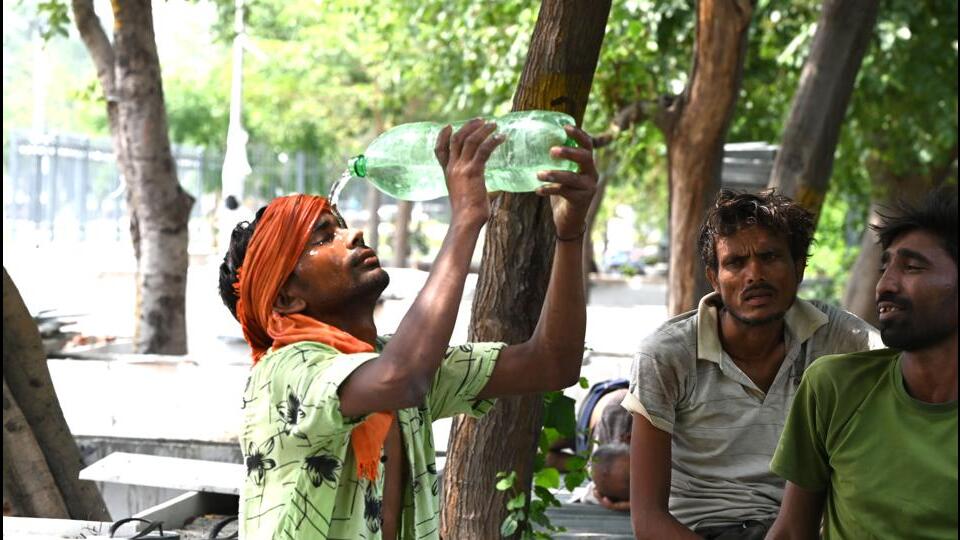
South Asia is the most climate-vulnerable region among emerging market and developing economies, according to the report titled “From Risk to Resilience: Helping People and Firms Adapt in South Asia”.
Temperature projections show that by 2030, approximately 89% of South Asia’s population will face extreme heat risks. In 2021, an average of six hours a day were too hot to safely work outside in Bangladesh, India, Pakistan and Sri Lanka. That is expected to rise to seven or eight hours a day by 2050.
More than 60% of households and firms surveyed have experienced extreme weather in the last five years, and more than 75% expect it for the next decade.
Many households and businesses are already taking steps to adapt to climate risks. Around 80% of households and 63% of firms have taken some measures to adapt, the report said.
World Bank surveys showed that in the past five years, 77% of surveyed households have adapted in some form to the risks of weather shocks. The two most common adaptations were rainwater harvesting to cope with drought and housing reinforcement to cope with storms.
Exposure to heat has raised the share of households engaged in off-farm wage employment and migration. But only 1.1% of surveyed households have used a weather insurance product as a climate adaptation.
Basic adaptation measures taken by the sample population, which includes those from India, range from raising house foundations to installing fans. More advanced options, like using climate-resilient seeds or relocating from high-risk areas, remain less common.
“The urgency is growing. People and firms are already adapting, but they are doing so with limited tools and few resources,” said Martin Raiser, World Bank vice president for South Asia.
“Governments must act quickly to remove the barriers that prevent more effective adaptation. This includes removing distortions in land and labour markets, expanding access to finance and investing in public infrastructure to support people and businesses as they respond to climate risks,” he said.
Households with more education or access to formal finance are more likely to adopt advanced strategies. Similarly, better-managed firms with fewer regulatory barriers tend to be more adaptive.
“Private sector adaptation could reduce one third of the region’s projected climate damage, but this requires governments to strengthen enabling environments,” said Franziska Ohnsorge, World Bank chief economist for South Asia.