E-Paper



3I/ATLAS tracker: Will the interstellar comet be visible from the Earth? Key details
Interstellar comet 3I/ATLAS will pass about 200 million km from Eart. Despite the close approach, it won’t be visible to the naked eye.

 Prefer HTon Google


The interstellar comet 3I/ATLAS is set to make its closest appearance to the sun on Wednesday and Thursday (October 29 and 30), as it travels just about 200 million kilometers from the sun, having first entered the solar system in July 2025.
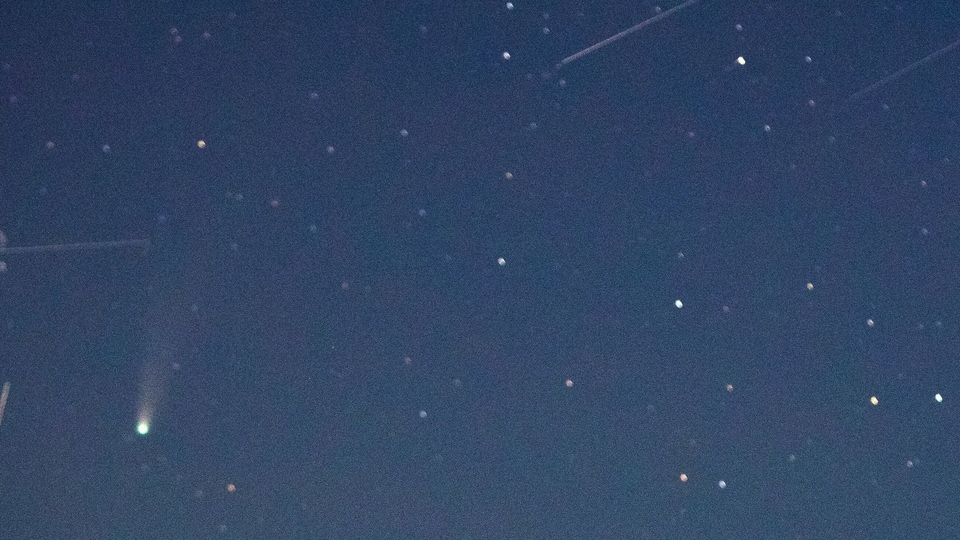
The comet has sparked a lot of curiosity as the visit from an interstellar object is a rare incident - the third ever recorded. A lot of questions on whether the comet will be visible from the Earth have also come up. But unfortunately, though the comet will be closest to the sun on Wednesday and Thursday, it's still too far to be visible in the sky. It will also not be visible when it comes closest to the earth in December.
How Close To The Earth Will The Comet Be?
In December, the 3I/ATLAS will be approximately 167 million miles away from the Earth, which is the closest it will come to the Earth since being first spotted in our solar system in July, before it exits.
Can The Comet Be Seen With A Telescope?
Yes, the comet can be seen with high-end telescopes. In fact, since it entered the earth on July 1, scientists have been studying it using a photo from the Hubble Space Telescope, which has led to some significant findings on interstellar life. However, low-end telescopes often used by space enthusiasts at home will not be able to detect the comet, even as it passes close to the earth.
Amateur mid-level telescopes, such as those present at the Lowell Observatory (1.1 m Hall Telescope) and Faulkes Telescope Project (2 m), may detect the comet as a faint streak of light, but a sighting is not guaranteed.
Also read: NASA withheld info on 3I/ATLAS; Harvard scientist makes big claim on Manhattan-sized comet
What To About 3I/ATLAS: Key Talking Points
The 3I/ATLAS has been of massive interest to space scientists who have been studying it in detail using space telescopes. A major finding on the comet was made by scientists from Chile's Instituto de Astrofísica-Pontificia of Universidad Católica. Space.com reported that the scientists have found nickel signatures in the comet, which will help throw light on the comet's origin.
Additionally, in the US, a physicist from Harvard has sparked a row by claiming that NASA withheld key information on the planet from the public. Appearing on the Joe Rogan Podcast, physicist Avi Loeb claimed that NASA has not released a photograph of the comet taken using the HiRISE camera aboard the Mars Reconnaissance Orbiter.