E-Paper



After launching strikes in Lebanon, Netanyahu says Israel will continue to strike Hezbollah ‘wherever necessary’
The strikes were launched on commercial and residential areas in central Beirut hours after US President Donald Trump announced a two-week ceasefire with Iran.

 Prefer HTon Google


Hours after Israel launched its deadliest strikes on Lebanon since the conflict with Hezbollah began last month, Israeli Prime Minister Benjamin Netanyahu on Thursday said Israel will continue to strike Hezbollah “wherever necessary.”
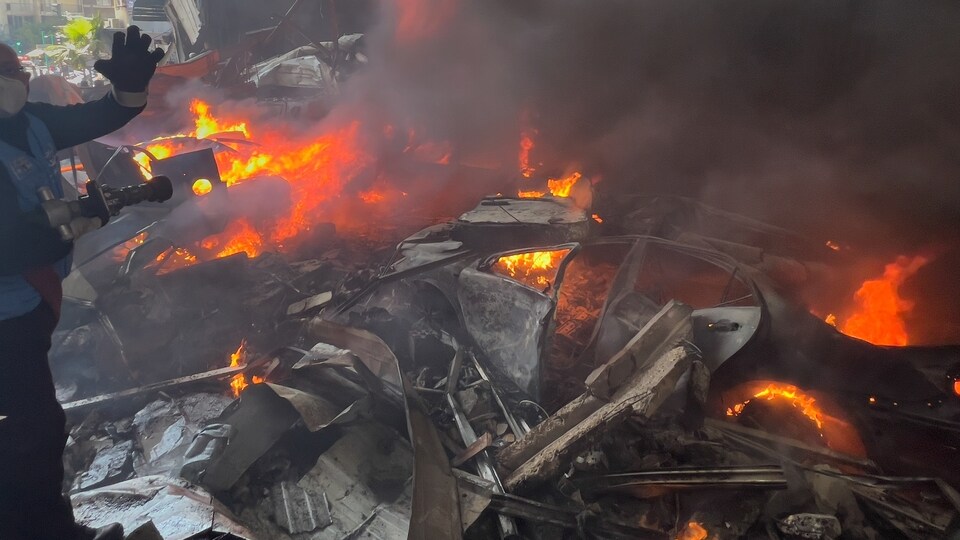
The strikes were launched on busy commercial and residential areas in central Beirut hours after US President Donald Trump announced a two-week ceasefire with Iran. The death toll from the strike is 250, as per news agency Reuters, while AP reported that fatalities are 182.
Also read | Lebanon clouds Iran-US ceasefire ahead of talks: Is it included or not? Explained
In response to the strikes against the Hezbollah militant group in Lebanon, Tehran on Thursday closed the Strait of Hormuz again, news agency AP reported.
On Wednesday, Iran agreed to reopen the Strait of Hormuz for two weeks after the US announced a ceasefire with Iran, with talks scheduled to take place in Islamabad on Friday.
Is Lebanon part of the two-week US-Iran ceasefire?
After the attack, Israeli Prime Minister Benjamin Netanyahu said on Wednesday that Lebanon, which houses the Iran-backed militia Hezbollah, was not a part of the two-week ceasefire struck between Iran and the United States.
Also read | Netanyahu backs US ceasefire with Iran, but finds a loophole to continue Lebanon onslaught
"Today, we dealt Hezbollah its most severe blow since the pager attacks — striking one hundred targets in 10 minutes, in areas it believed were immune," Netanyahu said in a televised address, referring to the 2024 operation against Hezbollah involving attacks via pager bombs.
“We have created security zones deep beyond our borders — in Lebanon, in Syria, and in Gaza, where we now control more than half the strip and are choking Hamas from all sides,” he added.
The claim that Lebanon was not covered in the two-week ceasefire deal was also backed by United States President Donald Trump and Vice President JD Vance.
However, when the ceasefire was announced by Pakistani Prime Minister Shehbaz Sharif, who is also hosting peace negotiations between Iran and the US later this week in what he called ‘Islamabad Talks’, he clearly mentioned that Lebanon was part of the ceasefire.
Iran says ceasefire in Lebanon ‘key’ for peace
The attack on Lebanon, which has long been a target of Israel due to Hezbollah, prompted Iran to react sharply and even close the Strait of Hormuz again.
Iranian foreign minister Abbas Araghchi said in a post on X that the ball is in US' court and added that the latter should choose between the ceasefire or continuing the war.
"The Iran–U.S. Ceasefire terms are clear and explicit: the U.S. must choose—ceasefire or continued war via Israel. It cannot have both," Aragchi argued.
Also read | Largest attacks in over 40 years, 1,500 killed: Why Israel continues to pound Lebanon despite US-Iran truce
"The world sees the massacres in Lebanon. The ball is in the U.S. court, and the world is watching whether it will act on its commitments,” he added.
Later, Iran's President Masoud Pezeshkian also clarified that the ceasefire in Lebanon is one of Iran's key conditions in its 10-point peace plan shared with the United States.
In a call with French President Emmanuel Macron, Iranian President said that Tehran's "acceptance of the ceasefire is a clear sign of Iran's responsibility and serious will to resolve conflicts through diplomacy", reported ISNA.
He added that "establishing a ceasefire in Lebanon has been one of the key conditions of Iran's 10-point plan".