
 E-Paper



Israeli strikes in Beirut targeted Hezbollah’s Hassan Nasrallah: Local media
In a televised statement, Israeli military spokesperson Daniel Hagari said the central command centre was embedded deep within civilian areas.

 Prefer HTon Google


The Israeli military said it carried out a strike on the headquarters of Lebanese militant group Hezbollah in the southern suburbs of Beirut on Friday. The Israeli Defense Forces (IDF) confirmed targeting Hezbollah's central command centre in the densely populated Dahiyeh suburb, which is known as a stronghold for the group.
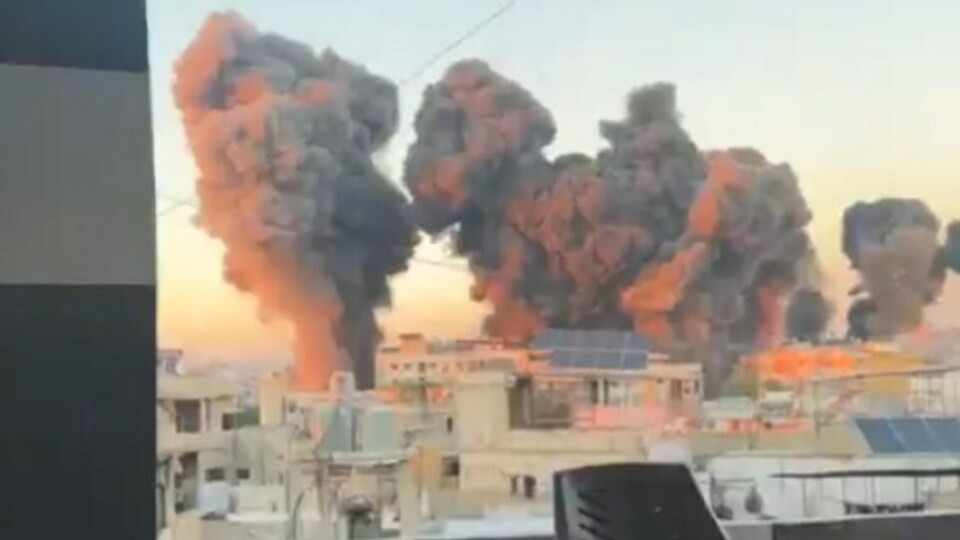
"The IDF (military) carried out a precise strike on the central headquarters of the terrorist organisation Hezbollah in Dahiyeh," military spokesman Daniel Hagari said in a televised statement.
Lebanon’s state-run National News Agency said six buildings were “levelled to the ground” by the strikes.
Israel’s three main TV channels say the massive strikes in Beirut targeted Hezbollah’s leader Hassan Nasrallah. The Israeli army had no comment on the reports that Nasrallah was the target. But given the size and timing of the blast, there were strong indications that a high-value target was inside the building at the time, reported the Associated Press.
The news outlet Axios cited an Israeli source as saying Hezbollah leader Sayyed Hassan Nasrallah was the target of the strike and that the Israeli military was checking if he was hit.
A source close to Hezbollah told Reuters that Nasrallah is alive, while Iran's Tasnim news agency also reported he was safe. A senior Iranian security official told Reuters that Tehran was checking his status.
Explosions from the strikes were heard across Beirut, shaking windows and buildings as far as 30 kilometres away from the city centre. Thick black smoke billowed into the sky, and ambulances were seen racing towards the site of the blasts in Dahieh, with sirens echoing throughout the city.
Hospitals in the area were receiving casualties, but the scale was not immediately clear. Officials at Sahel hospital near the scene of the strike said they had received 10 wounded, three of them critically, including a Syrian child.
The strike came amid heightened tensions following Israeli Prime Minister Benjamin Netanyahu's vow to escalate Israel's offensive against Hezbollah. Speaking at the United Nations General Assembly in New York on Friday, Netanyahu reiterated Israel’s commitment to confronting Hezbollah, stating, “As long as Hezbollah chooses the path of war, Israel has no choice and Israel has every right to remove this threat.”
A Lebanese security source told Reuters that Friday's assault was the largest Israeli attack on the capital's southern suburbs since the conflict began earlier this week. The precise impact and casualties from the strike were not immediately known.
The escalation of violence follows a week of intensive airstrikes across southern Lebanon, where Israel has been targeting Hezbollah positions. Over 700 people have reportedly been killed, and tens of thousands of civilians have fled their homes amid the bombardment.
Netanyahu's UN speech, delivered shortly before the Beirut strike, was defiant, dismissing ongoing international efforts to broker a ceasefire in the conflict. The US, European Union, and several Arab nations had proposed a three-week ceasefire to stem the violence. However, Netanyahu focused on achieving "total victory" over Hezbollah and its ally Hamas, the Palestinian militant group that controls the Gaza Strip.
With inputs from agencies


