
 E-Paper



Belarus gives the EU a chance to show geopolitical relevance
The bloc’s 27 leaders will hold an emergency conference call on Wednesday to discuss the violent aftermath of Belarus’s presidential election, which the EU said was neither “free nor fair.”


The massive protests in Belarus are a chance for the European Union to try and flex its rarely used foreign-policy muscle in what could be a defining historical moment.
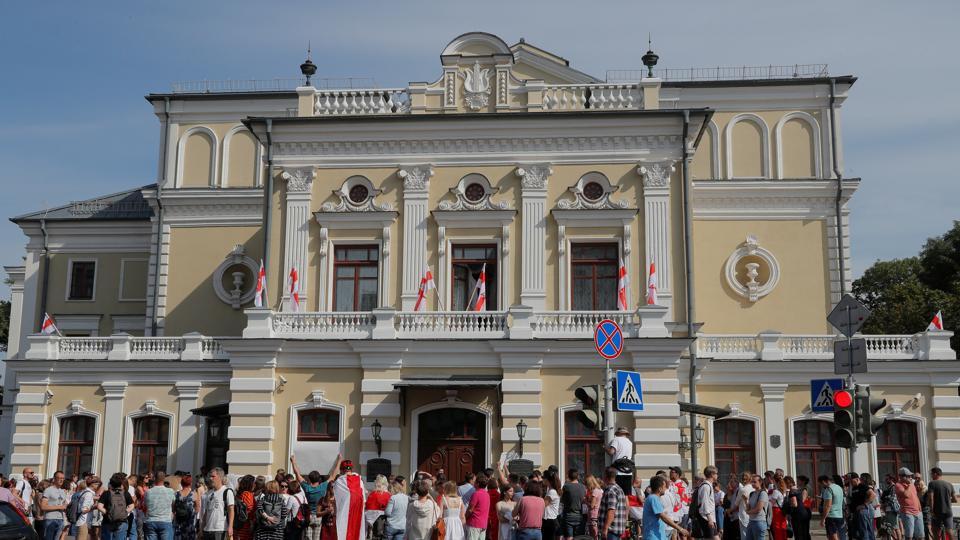
The bloc’s 27 leaders will hold an emergency conference call on Wednesday to discuss the violent aftermath of Belarus’s presidential election, which the EU said was neither “free nor fair.” And while options are limited, timely action could sway the outcome while also redefining the EU’s international role.
Since emerging from a decade of internal crises -- from euro-area debt chaos to the UK becoming the first country to leave the bloc -- the EU has found itself caught in a struggle between the US and China, and with its old foe Russia still causing trouble. No longer able, and in some cases willing, to piggyback onto American power, the EU wants to strike out on its own.
“What we have witnessed in Belarus is not acceptable,” European Council President Charles Michel, who will chair the video conference, said in a letter to the leaders, including German Chancellor Angela Merkel and French President Emmanuel Macron.
But aside from symbolism, there’s a ceiling to what they can do and toughening the rhetoric remains their main arsenal. The bloc’s foreign ministers have already agreed to start working on sanctions -- though leaders may push to expedite them.
Russia’s Role
The EU’s leadership believes the response to the situation has been too muted, in particular on the role that Russian President Vladimir Putin might play in shoring up Belarusian President Alexander Lukashenko, according to an EU official in Brussels. “There should be no outside interference,” Michel made a point of saying in his letter.
Eastern European countries geographically close to Belarus such as Poland and the Baltic states pushed for the call, arranged for noon Brussels time on Wednesday, but Michel needed little persuasion, EU officials said.
He and European Commission President Ursula von der Leyen started their mandates at the end of last year with teams that reflected a new-found focus on international issues and although the coronavirus pandemic has stymied their plans, that vision hasn’t altered. And the EU’s foreign-policy chief, Spain’s Josep Borrell, has shown a willingness in the past to speak his mind even though he has limited powers.
“These peaceful demonstrations had clear demands: the release of all unlawfully detained people, the prosecution of those responsible for police brutality, and holding of new presidential elections,” Borrell said in a statement on Monday. “The sheer numbers clearly show that the Belarusian population wants change, and wants it now. The EU stands by them.”
The call will be as much about showing how the EU can act when it believes a line has been crossed, one EU official said, and its willingness to directly take on Putin.
Another added that while the outcome needs to be more than a mere statement, there’s a balancing act between taking measures that sends a strong signal and steps that are counter-productive and make a negotiated solution harder.


