
 E-Paper



Biden’s order splits frozen $7bn funds between Afghans, 9/11 victim families
The US President Joe Biden has kicked off a complex process that could divide up the frozen assets of the Afghan central bank that are parked in the US amounting to $7 billion.

 Prefer HTon Google


Signing an executive order on Friday, the US President Joe Biden has kicked off a complex process that could divide up the frozen assets of the Afghan central bank that are parked in the US, amounting to $7 billion, into two baskets - with $3.5 billion transferred to a trust fund for humanitarian assistance to the Afghan people, and the other $3.5 billion remaining in the US as possible compensation to families of the 9/11 terror victims who are currently engaged in litigation.
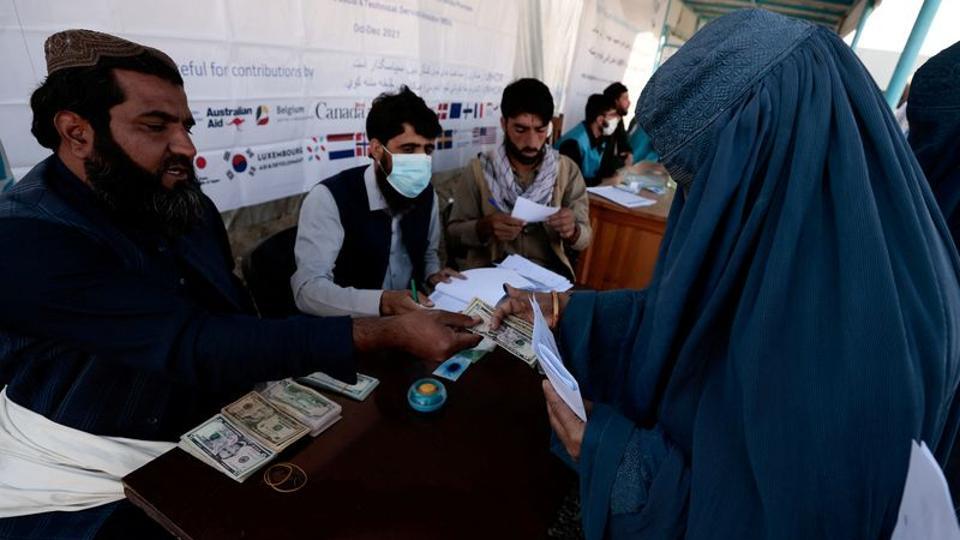
The entire process is subject to judicial approval and will take months to operationalise. The administration has sought to convey this as a decision which frees up funds for Afghan people without aiding the Taliban regime and while conforming to US law, while critics have said that Afghan people should have the first right over the entire reserves, especially at a time of a dire humanitarian crisis.
Commenting on the decision, Avinash Paliwal, an expert on Afghanistan at the School of Oriental and African Studies, said the decision was a “stark example” of where Biden’s priorities lay - “domestic politics”. “The $3.5 billion for families of 9/11 victims could become an important narrative in future elections to demonstrate that the administration helped deliver ‘justice’ to families of 9/11 victims. The other $3.5 billion in aid to the starving people of Afghanistan, which no one knows when and in what form will reach the intended beneficiaries, could help the administration gloss over the actual damage done to Afghans. All of it done with someone else’s money.”
The New York Times first reported the decision on Friday.
Explaining the decision, a senior administration official said that when Kabul fell last August, Da Afghanistan Bank (DAB) had over $9 billion in reserves - of which $7 billion were in the US, and over $2 billion were in other countries. The source of these reserves, the official said, were “overwhelmingly” proceeds from international donor aid to Afghanistan between 2001 and 2021. The US had, right after the Taliban takeover, frozen the assets to prevent the terror group - the Taliban government is still not recognised by the international community - from accessing the funds.
Terror victims seek justice
In parallel, terror victims, including families of 9/11 victims, who had, in the past, won court cases against the Taliban seeking justice, went back to the court to lay claim over these assets. The Biden administration then sought time to come back with a response, and, according to the senior official, had been exploring potential avenues to free up the assets to help the Afghan people without benefiting the Taliban, while also ensuring justice for 9/11 families.
A factsheet released by the White House said that Biden’s executive order would require US financial institutions to transfer DAB reserves to a consolidated account in the Federal Reserve of New York, and “seek to facilitate access of $3.5 billion of those assets for the benefit of Afghan people and for Afghanistan’s future pending a judicial decision”.
It added that even if these funds were transferred, “more than $3.5 billion would remain in the US” and be “subject to ongoing litigation by US victims of terrorism”.
Rejecting the criticism that the administration was using the court case as a shield, when Afghan people deserved more assistance, the official said that the funds were, at the moment, subject to a “writ of attachment”, and no distribution of funds could happen without the authorisation of the concerned New York court. “The idea that we can ignore the litigation in New York is wrong…Whether claimants have a right to those assets is a complicated issue, but they have a right to bring those claims and have those claims heard in court. There is an independent judiciary.”
$2 billion parked in Germany, UK
The official also pointed out that the while the US was doing what it could within its legal system, other countries where Afghan reserves were parked - including Germany, United Kingdom - to the tune of over $2 billion could also look into steps to assist the Afghan people.
Responding to apprehensions that the funds, if released, could benefit Taliban, the senior administration official quoted above said that the funds would be transferred to a trust fund - the governance structure and modalities of which were still in progress - and there would be “appropriate controls in place”. The official also pointed out that sanctions remain in place against both the Taliban and individual Taliban leaders, and that the US would work closely with its allies, partners and international organisations and there would be significant multilateral components in place.
A good step
While saying the decision was a “good step” in ending the uncertainty around frozen assets, Javid Ahmad, a former ambassador of Afghanistan to the United Arab Emirates and a senior non-resident fellow at Atlantic Council, said that the decision “unfairly penalises Afghan people over the Taliban ruling class”. “Because Washington wants to put Afghanistan in the rearview mirror ahead of the mid-term elections, the timing of the decision means Biden doesn’t want to hear the word Afghanistan beyond May or June. More such equally tough decisions are forthcoming.”
Ahmad added that the US decision opened up two possibilities. The first was a default possibility of the Taliban taking a “publicly hostile anti-US stance” not because they cared for the Afghan people, but because their “regime survival” depended on money flow. “But there is also a real possibility that Biden’s decision will propel Taliban to take a drastic turn in their social policies and agree to negotiate a political roadmap to form a broad-based Taliban-led government.”


