
 E-Paper



‘The Boss Wants This Money’: Inside Trump’s Unprecedented Fundraising Operation
Meredith O’Rourke, nicknamed ‘princess of darkness,’ carries out the president’s desire to wring hundreds of millions from companies for his projects.


 Prefer HTon Google


WASHINGTON—Almost every night in the White House, President Trump calls his fundraiser, Meredith O’Rourke, for an update.
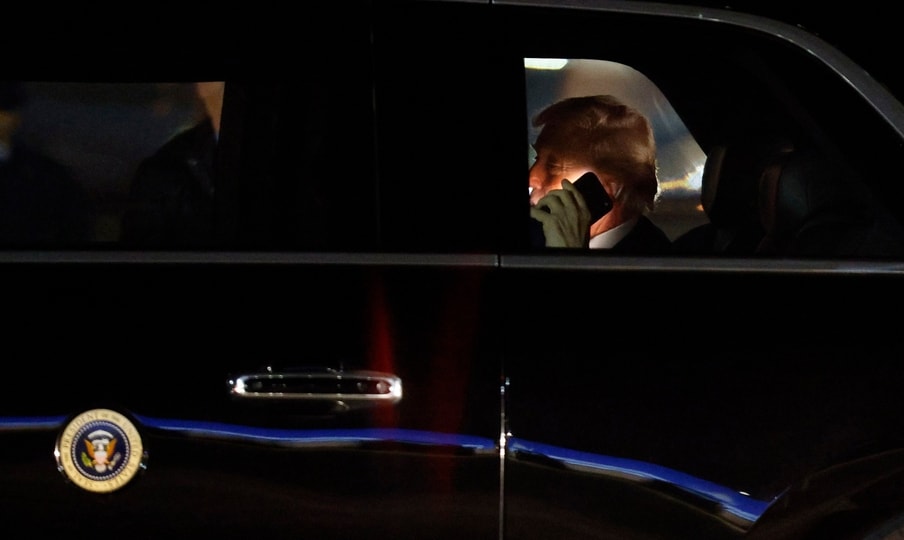
Trump asks O’Rourke which companies and donors have cut checks and which haven’t, and for how much. He often asks her to make much larger financial requests than she was planning—for some donors the ask is $5 million, for others it is $50 million. And the president gives her names to call, often including people who have recently met with him, according to people with knowledge of the calls.
“This is very important to the president. He’s asked me to call you and ask you for this donation,” O’Rourke has relayed on phone calls with companies, persistently following up with them. In some calls, she has referred to Trump as the boss, saying “the boss wants this money.” In turn, Trump has called her the “princess of darkness” because she is such a “killer” with donors, according to people who have heard his comments.
SoftBank donated $50 million toward Trump’s presidential library. Apple cut a check for around $25 million toward his White House ballroom project, while Microsoft gave around $10 million and Amazon chipped in around $5 million, according to people familiar with the contributions. Meta Platforms recently gave $10 million to a Trump-aligned political committee, people familiar said, on top of a multimillion donation to the ballroom and a prior $22 million payment to the planned presidential library.
Trump stands out for taking personal control of the fundraising, and no sitting American president has ever raised these amounts for his pet projects. At the same time, companies have paid new attention to the White House as Trump has gotten involved in regulatory decisions that once were made by independent agencies, dramatically shifting the balance of power across Washington.
Trump has been demanding large checks from companies for a range of political and legacy projects—telling executives and lobbyists that their companies should give $25 million or $50 million. He has sometimes offered donors special access.
No laws prohibit presidents from raising unlimited sums of money for nonprofits, like the ones used for the ballroom and his presidential library, his super PAC or political issue committees. For most of these types of transactions, public disclosure of donors isn’t required and reporting on spending is infrequent.
All told, the second-term president has raised more than $800 million since returning to office, according to an updated Wall Street Journal analysis.
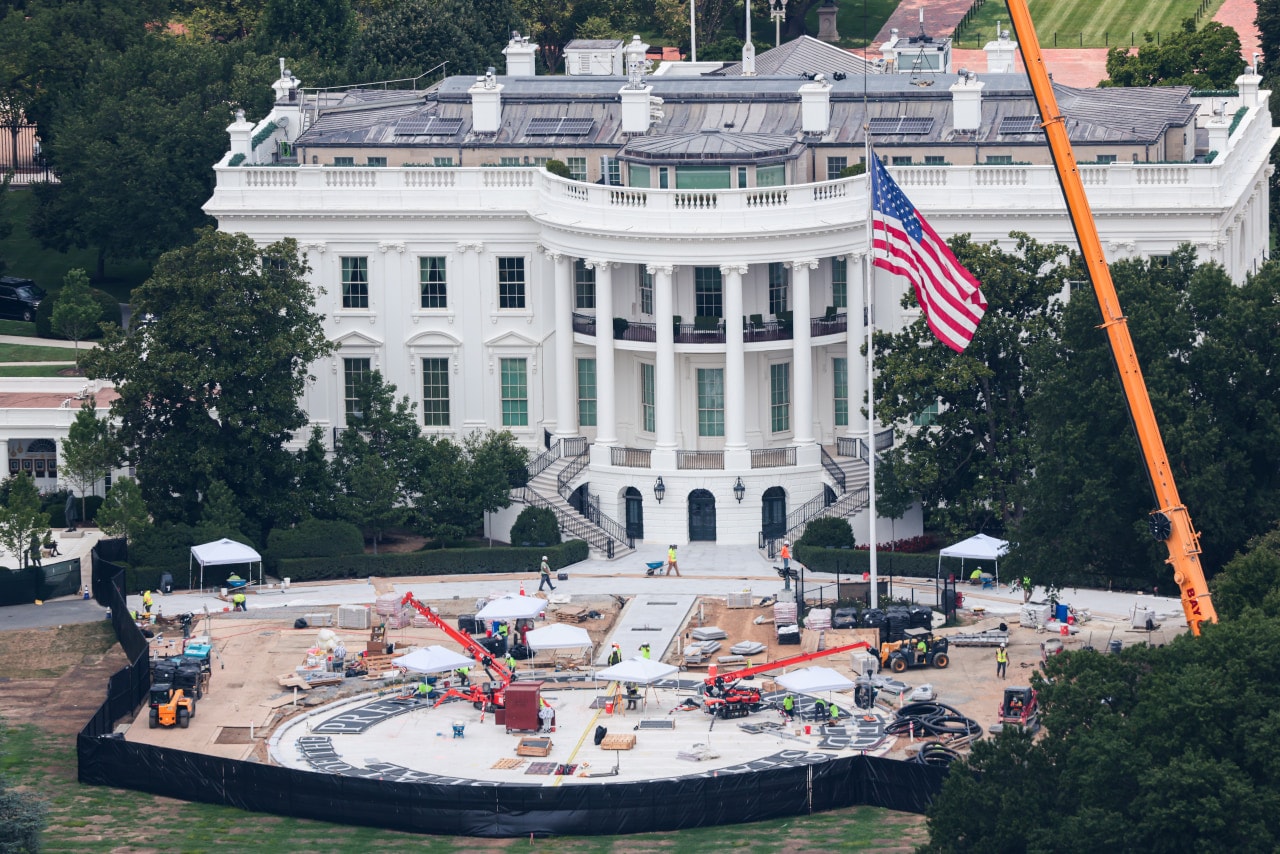
Some of the money is earmarked for specific projects, including the White House ballroom and the Freedom 250 funds for the nation’s birthday celebrations, but Trump has floated using funds in other ways. The president, at the dinner thanking contributors to the ballroom project, said, “We’ll have money left over, and we’ll use that for something…maybe for the arch or something else that will come.”
Interviews with dozens of donors, executives, lobbyists, Trump advisers and others indicate a staggering fundraising and influence operation, with Trump at the center of it all. The president closely tracks who gives, aides said, repeatedly assigning O’Rourke with big asks that she has told others make her uncomfortable. Danielle Alvarez, an outside spokeswoman for Trump and O’Rourke, said it was “laughable” that O’Rourke had ever been uncomfortable with a request.
Chevron was asked to give $50 million this year. The oil company gave millions, but far less than the requested amount. Several top Washington lobbyists have been asked to raise $50 million or more, including from their clients, for Trump projects.
Meta executives convened a series of calls among themselves to discuss strategy after being repeatedly asked to give money to various Trump funds. The company has donated to the inauguration, the ballroom and two Easter events. About $22 million of Meta’s money went to the library after the social-media company agreed to settle a lawsuit Trump had filed for suspending his accounts.
Meta also wrote a $10 million check to Securing American Greatness, a political committee aligned with Trump that highlights conservative issues such as lowering taxes and reducing crime. Contributions to Securing American Greatness aren’t publicly reported, unlike contributions to super PACs, which disclose donors in regular filings.
When some donors have been put on the phone with Trump after giving millions, they expected to receive thank yous, but instead were asked for more money, people familiar with the calls said. In one case, O’Rourke asked an executive to cut a $1 million check to a Trump entity just days after he’d attended a thank you dinner for a separate multimillion-dollar donation he’d made to the president’s ballroom, according to a person familiar with the exchange.
“Trump is shattering all fundraising paradigms in regards to hitting up corporate America for donations. The scope is mind-bogglingly large,” said Douglas Brinkley, a presidential historian at Rice University. “We used to talk about the Lincoln bedroom being for sale, but this is just a wholesale money trough that’s totally different.” Critics alleged in the 1990s that the Clinton administration allowed overnight stays in the White House’s Lincoln bedroom in exchange for campaign contributions.
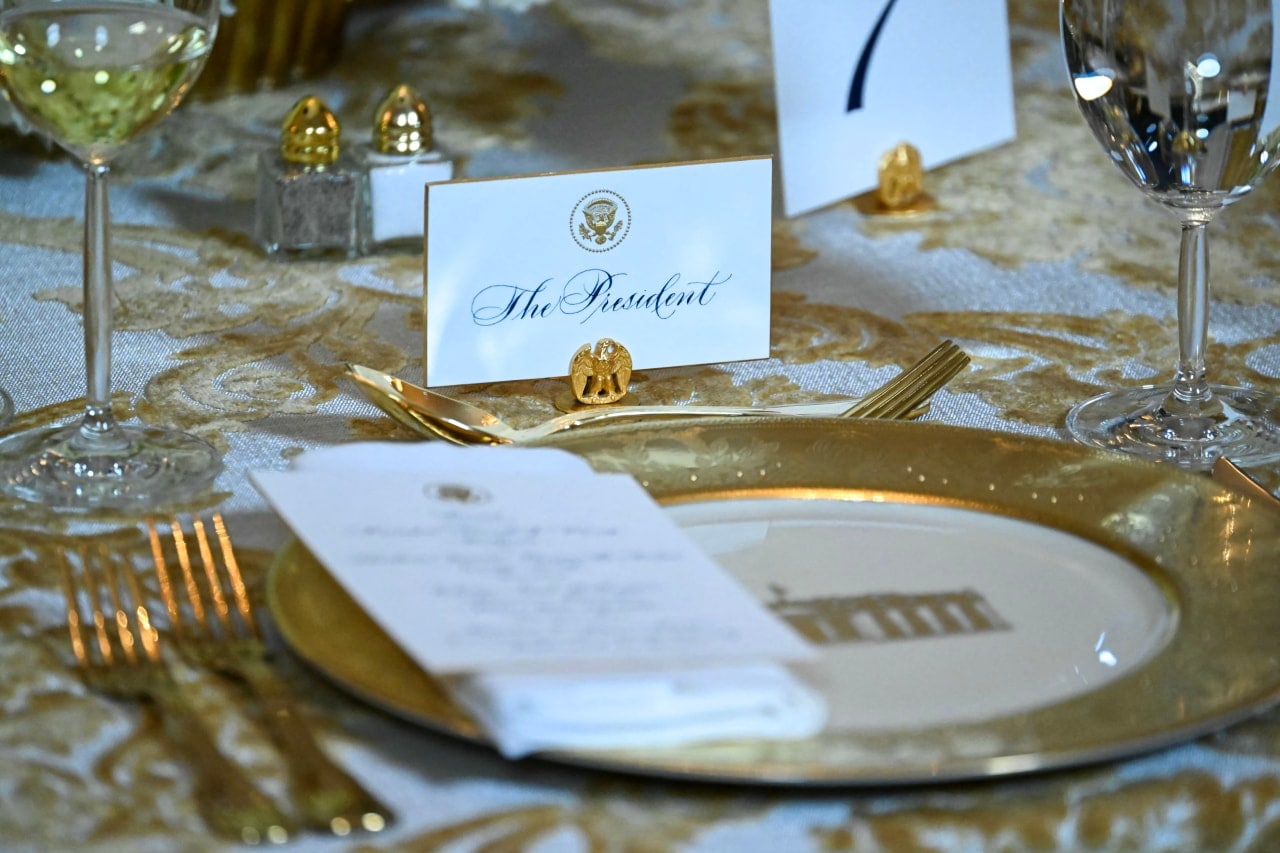
In the Rose Garden on a warm April evening, some of the president’s biggest donors mingled with top White House aides and the president. Some of the guests received special tours, including of the Oval Office at night. “Have you ever seen anything like this?” Trump said on the tour, people with knowledge of the event said.
Then one businessman stood up. It was the reclusive billionaire Timothy Mellon, who has donated millions of dollars to Trump causes—even in the form of solid gold, some of the people said. Mellon has contributed more than $100 million to MAGA Inc., Trump’s super PAC.
He gave a toast to the president, several Rose Garden attendees said. He called Trump the “greatest president in my lifetime.” His remarks drew polite applause from the Fortune 100 executives arrayed around him.
At another Rose Garden dinner, Google co-founder Sergey Brin was seen sitting next to White House chief of staff Susie Wiles.
The White House referred requests for comment to Alvarez. She said the president is the “most successful fundraiser in modern political history” and that Trump plans to use the money to “help Republicans win big in the midterms, build an enduring political infrastructure and continue advancing innovative private-sector initiatives.”
“One thing has never changed. President Trump can’t be bought,” she said.
Change from first term
Trump’s stance on fundraising has dramatically changed from when he was first running for president. In 2015, he called political-action committees a “scam” and said he had disavowed them. His team sent letters to unauthorized super PACs that were supporting his election efforts, asking them to return their money to donors. “I am self-funding my campaign and therefore I will not be controlled by the donors, special interests and lobbyists who have corrupted our politics and politicians for far too long,” he said at the time.
Marc Short, Trump’s former director of legislative affairs, said, “One of the things that most rallied his crowds in 2016 was draining the swamp. The crowds would go wild.”
Short and other former administration officials said Trump had little interest in fundraising during his first term. “There definitely wasn’t a corporate shakedown like you see now,” he said, adding that the president during his first term didn’t aggressively seek money from companies with business before the government.
Trump would sometimes berate aides for signing up too many donors to take photos on “click lines” and would leave events as soon as he finished speaking. In the first term, he regularly complained that the money went to entities such as the Republican National Committee that he didn’t control, and viewed it as an obligation.
In 2020, Trump raised money for his re-election campaign but wasn’t notably aggressive about it.
Wiles had to persuade Trump during the 2024 campaign to do fundraising calls. But he embraced big money on the campaign trail, even asking oil executives to give $1 billion at a Mar-a-Lago event in April 2024. At one point, he told donors he wouldn’t have lunch for less than $5 million, according to audio from a 2024 fundraiser reviewed by the Journal.
O’Rourke, a well-known fundraiser in Florida, was part of Trump’s 2016 and 2020 operations. In the 2024 cycle, she was tapped to lead fundraising for the whole campaign. She opted to drive six hours between the Trump campaign headquarters in Palm Beach and her homebase in northwestern Florida instead of flying so she could spend the time on back-to-back calls with donors. Driving also ensured she wouldn’t be out of touch for the hourlong flight, according to people familiar with the campaign.
After the 2024 election, Trump realized how many donors and companies were lining up outside his Mar-a-Lago club to cut multimillion-dollar checks and told O’Rourke to immediately start soliciting donations, advisers said. She was planning to slow down operations. Strike while the iron is hot, Trump told O’Rourke, according to Trump advisers and an account the president has repeatedly given in private settings.
O’Rourke isn’t a government employee, although she is often at Trump’s side in the White House and elsewhere. She sometimes sits in on meetings, including when Trump meets with corporate executives about issues that affect them. O’Rourke also travels with top officials on Air Force One. She often posts photos of herself with Trump, including in the Oval Office, on her social-media accounts and has referred to Trump as a mentor.
At a meeting with tobacco executives in May at Trump’s golf club in Jupiter, Fla., the president promised to do much of what executives wanted on policy related to vaping and the Food and Drug Administration. He also took in millions of dollars in contributions for his political committees. O’Rourke sat in on the meeting. Shortly after the meeting, the FDA lifted restrictions on some flavored vaping products, and the FDA’s chief was gone.
At the time, White House spokesman Kush Desai said, “The only guiding factor behind the Trump administration’s health policymaking is Gold Standard Science. FDA’s regulatory treatment of nicotine pouches and vapes is rooted in recent evidence that has found they can help adults quit smoking.”
O’Rourke was appointed a director at Trump Media & Technology, owner of Truth Social, and named to the board of the National Park Foundation, which oversees the Trump-aligned group that raised money for Freedom 250.
Trump, tapping his real-estate sales roots, has conversations with O’Rourke about how to specifically sell various projects, giving her pointers on how to pitch the library, according to people familiar with the conversations. Trump has told allies that he doesn’t want to struggle to raise money for his library the way Joe Biden has. Plans for the Trump library show a glass-walled skyscraper that is expected to also have a hotel.
“She’s a combination of tough but charming, and she absolutely has the president’s 100% trust and respect,” said Brian Ballard, a top Washington lobbyist who first worked with her in Florida in the 1990s. “She literally is the most talented fundraising professional I’ve dealt with, and I’ve dealt with a ton of them.”
In the spring, even as Republicans were gearing up to raise money for the midterms, O’Rourke began sending out solicitations for a new Trump initiative called the National Garden of American Heroes Foundation. The money will be used to remake a golf course in Washington and build a statue garden.
Candlelight dinners
O’Rourke sends out invites to prominent CEOs and their handlers and lobbyists to attend $1 million-per-head candlelight dinners at the White House or one of Trump’s properties, where guests are given extraordinary access to the president. Many of the events are arranged by industry, such as cryptocurrency or manufacturing.
O’Rourke often attends the dinners and takes notes about what the president promises and what the donor says, and she will filter the notes to other White House officials. Trump will often ask the donors to follow up with O’Rourke, attendees said.
At times, donors with particular agendas have shown up, such as a marijuana CEO pushing for changes in drug laws or the CEO of Pfizer who talked up experimental cancer drugs.
A regular presence at Trump’s dinners are cryptocurrency executives. The president has made more than $1.4 billion from his family’s crypto-related ventures since taking office, his financial disclosures show, and has often told the cryptocurrency crowd how he has made them richer.
The president sits at the center point of a horseshoe-shaped table and often stays for two hours. At Mar-a-Lago, he sometimes gives private tours of the gilded lobby. At an April event at Trump’s winery in Charlottesville, a TV was wheeled in so donors could watch with Trump the progress of astronauts returning to Earth, attendees said.
The president is often solicitous and warm at these fundraisers, asking each CEO to introduce themself. There are regular guests, such as OpenAI’s Sam Altman. Last year, OpenAI co-founder and president Greg Brockman and his wife personally contributed $25 million to Trump’s super PAC.
Trump has surprised donors at how long he will stay and talk. Within 24 hours of launching the war in Iran, he attended a lengthy $1 million-a-plate fundraiser in Florida. Many expected he would cancel, and the event was interrupted at one point for him to learn that Iran’s Supreme Leader Ali Khamenei had been killed. After that, Trump listened to a range of corporate concerns and even engaged in a lengthy back-and-forth with Verizon’s CEO about what kind of cable was best.
Trump also asks lobbyists to set up meetings at his golf clubs and properties. The lunches are often lighthearted, with celebrity athletes stopping by the table. There, he often meets with executives over burgers, before telling the lobbyist later how much the client should give.
“What can I do to help you?” Trump has said at multiple events, according to attendees. “What do you need?” he asked CEOs at a Florida event.
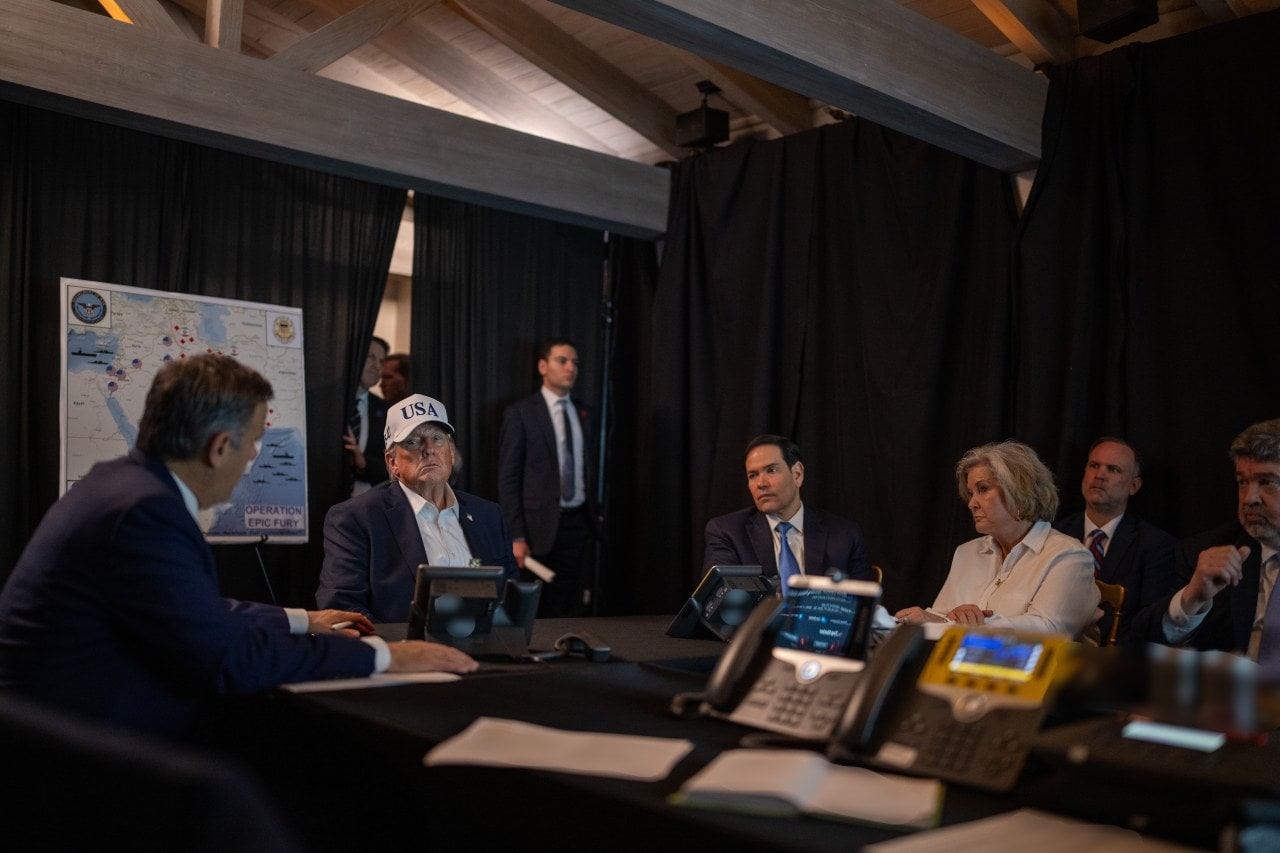
Senate Democrats have noted that some of the corporate donors have later been the beneficiaries of regulatory changes. “Money well spent! Your company’s millions of dollars in recent investment in President Trump’s political operation appears to have enabled tobacco manufacturers to circumvent federal law and unlawfully sell unauthorized e-cigarettes,” six Democratic senators wrote in a June letter to Altria’s CEO, saying the company contributed to the president’s ballroom and inauguration.
The company responded to the senators, describing policies it said would protect youth and reduce tobacco-related harm and saying it welcomed an opportunity to discuss the issue with legislators at greater length.
Government business
Executives said Trump is one of the most accessible presidents in recent times. In private, they acknowledged that this administration is much more transactional than prior ones. If a company encounters an issue with the federal government that comes to Trump’s attention, he will want to know how much money the company gave, according to a person familiar with the matter. At times he’ll rib the corporate leaders who haven’t met the goals he set, the person said.
Several CEOs and board members said they believe there is a link between their contributions and their access to the president. One chairman of a publicly traded company said that if you give the money, you know you are either checked on a list, or crossed off a list if you don’t.
Some lobbyists said they tell their clients to be noncommittal when Trump asks for a large donation and to say they’ll get back to him and his team. Many of the corporate donors have business before the government, are seeking federal contracts or are lobbying on a range of issues from trade policy to defense policy and appropriations.
Lockheed Martin gave more than $10 million in late 2025 and early 2026 related to America’s 250th anniversary and infrastructure projects in the Washington area, people familiar with the matter said.
A company spokesperson said “Lockheed Martin has a long history of supporting projects in both the Washington, DC, area and across the country.” The spokesperson added that its engagement with the government is guided by compliance standards and follows applicable laws and regulations.
In June, the Pentagon awarded Lockheed a contract worth up to $35 billion to make missiles to replace U.S. stockpiles drawn down by the war with Iran. A few weeks later, Trump revealed that Lockheed had agreed to pay roughly $5 million toward a new helipad he is now building at the White House.
Freedom 250, the Trump group that organized anniversary celebrations, raised more than $50 million, according to people familiar with the matter, and invited donors and other participants to a wine reception at the White House with Trump in the spring. Social-media platform TikTok gave around $2 million toward Freedom 250, according to people familiar with the matter. Other donors contributing more than $1 million each toward the anniversary included Oracle and ExxonMobil.
When SoftBank CEO Masayoshi Son’s team approached the White House offering support, they were told to give funds to the presidential library. SoftBank gave $50 million to the project, according to people familiar with the matter.
One of Son’s ideas for the space is to use a portion of that money to create an area in the library dedicated to the relationship between the U.S. and Japan, one of the people said.
Trump has taken in money from deep-pocketed companies and their owners through lawsuits or threats of litigation. The president has told his lawyers that he wants bigger payouts from media companies and others he believes have wronged him, according to people familiar with the discussions. ABC News and CBS parent Paramount have reached settlements with the president that included around $15 million each for the Trump library to end lawsuits.
Trump has filed a lawsuit against Dow Jones, the publisher of the Journal, alleging he was defamed by an article about a birthday letter to disgraced financier and sex offender Jeffrey Epstein. A Dow Jones spokesman said, “We have full confidence in the rigor and accuracy of our reporting, and will vigorously defend against any lawsuit.”
Companies have traded notes about what Wall Street analyst Blair Levin calls “The Trump Transaction Tax,” or a payment outside of the cost of normal business. “Another way of saying it,” Levin said, “is simply that we’re replacing the free market with the market for Trump’s affections.”
In October, Trump hosted companies and donors that contributed to the ballroom project for a dinner in the White House’s East Room. Standing at a lectern with a model of the planned ballroom next to him, the president recounted the ease of his fundraising.
“So many of you have been really, really generous,” Trump said. “I mean, a couple of you, I was sitting here and saying, ‘Sir, would $25 million be appropriate?’ They said, ‘I’ll take it.’”
He added: “It doesn’t take too many 25s to get it done.”
“Chief executives throughout the history have contributed to making the White House special,” Trump said, “and nothing of this magnitude has been done.”
Write to Josh Dawsey at Joshua.Dawsey@WSJ.com, Dana Mattioli at dana.mattioli@wsj.com, Annie Linskey at annie.linskey@wsj.com and Emily Glazer at Emily.Glazer@wsj.com


