
 E-Paper



China has ‘lost control’ of space lab, to come crashing down to earth
The pride of China’s space industry, the Tiangong-1 or “Heavenly Palace” space lab, is set to plummet to earth next year, triggering fears that its free-falling debris could collide with objects in the sky.

 Prefer HTon Google


The pride of China’s space industry, the Tiangong-1 or “Heavenly Palace” space lab, is set to plummet to earth next year, triggering fears that its free-falling debris could collide with objects in the sky.
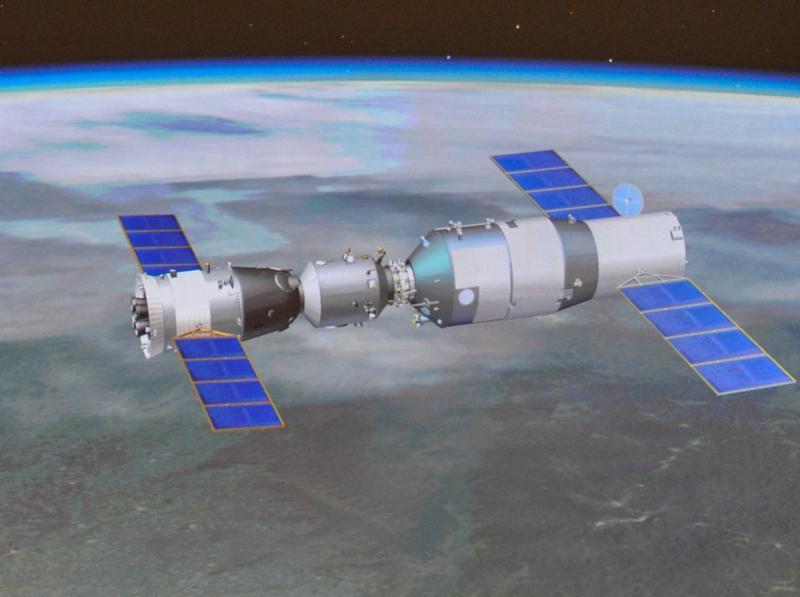
When the eight-tonne Tiangong-1 was launched amid much fanfare in September 2011, state media touted it as a symbol of China’s power in the final frontier.
But last week’s announcement by a senior official of China’s expanding space programme dropped enough hints that it will not be a controlled end for the 10.4-metre space station as its mechanical life expires.
Officials at a satellite launch centre in the Gobi Desert said the unmanned module had “comprehensively fulfilled its historical mission” and was set to re-enter the earth’s atmosphere at some point in the second half of 2017.
“Based on our calculation and analysis, most parts of the space lab will burn up during falling,” Wu Ping, deputy director of China’s manned space engineering office, was quoted as saying by the official Xinhua news agency.
Wu added the space lab was unlikely to affect aviation activities or cause damage on the ground.
Astrophysicist Jonathan McDowell from Harvard wasn’t so sure.
He told The Guardian newspaper it seemed China had lost control of the space station and it would re-enter the earth’s atmosphere “naturally”. He said: “You really can’t steer these things.”
McDowell added, “Even a couple of days before it re-enters we probably won’t know better than six or seven hours, plus or minus, when it’s going to come down. Not knowing when it’s going to come down translates as not knowing where it’s going to come down.”
The space lab, according to Xinhua, was in service for four-and-a-half years, two-and-a-half years longer than its designed life, and had docked with the Shenzhou-8, Shenzhou-9 and Shenzhou-10 spacecraft. It undertook tasks with long-term focus on China's manned space programme.
Wu tried her best to sound calm about the inevitable next year. “China has always highly valued the management of space debris, conducting research and tests on space debris mitigation and cleaning,” Wu said.
“Now, China will continue to monitor Tiangong-1 and strengthen early warning for possible collision with objects. If necessary, China will release a forecast of its falling and report it internationally.”


