
 E-Paper



China: Xi Jinping appoints top Xinjiang police officer as Hong Kong PLA chief
A former senior paramilitary officer posted in Xinjiang has been appointed as the People’s Liberation Army (PLA) garrison chief in Hong Kong, the latest sign of Beijing taking an increasingly hardline stand on security in the financial hub.

 Prefer HTon Google


A former senior paramilitary officer posted in Xinjiang has been appointed as the People’s Liberation Army (PLA) garrison chief in Hong Kong, the latest sign of Beijing taking an increasingly hardline stand on security in the financial hub.
Major General Peng Jingtang was the deputy chief of staff of China’s paramilitary police force, the People’s Armed Police, national broadcaster, CCTV said in a report late on Sunday night, adding that his appointment was signed into order by Chinese President Xi Jinping.
Peng was previously also chief of staff of the armed police force in Xinjiang, where western countries and international rights groups say Beijing is committing genocide against the minority Uighur community.
China has denied the allegations, denouncing the charges as part of a smear campaign.
Broadcaster CCTV quoted Peng as saying that he would in his new appointment work with all members of the garrison to follow the command of the ruling Communist Party and Xi, and resolutely defend national sovereignty and security interests.
Hong Kong, a special administrative region, returned to Chinese rule in 1997 with the promise that wide-ranging individual rights would be protected.
Pro-democracy activists and rights groups, however, say freedoms have been eroded, in particular since China imposed a new national security law after months of at times violent protests in 2019.
Britain handed Hong Kong back to China in 1997, and a mini-constitution, called the Basic Law was created under the “one country, two systems” principle; it gave the city more freedoms than the mainland, including freedom of speech, and which are supposed to remain intact until 2047.
Last March, China approved sweeping changes to Hong Kong’s electoral system, tightening Beijing’s control over the city and cutting down democratic representation in the legislature.
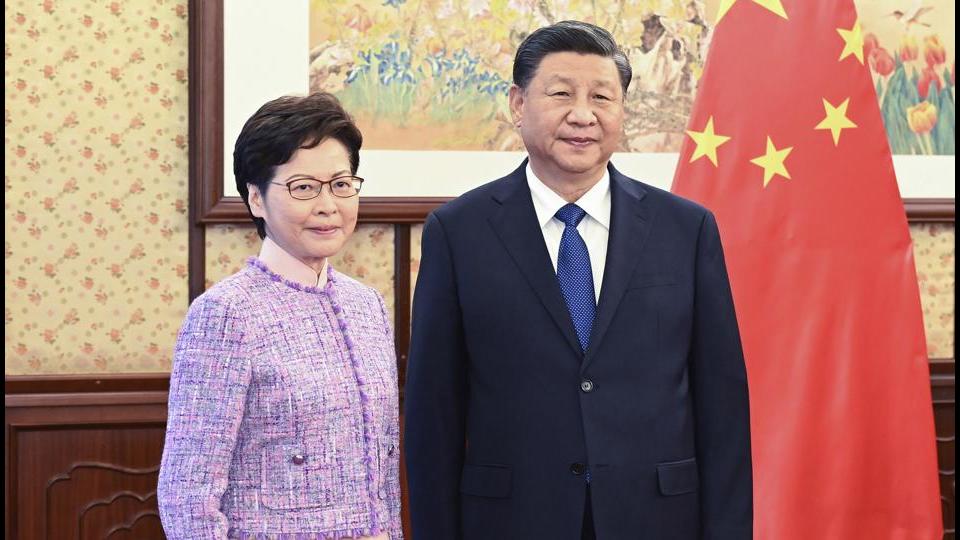
In December, Xi told Hong Kong leader Carrie Lam that the city is developing in the right direction and heaped praise on her work, two days after an election installed Beijing’s loyalists in the financial hub’s legislature amid a low turnout.
“In the past year, Hong Kong has consolidated the situation in which the city turned from chaos [during the 2019 social unrest] to peace, and has continued to develop in a positive direction,” Xi Jinping was quoted by official media as telling Carrie Lam.


