
 E-Paper



‘Don’t want to be sandwiched, especially between China and India’: Sri Lankan new President Anura Kumara Dissanayake
Anura Kumara Dissanayake was declared the new president on Sunday, displacing Ranil Wickremesinghe.

 Prefer HTon Google


Sri Lanka’s new President Anura Kumara Dissanayake said the country doesn't want to be sandwiched, especially between China and India, signaling a bold stance on his foreign policy.
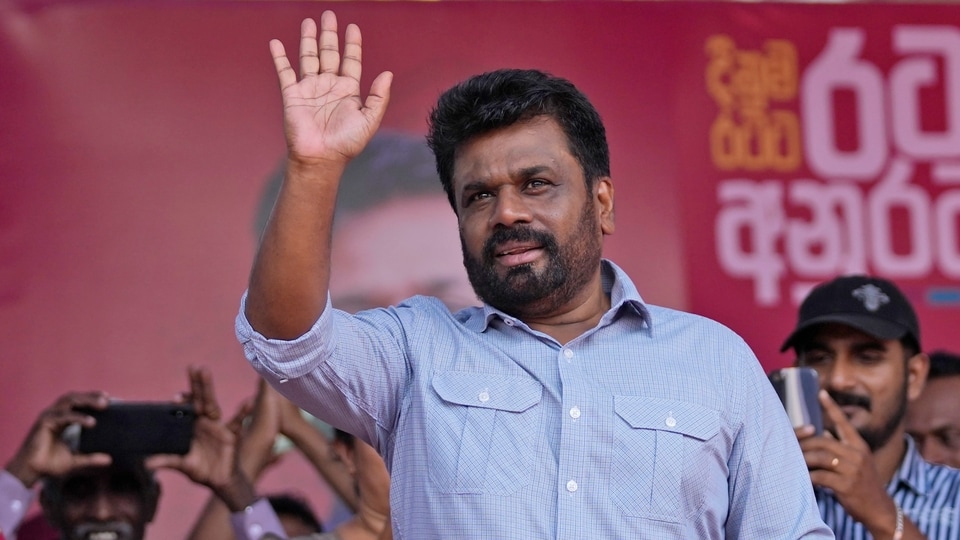
As Sri Lanka navigates its place in an increasingly multipolar world, Anura Kumara Dissanayake, in his interview with Monocle magazine, emphasised that under his leadership, the country will avoid being drawn into geopolitical rivalries. Instead of aligning with any power bloc, the National People’s Power (NPP) government intends to foster balanced relationships with both China and India, two of Sri Lanka’s closest neighbours.
“We won’t be a competitor in that geopolitical fight, nor will we be aligned to any party. We don’t want to be sandwiched, especially between China and India. Both countries are valued friends and, under an NPP government, we expect them to become close partners. We also want to maintain relations with the EU, the Middle East and Africa,” Dissanayake said on the foreign policy.
This neutral foreign policy approach, Dissanayake suggests, is critical for Sri Lanka to safeguard its sovereignty amid growing regional tensions. The president made it clear that Sri Lanka will not be a player in the power struggles between global superpowers, focusing instead on building diplomatic partnerships that are mutually beneficial.
Sri Lanka's leftist leader Dissanayake took office as president on Monday, promising change in the island nation long led by powerful political families which is emerging from its worst economic crisis in more than seven decades.
Dissanayake was declared the new president late on Sunday, displacing Ranil Wickremesinghe, who had been appointed by Parliament to serve out President Gotabaya Rajapaksa's remaining term.
Dissanayake polled 1.27 million votes
Popularly known as AKD, Dissanayake polled 1.27 million votes more than nearest rival and main opposition leader Sajith Premadasa. Wickremesinghe finished third.
Sri Lanka's close neighbours India, Pakistan, and the Maldives also congratulated Dissanayake on his win, along with China, the largest bilateral creditor.
“China hopes that Sri Lanka will maintain its national stability and development, and is willing to play a constructive role in the smooth economic and social development,” a Chinese foreign ministry spokesperson said on Monday.
On the domestic front, Dissanayake’s immediate priority is rescuing the nation from its economic collapse.
“We are a bankrupt nation,” he said in the interview, highlighting Sri Lanka’s €34 billion external debt, rising poverty levels, and soaring prices for essential goods.
Dissanayake also criticised both the ruling party and the main opposition for adhering to the same neoliberal economic model, which he claims has led to the country’s current economic plight. The NPP’s goal, he said, is to implement reforms that will pull Sri Lanka out of its financial crisis and restore stability.


