
 E-Paper



Ex CIA officer reveals Musharraf’s fury on being told of physicist AQ Khan ‘leaking’ Pak's nuclear secrets
The CIA allegedly told Musharraf that AQ Khan ‘was betraying Pak’s nuclear secrets to at least the Libyans and maybe others’, prompting an explosive response.

 Prefer HTon Google


Former CIA operations chief James Lawler has revealed dramatic details of how Pakistan’s then-president Pervez Musharraf reacted when confronted with evidence that physicist Abdul Qadeer Khan was selling Pakistan's nuclear secrets abroad, calling it a decisive moment in dismantling one of the world’s most dangerous proliferation networks.
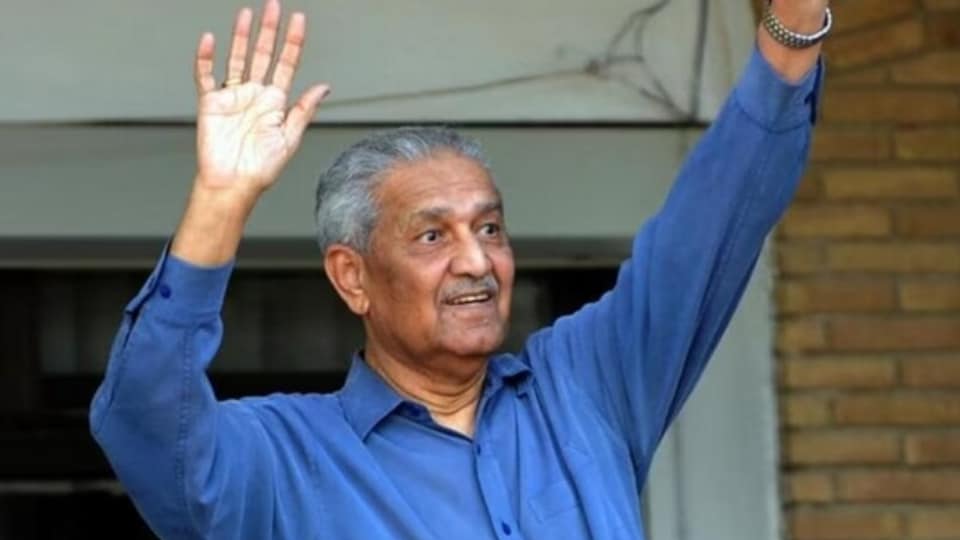
Lawler, renowned for helping expose and sabotage AQ Khan’s global nuclear trafficking operations, said in an interview with ANI that CIA director George Tenet personally briefed Musharraf with “absolutely incontrovertible evidence” that Khan had been leaking sensitive nuclear technology to countries such as Libya.
According to Lawler, Tenet told Musharraf that Khan “was betraying Pakistan’s nuclear secrets to at least the Libyans and maybe others,” prompting an explosive response. “I’m going to kill that son of a b****,” Musharraf reportedly said, before ultimately placing Khan under years-long house arrest.
Long hunt for the 'Merchant of Death'
Lawler, who once headed the CIA’s Counter-Proliferation Division, detailed how he came to call AQ Khan the “Merchant of Death,” recalling that US intelligence had long monitored Khan’s role in building Pakistan’s nuclear capability but was slow to grasp the scale of his outward proliferation.
“We were very slow. We thought it was serious that he was supplying Pakistan, but we did not imagine he was going to turn around and become an outward proliferator,” he said. “I nicknamed AQ Khan the ‘Merchant of Death.’”
The CIA later confirmed that Khan’s operation had evolved into a sprawling trafficking enterprise supplying multiple foreign nuclear programmes.
Lawler said certain Pakistani generals and leaders were “on his payroll,” though he stressed that individual complicity did not equal state policy.
Inside the CIA’s covert sabotage effort
Lawler recounted how he was tasked in the mid-1990s with running counter-proliferation operations in Europe and subsequently building covert front companies to penetrate nuclear smuggling networks. Drawing inspiration from Soviet-era deception operations, he created entities that posed as suppliers of sensitive technology.
“If I want to defeat proliferation and proliferators, I need to become a proliferator,” he explained.
These fronts were used in sting operations to ship compromised equipment designed to break down inside illicit nuclear facilities. “We took the reverse of the Hippocratic oath. We always did harm.”
Despite the global scale of the mission, Lawler said the CIA’s core team was small - “no more than 10 people” at headquarters - supported by undercover officers overseas.
The Libya breakthrough
A major turning point came after 9/11 when the CIA intercepted the BBC China freighter carrying “hundreds of thousands of nuclear components” destined for Libya.
When US negotiators confronted Libyan officials with the seized material, “You could have heard a pin drop,” Lawler recalled. Libya later dismantled its nuclear programme, a moment he said prompted him to “dance a little happy jig” beside the containers.
Network beyond Pakistan
Lawler also linked AQ Khan’s network to Iran’s nuclear programme, noting that Tehran used the same P1 and P2 centrifuge designs originally stolen from URENCO and proliferated by Khan. The network also transferred ballistic missile technology and even a Chinese atomic bomb blueprint.
He warned that if Iran acquires a nuclear weapon, it could trigger a “nuclear pandemic” across the Middle East.
Addressing longstanding questions about US' tolerance of Pakistan’s nuclear programme while taking a harder line on Iran, Lawler said Washington may have turned a “blind eye” because of Pakistan’s importance in Afghanistan during the Cold War and beyond.
He also described how US intelligence carefully monitored Pakistan’s nuclear assets after 9/11 to ensure Khan was not supplying nuclear material to al-Qaeda. Tenet’s confrontation with Musharraf, Lawler said, was pivotal in containing the network.


