
 E-Paper



F-16 jets, airstrikes and temple dispute: Why are Thailand and Cambodia on the brink of war?
The latest violence erupted after Cambodia fired rockets across the border, prompting Thai air strikes on military targets.

 Prefer HTon Google


At least nine civilians were killed on Thursday after rockets fired from Cambodia struck a Thai border community, as military forces from both countries exchanged fire near the Ta Muen temple along the Thailand-Cambodia border. The latest violence marks a sharp escalation in decades-old tensions over a disputed area known as the Emerald Triangle.
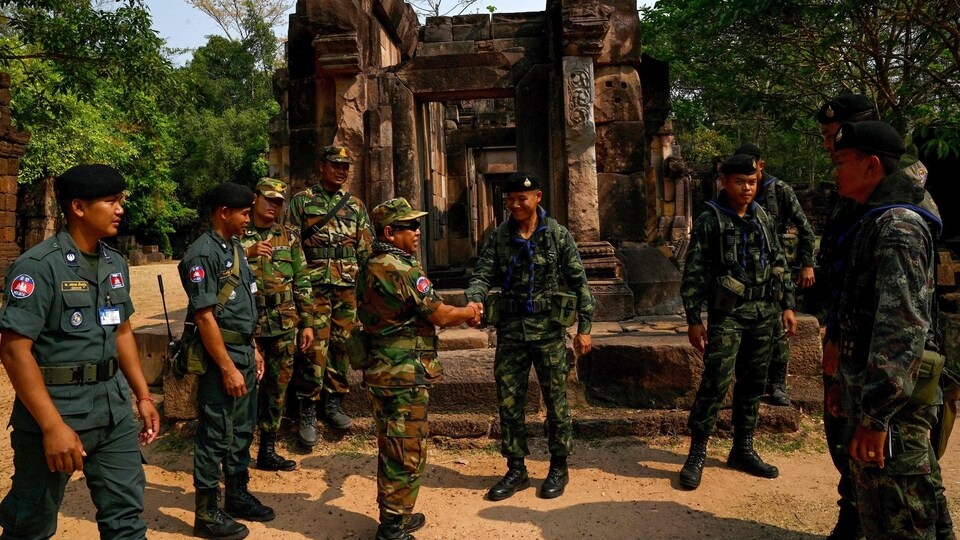
A decades-old border dispute between Thailand and Cambodia has flared into open conflict once again, with air strikes, rocket fire, civilian casualties, and diplomatic expulsions marking the most serious escalation in years.
What triggered latest Thai-Cambodia clashes?
The current round of violence erupted on Thursday, when Thailand launched airstrikes on Cambodian military positions shortly after Cambodian forces fired rockets and artillery across the border, reportedly killing a Thai civilian and injuring three others, including a five-year-old child.
Thai military deputy spokesperson Ritcha Suksuwanon confirmed that six F-16 fighter jets were scrambled from Ubon Ratchathani province and struck two “Cambodian military targets on the ground.”
According to the Thai army, cited by news agency AFP, hostilities began at around 7:35 AM when Thai soldiers stationed near the Ta Muen temple detected a Cambodian drone overhead. An hour later, a group of armed Cambodian soldiers approached a barbed-wire fence near the Thai post. Thai forces say they issued verbal warnings before Cambodian troops opened fire.
Both sides blame each other
Cambodia and Thailand have each accused the other of initiating the conflict, which took place near two ancient temples along the contested border region between Thailand’s Surin province and Cambodia’s Oddar Meanchey.
“The Thai military violated the territorial integrity of the Kingdom of Cambodia by launching an armed assault on Cambodian forces stationed to defend the nation's sovereign territory,” Cambodian defence ministry spokeswoman Maly Socheata said in a statement.
“In response, the Cambodian armed forces exercised their legitimate right to self-defence, in full accordance with international law, to repel the Thai incursion and protect Cambodia's sovereignty and territorial integrity.”
On the other hand, the Thai military claimed that Cambodian troops initiated the exchange by targeting Thai positions and later carried out a "targeted attack on civilians" using BM-21 rockets.
Diplomatic fallout deepens
Thursday’s violence came just hours after Thailand expelled Cambodia’s ambassador and recalled its own envoy from Phnom Penh, following a landmine blast that injured five Thai soldiers.
Acting Prime Minister Phumtham Wechayachai said Thai investigators believe the mines were newly planted by Cambodian forces—an allegation Phnom Penh strongly denied.
In response, Cambodia announced it was downgrading diplomatic ties to “the lowest level,” pulled most of its diplomats, and expelled Thailand’s diplomatic team from its capital.
Tensions have also spilled over into trade and border policy. Thailand recently restricted crossings, while Cambodia suspended select imports. The Thai embassy in Phnom Penh has advised its citizens to leave Cambodia “as soon as possible” unless absolutely necessary.
Historical roots of the dispute
The two countries have long been at odds over a tract of land near the Emerald Triangle — where the borders of Thailand, Cambodia, and Laos converge. This area includes several ancient temples, which are claimed by both sides.
While legal rulings and negotiations over the years have aimed to resolve the issue, military skirmishes have continued to erupt periodically. Clashes first turned deadly more than 15 years ago, and the dispute flared up again in May this year, when a Cambodian soldier was killed during a firefight.
Internal politics and rising militarisation
The border crisis is unfolding amid domestic political upheaval in both nations. In Thailand, Prime Minister Paetongtarn Shinawatra has been suspended from office pending an ethics probe, while Cambodia’s government has drawn criticism for leaking a private diplomatic call between Paetongtarn and former Cambodian leader Hun Sen, triggering a judicial review.
Meanwhile, Cambodia has begun preparing for an expanded military role for its citizens. Prime Minister Hun Manet last week announced that a dormant conscription law would be activated in 2026, introducing mandatory military service for civilians for the first time in years.
As the dispute escalates on both military and diplomatic fronts, leaders are urging caution. Thailand’s acting PM stated, “The situation requires careful handling, and we must act in accordance with international law. We will do our best to protect our sovereignty.”
(With AFP inputs)


