
 E-Paper



How Covid-19 hijacks and damages lung cells? Scientists decode
Scientists in the US have decoded the chain of molecular responses of human lung cells to the coronavirus infection, a feet which may help in identifying the clinically approved medications that can be re-purposed for the treatment of Covid-19, according to a report.

 Prefer HTon Google


Scientists in the US have decoded the chain of molecular responses of human lung cells to the coronavirus infection, a feet which may help in identifying the clinically approved medications that can be re-purposed for the treatment of Covid-19, according to a report.
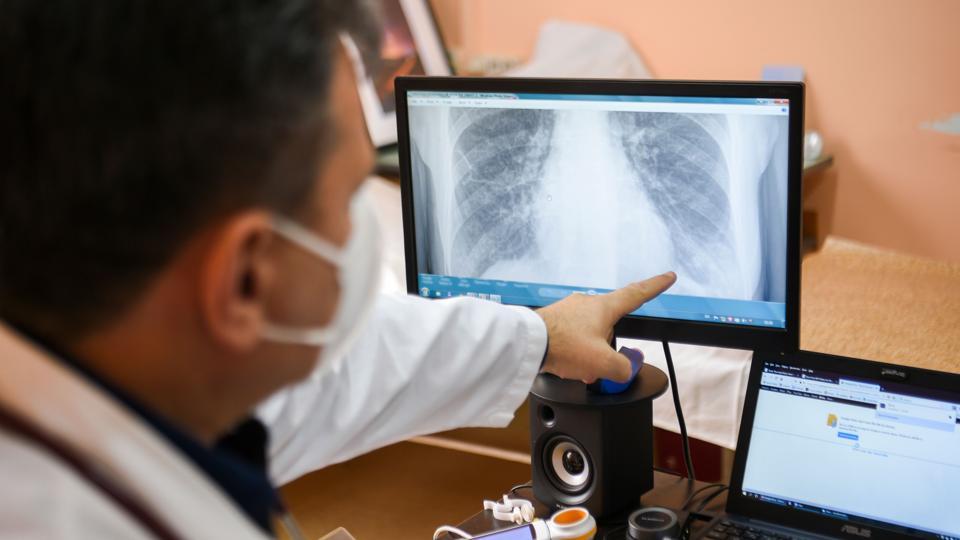
Published in the journal Molecular Cell, the study, conducted by the scientists from Boston University School of Medicine (BUSM), evaluated engineered cells of the human lungs’ air sacks using exact mass spectrometry technology that can identify the molecules present in samples.
Based on the analysis of the study, the researchers identified proteins and pathways of molecules in lung cells whose levels change upon infection by the coronavirus. The scientists believe the findings of the study provides an insight into disease pathology and new therapeutic targets to block Covid-19.
The researchers found a crucial type of protein modification called “phosphorylation” becomes aberrant in these infected lung cells.
According to the study, phosphorylation of proteins plays a major role in regulating protein function inside the cells of an organism.
It noted that both protein abundance and protein phosphorylation are typically highly controlled processes in the case of healthy cells.
However, the scientists discovered that SARS-CoV-2 throws the lung cells into disarray, causing abnormal changes in protein amounts and frequency of protein phosphorylation inside these cells.
These abnormal changes, the scientists said, help the virus to multiply -- eventually destroying the cells and resulting in widespread lung injury.
Upon infection, the researchers said the coronavirus rapidly begins to exploit the cell’s core resources, which are otherwise required for the cell’s normal growth and function.
“The virus uses these resources to proliferate while evading attack by the body’s immune system. In this way new viruses form which subsequently exit the exhausted and brutally damaged lung cell, leaving them to self-destruct,” said Andrew Emili, study co-author from BUSM.
“These new viruses then infect other cells, where the same cycle is repeated,” Emili explained.
In the study, the scientists examined lung alveolar cells from one to 24 hours after infection with SARS-CoV-2 to understand what changes occur in these cells immediately -- at one, three and six hours after infection by SARS-CoV-2 -- and what changes occur later -- at 24 hours after infection.
“Our results showed that in comparison to normal/uninfected lung cells, SARS-CoV-2 infected lung cells showed dramatic changes in the abundance of thousands of proteins and phosphorylation events,” said Darrell Kotton, study co-author and professor of pathology & laboratory medicine at BUSM.
“Moreover, our data also showed that the SARS-CoV-2 virus induces a significant number of these changes as early as one hour post infection and lays the foundation for a complete hijack of the host lung cells,” added Elke Muhlberger, another co-author of the study.
The researchers also identified at least 18 pre-existing clinically approved drugs which were developed originally for other medical conditions that could be re-purposed for use towards Covid-19 therapy.
They believe further studies can shed light on the potential of these drugs to block the proliferation of the novel coronavirus in human lung cells.
(with inputs from PTI)


