
 E-Paper



Indian Americans divided on current trajectory of Indian democracy: Survey
Asked if India is on the right track, 36% of the respondents said it is, while 39% said it is on the wrong track, and 25% said they do not have an opinion


While broadly supportive of Prime Minister Narendra Modi and the BJP, Indian Americans are evenly divided on the current trajectory of Indian democracy, according to a newly published analysis of an online survey conducted last September.
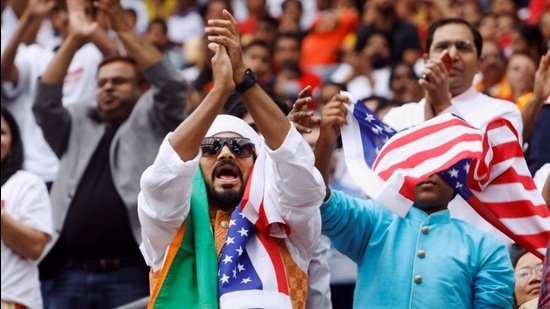
Asked if India is on the right track, 36% of the respondents had said it is, while 39% said it is on the wrong track, and 25% had said they do not have an opinion.
The survey was conducted by YouGov for Carnegie Endowment for International Peace and Johns Hopkins University and the University of Pennsylvania between September 1 and September 20, in the run up to the US elections in November 2020. It covered 1, 200 Indian Americans, a community with growing economic and political clout.
The analysis released on Tuesday showed that Indian Americans were most concerned about government corruption (18%) in India, slowing economic growth (15%) and religious majoritarianism (10%).
But not all Indian Americans felt the same way on the current trajectory of India. Those born in the US were more pessimistic — 39% of Indian-born believed India was on the right track compared to 32% of those born in the US, while 44% of those born in the US felt India was on the wrong track compared to 36% born in India.
The analysis reaffirms, at the same time, the BJP’s continuing popularity among Indian Americans, with 32% of respondents favouring it while just 12% backed the Congress. But 40% said they do not identify with any political party, which the reports said, suggested “an arms-length relationship to everyday politics in India”.
Prime Minister Modi remains broadly popular in the community — with 35% strongly approving of his job performance and 13% approving of it; 9% disapproved and 22% strongly disapproved. “This support is greatest among Republicans, Hindus, people in the engineering profession, those not born in the United States, and those who hail from North and West India,” the report said.
Indian Americans were curiously more liberal when it came to issues affecting the United States than for those relating to India. “Regarding contentious issues such as the equal protection of religious minorities, immigration, and affirmative action, Indian Americans hold relatively more conservative views of Indian policies than of US policies,” the report said.
The community is largely supportive of the US-India relationship and most of them hold unfavourable views of China. But, the report said, they were divided on how much help should the US extend to India against China. “Foreign-born Indian Americans and those who identify as Republicans are more supportive of US efforts to support India militarily than their US-born and Democratic counterparts.”
The report concludes that while the community remains connected with India and largely supportive of it, it is not a monolith and “there are clear intergenerational differences when it comes to attitudes toward political and social changes underway in India”.
The first-generation immigrants had emphasised the Indian elements of their identify. “But their children — members of the second generation—place a relatively greater emphasis on the American dimension of their identity,” the report said. “They are less engaged with India and more US-focused than their parents’ generation.”


