
 E-Paper



Indian media stirring up negative sentiments about China: State media
Beijing-controlled tabloid “Global Times” said reports in the Indian media about Chinese foreign minister Wang Yi’s visit were impacting the Communist country’s image across the border.

 Prefer HTon Google


The Indian media is stirring up negative sentiments about China at a time when both countries are focused on expanding collaboration, Chinese state media said on Monday, adding that damaging reports were impacting the Communist country’s image across the border.
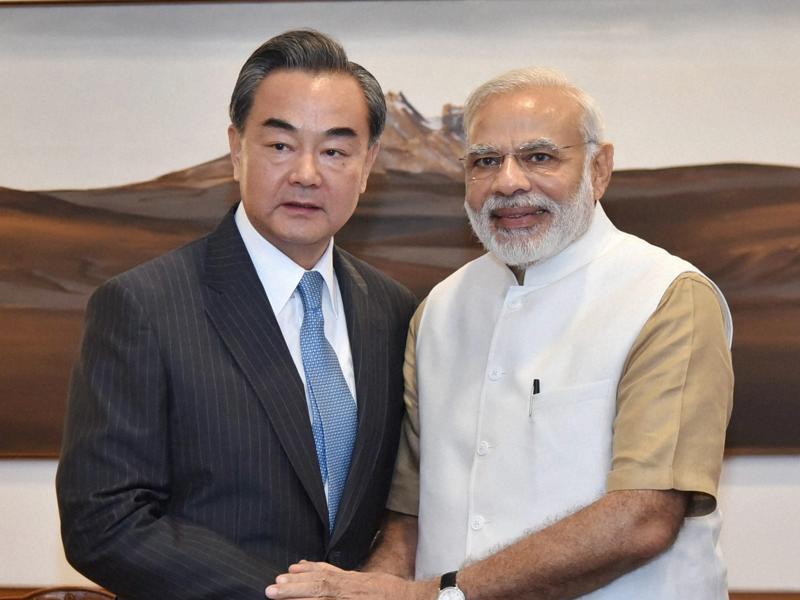
Referring to a news report published in an English newspaper in India last week, state-controlled tabloid, “Global Times” said the “eye-catching headline” gave the wrong impression about foreign minister Wang Yi’s visit to India.
“Chinese Foreign Minister Wang Yi paid a visit to India on Friday. As a number of media outlets reported, the tour was focused on cooperation over the upcoming G20 and BRICS summits. However, quite a few Indian media started to cover the tour a week ago with the eye-catching headline ‘China blocked India's NSG bid, but now wants help on South China Sea’,” the editorial said.
It said there was no need for Beijing to “beg” a favour from India on any issue.
“Over the years, bilateral joint works are unfolding in a variety of fields such as international trade, environmental protection, infrastructure projects, and anti-terrorism, as well as energy security. Such cooperation will benefit both,” the commentary said.
An official statement issued in New Delhi had specifically mentioned that the South China Sea dispute wasn’t discussed during meetings Wang had with Indian officials.
China is embroiled in claims and counter-claims over the ownership of islands in the South China Sea with several countries like Philippines, Malaysia, Vietnam, Brunei and Taiwan.
India, though not a direct party to the disputes, has maintained that “freedom of navigation” should be maintained throughout the South China Sea maritime region.
“Clearly, the Indian media has not yet learned to see the considerable potential of the bilateral relationships with a constructive mindset,” the editorial added, “It is important for the Indian media to remember that development and prosperity are needed by both sides and they need a stable environment for that.”
The Global Times editorial further said: “Given the recent frictions between the two countries, including the NSG issue and New Delhi's rejection of visa extension requests for Chinese reporters, there are indeed certain puzzles left unresolved in the bilateral relationship. But they can hardly represent the big picture of Sino-Indian ties.”
It added that though India’s government was treating its relations with Beijing rationally, the country's media was trying to mislead public opinion.
“They (the media) tend to attach more attention to divergences while overstating contradictions between the two. Words like ‘invasion’ or ‘transgression’ are often used by them to describe Beijing without naming sources, and the ‘China threat theory’ has been hyped up by them from time to time.”


