E-Paper



Explained: Why the US F-35 snub at Tarang Shakti matters for IAF’s stealth fighter plans
The IAF chief earlier said if there are delays in the AMCA programme, the air force may have to look at other options.

 Prefer HTon Google


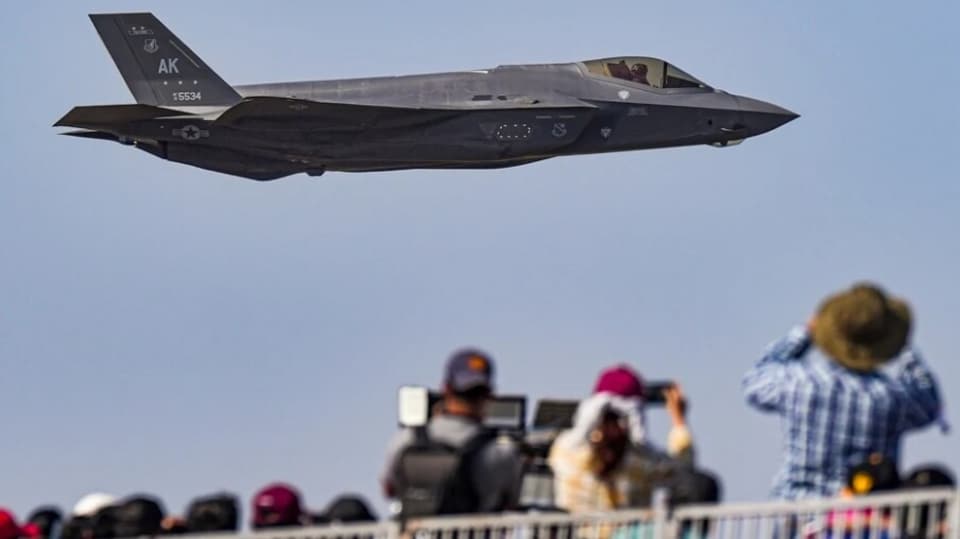
The Indian Air Force (IAF) was denied access to the United States Air Force (USAF)’s F-35 stealth fighters during the two-week multinational exercise Tarang Shakti, prompting India’s Chief of Air Staff Air Chief Marshal AP Singh to publicly flag the issue at a media briefing in Jodhpur on October 10 in the presence of a senior US commander. In response, General Kevin B Schneider, commander of US Pacific Air Forces (PACAF), cited Washington’s security protocols governing access to advanced weapons systems. The exchange between the two four-star officers has brought the IAF’s push for fifth-generation fighters into sharper focus.
What is the current status of India’s homegrown stealth fighter programme?
India’s AMCA (advanced medium combat aircraft) programme aims to equip the IAF with an indigenous fifth-generation stealth fighter to boost its long-term combat strength.
In May, the defence ministry issued a tender to three bidders for the development and production of five AMCA prototypes at an estimated cost of ₹15,000 crore. The contenders for the programme include Tata Advanced Systems Limited (TASL), Larsen & Toubro (L&T) in partnership with Bharat Electronics Limited (BEL), and a consortium led by Bharat Forge. The first prototype is expected to fly in 2029, and AMCA’s development is likely to be completed by 2034 before it enters production a year later.
Also read | IAF chief ribs US general over F-35 at combat drills
Deep Dive

AMCA production is expected to involve a separate procurement process. The IAF’s modernisation map envisages the deployment of around 120 stealth fighters (six squadrons) 2035 onwards. On Saturday, defence minister Rajnath Singh said the AMCA programme is an important step towards mastering fifth-generation stealth fighter technology.
What if AMCA is delayed?
The possibility cannot be ruled out. The IAF chief earlier said if there are delays in the AMCA programme, the air force may have to look at other options. He indicated that the IAF may have to import some fifth-generation stealth fighters as an interim measure. The Russian Su-57 and the American F-35 are considered likely contenders for the stop-gap requirement. Russia has pitched the Su-57 to IAF but India has not made a decision yet.
Also read | US approves USD 24.3 billion sale of 48 F-35 fighter jets to Saudi Arabia
Last year, President Donald Trump announced that tje US was paving the way for India to get the F-35 stealth fighters. AP Singh, however, clarified that the US has made no formal offer to sell the F-35 to India. F-35s took part in an air combat exercise in the country for the first time — the USAF brought six such stealth aircraft to Jodhpur for the Tarang Shakti drills, which will conclude on Monday.
“I was telling the PACAF commander that your people don’t let us come anywhere close to the F-35, and you talk about selling it to us. There is no offer from the US for us to buy the F-35,” Singh said at the press briefing.
Why is speeding up AMCA critical for IAF?
Fast-tracking the AMCA programme is critical because China has already deployed its J-20 fifth-generation fighters, is rolling out the J-35 stealth fighters that Pakistan is reportedly looking to acquire, and has flight-tested two purported sixth-generation platforms – the J-36 and J-50.
The IAF chief has described the cooperation between China and Pakistan on fifth-generation fighters as “a cause for worry.” Reports suggest that Pakistan may acquire them in the near future, and that their pilots are already undergoing training in China, Singh said on October 3. “It is a cause for concern. But is it a total no-go situation? I will not agree with that. It is not just one platform that matters, but the integration of that platform into your whole system. Pakistan had other platforms during Operation Sindoor but they were not able to achieve anything significant. If we effectively integrate the platforms we are inducting, we should be able to ward off this threat for the time being...until they integrate these new aircraft into their own systems very well. We must think of the future and the need to induct a fifth-generation aircraft fast.”
Also read | US Air Force F-35 fighter jet set to debut in Indian Air Force's Tarang exercise
What capabilities is the AMCA expected to have?
The 25-tonne AMCA will be a swing-role fighter featuring increased combat survivability, advanced avionics, internally stored smart weapons, top-end mission computers, 360-degree situational awareness, and super-cruise capability, allowing it to fly at supersonic speeds for extended periods without using fuel-guzzling afterburners.
The AMCA is expected to be developed in two phases. The first two squadrons will consist of the Mk-1 version of AMCA powered by the American F-414 engines, while the remaining four squadrons will have the more advanced Mk-2 version equipped with an even more powerful engine to be built in India with foreign collaboration. To be sure, last week Rajnath Singh said the government is pursuing a programme to develop an indigenous high-thrust aero-engine with a proposed investment of around ₹5,000 crore, stressing that self-reliance in aerospace must extend to engine technology, particularly for the AMCA programme.
Is India also looking at sixth-generation fighters?
The country is taking steps to join the France-led Future Combat Air System (FCAS) programme for developing a sixth-generation fighter aircraft. India’s path to joining the FCAS remains unclear as the programme no longer exists in its originally envisaged format — France and Germany scrapped the joint project in June. If India decides to move ahead, the programme may progress under a new arrangement.
While fifth-generation fighters focus on stealth and sensor fusion, sixth-generation aircraft will form the core of a 'system of systems' with manned-unmanned teaming, and operate across five domains—air, land, sea, cyber and space.