
 E-Paper



Iran triggers chaos in Strait of Hormuz, tankers under attack, 2 Indian ships cross warzone
As many as 19 ships have been hit by Iran in the Strait of Hormuz with some seven persons being killed in the attack.

 Prefer HTon Google


While two Shipping Corporation of India (SCI) tankers safely transited Strait of Hormuz this morning, the situation on Persian Gulf-Hormuz-Gulf of Oman sea lane access is precarious as Iranians are still not allowing crude oil tankers to be escorted by warships.
Even though SCI tankers - Pushpak and Piramal - managed to cross the Strait of Hormuz without escort between last night and this morning, three other tankers were attacked by Iranian projectiles and sustained damage.
"There is utter confusion in the Persian Gulf as Iranians are talking in multiple voices. The escorts are not being allowed and the tankers are taking chances,” said a shipping expert.
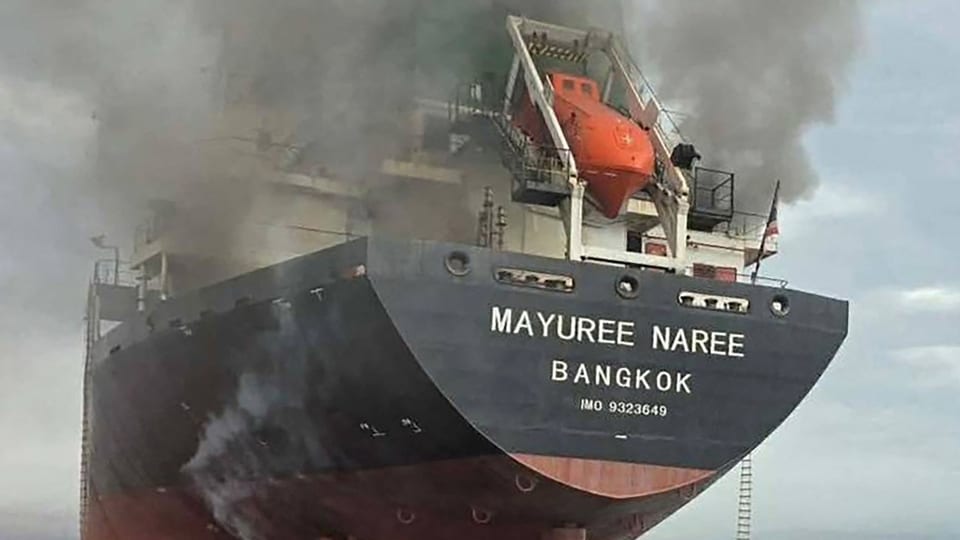
The Kandla-bound Thai vessel Mayuree Naree was hit on the hull even as the ship was transiting the Strait of Hormuz.
The passage of two Indian ships and targeting of others clearly shows that Iranian chain of command is working with Tehran using Hormuz as a chokepoint to trigger a global energy crisis and use it as a leverage for US-Israel to back down from war. Besides, Iran is also targeting Sunni Gulf countries to expand the theatre of war and punish them for allowing the US to establish bases on their soil. Targeting of Straits of Hormuz by Iran is a violation of UN Convention on the Law of Sea (UNCLOS), articles 37-45, and is against Freedom of Navigation as mandated by the convention.
The UNSC on Wednesday night adopted a resolution invoking article 51 of the UN Charter—member states’ collective or individual right to self defense—against retaliatory attacks by Iran across the Gulf region. The resolution was sponsored by 134 countries was passed with 13 votes in favor and two abstentions – China and Russia.
Fact is that Iran is deliberately targeting shipping in the Persian Gulf to trigger both oil crisis globally and a food crisis in the Middle-East. Given that the Sunni Gulf countries are only defending themselves from Iranian missile onslaught and not retaliating to Tehran shows that the Gulf countries do not overtly want to be seen on the side of the US and more particularly Israel. It is another matter, that the Gulf rulers were fuming at Iran for making them collateral damage and will retaliate covertly when times comes.
While Iran has been using kamikaze drones to target shipping in the Gulf, there are indications that the IRGC may be targeting tankers using underwater drones or projectiles though there is no evidence of any mines being used by the Islamist regime. That Thai flagged tanker was hit in the hull gives rise to the suspicion that Iranian may be targeting these tankers though underwater projectiles.
As of today, as many as 19 ships have been hit by Iran in the Strait of Hormuz with some seven persons being killed in the attack. Given that Iran has decided to use the Strait of Hormuz as military leverage, the global energy crisis will continue till the time when either the Iranian regime collapses or comes on the table for talks with the US.


