
 E-Paper



Japan's new report warns ‘megaquake’, tsunami along Nankai Trough could kill 298,000 people
Over the past 1,400 years, megaquakes in the Nankai Trough have struck every 100 to 200 years, with the most recent occurring in 1946.

 Prefer HTon Google


A “megaquake” and the resulting tsunami could cause 298,000 deaths in Japan and damages worth up to $2 trillion, according to a new government estimate quoted by AFP on Monday.
The updated figures revise a 2014 estimate that assessed the potential impact of a massive earthquake along the Nankai Trough, an 800-kilometer (500-mile) undersea trench stretching from Shizuoka, west of Tokyo, to the southern tip of Kyushu.
This trench is where the Philippine Sea tectonic plate is gradually subducting beneath the continental plate that Japan rests on. Over time, the plates become locked, accumulating energy that is eventually released in the form of major earthquakes.
According to the Cabinet Office's disaster management working group, up to 215,000 people could die in a tsunami, 73,000 due to collapsing buildings, and 9,000 in fires. However, the new projection is lower than the 2014 estimate, which had predicted up to 323,000 deaths.
A "megaquake" refers to an extremely powerful earthquake, typically magnitude 8 or higher, capable of causing widespread destruction and potentially triggering a tsunami.
Megaquakes in Nankai Trough
Over the past 1,400 years, megaquakes in the Nankai Trough have struck every 100 to 200 years, with the most recent occurring in 1946. While earthquakes remain extremely difficult to predict, a government panel in January reported a slight increase in the probability of a megaquake within the next 30 years, now estimated at 75-82%.
As one of the world's most tectonically active nations, Japan has implemented strict building regulations to ensure structures can withstand powerful earthquakes.
The archipelago, home to approximately 125 million people, experiences around 1,500 tremors annually. While most are mild, the extent of damage depends on their location and depth below the Earth's surface.
Japan's first ‘megaquake advisory’
In August last year, the Japan Meteorological Agency (JMA) issued its first-ever “megaquake advisory” under post-2011 rules, following a magnitude 7.1 earthquake in southern Japan that injured 14 people. The advisory, which warned of an increased likelihood of a major quake along the Nankai Trough, was lifted after a week but led to shortages of rice and other essentials as people stocked up on supplies.
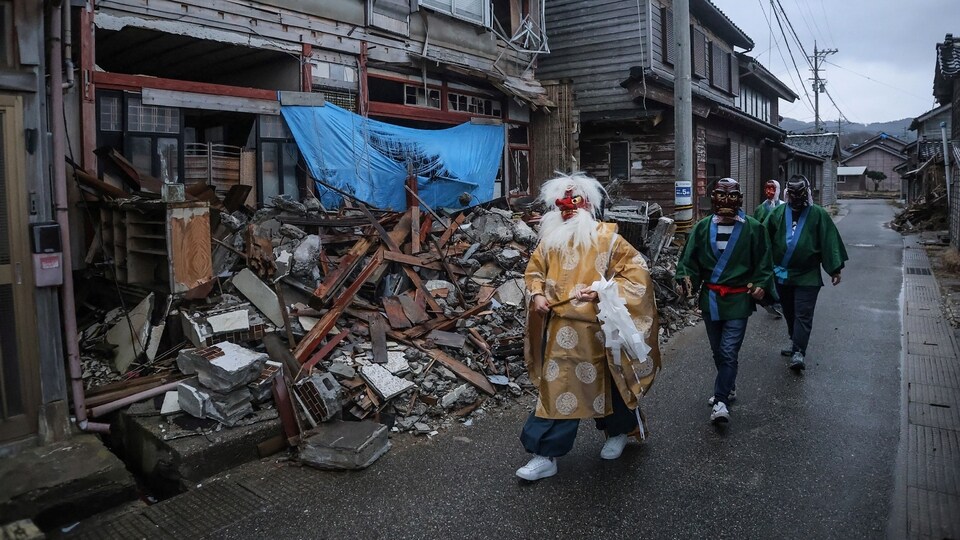
On New Year's Day, a massive earthquake struck Japan’s Noto Peninsula, killing at least 260 people, including 30 quake-related deaths. The disaster toppled buildings, triggered fires, and damaged infrastructure during New Year celebrations.
Japan’s largest recorded earthquake, a magnitude 9.0 undersea jolt in March 2011, caused a tsunami that left around 18,500 dead or missing. It also led to three reactor meltdowns at the Fukushima nuclear plant, marking the country’s worst post-war disaster and the most severe nuclear accident since Chernobyl. The estimated cost was 16.9 trillion yen ($112 billion), excluding the long-term Fukushima decommissioning, expected to take decades.
(With AFP inputs)


