
 E-Paper



Key Iranian leaders killed in US-Israeli attacks as deadlock persists over talks: From Ali Khamenei to Tangsiri
From the Supreme Leader to naval commanders, US-Israeli strikes have killed dozens of Iran's top political and military figures

 Prefer HTon Google


It started at the very top when, February 28, the US-Israel coordinated strikes killed Iran’s Supreme Leader Ayatollah Ali Khamenei. Several senior Iranian leaders have since died in such attacks in the war now in its second month.
The US and Israel have carried out systematic targeting of Iran's political and military leadership, even as Donald Trump insists he wants to talk and Iran remains defiant. Iran has also appointed replacements, and said the system is not person-centric.
Follow: Live updates on the US-Iran war
Supreme Leader killed on Day 1
Ayatollah Ali Khamenei, 86, was killed on Day 1 of the US-Israeli airstrikes, at his residential compound in Tehran. He had ruled Iran since 1989, consolidating power through the security apparatus and overseeing the country's nuclear programme and regional proxy network for more than three decades.
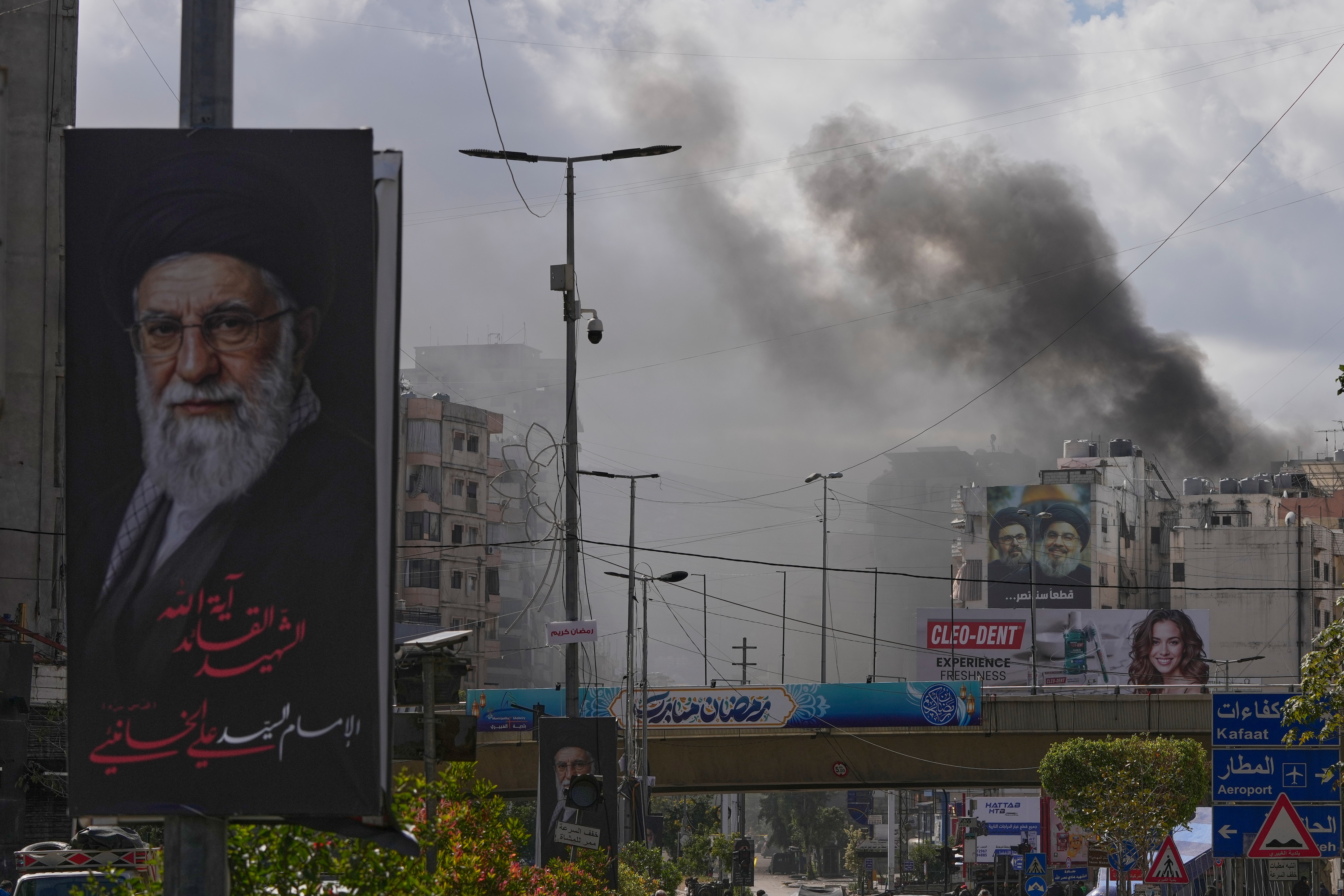
His death triggered Iran's hybrid constitutional system of a theocracy and limited democracy. An Interim Leadership Council was established the following day.
On March 8, his son Mojtaba Khamenei was chosen as the new Supreme Leader by the Assembly of Experts. The Khamenei name, thus, signallied continuity.
Ali Shamkhani, Larijani and many other senior leaders
One of Khamenei's closest advisers and a key figure in nuclear policymaking, Ali Shamkhani was also killed in the February 28 strikes on Tehran. He had survived a similar assassination attempt during the June 2025 12-day war between Iran and Israel-US.
Ali Larijani, secretary of the Supreme National Security Council who had served as an Islamic Revolutionary Guard Corps (IRGC) commander and nuclear negotiator, was killed on March 17 in a strike in the Pardis area, along with his son and a deputy.
Ali Larijani was widely seen as the de facto leader of Iran.
Esmail Khatib, Iran's intelligence minister, was killed in an Israeli strike on March 18. A hardliner cleric, he had been mentored by Ali Khamenei and had headed an intelligence setup since 2021.
Military commanders
The airstrikes have also hit Iran's military command. In the opening wave on February 28 alone, three of the country's senior military figures were killed — Mohammad Pakpour, commander-in-chief of the IRGC; Aziz Nasirzadeh, the defence minister; and Abdolrahim Mousavi, chief of staff of Iran's armed forces. All three were reported to have been together in Tehran when the strikes hit.
Gholamreza Soleimani, commander of the Basij paramilitary force used to enforce state authority, was killed on March 17.
On March 26, Israeli strikes on the port city of Bandar Abbas killed two IRGC naval commanders in a single day. Behnam Rezaei, the IRGC's navy intelligence chief, was killed immediately.
Alireza Tangsiri, the IRGC's navy commander who had overseen the strategy for controlling the Strait of Hormuz, through which roughly a fifth of the world's oil normally passes, died of wounds sustained in the same strike.
These deaths follow an earlier round of military killings in the June 2025 war, which had already eliminated IRGC commander Hossein Salami, armed forces chief of staff Mohammad Bagheri, and several other senior commanders and nuclear scientists.
War persists, as does a deadlock
As for the toll of this war so far, US-based rights group HRANA said 3,461 people have been killed in Iran, including 1,551 civilians and 236 children, as of March 30. The International Federation of Red Cross and Red Crescent Societies has reported at least 1,900 deaths and 20,000 injuries from US-Israeli strikes.
Outside Iran, Lebanon has reported 1,189 fatalities from Israeli strikes, including 124 children. In Iraq, at least 100 people have died. Thirteen US servicemembers have been killed, six of them in a military aircraft crash over western Iraq on 12 March. Nineteen people have died in Israel from Iranian missile attacks. More than 30 people have been killed across Gulf states.
There is a war of words running alongside, and it is confusing. Trump has repeatedly said talks with Tehran are "going very well”. Secretary of State Marco Rubio told reporters "progress has been made”.
But Iran has repeatedly denied that any talks are taking place.
The US sent Iran a 15-point peace plan via Pakistan, which includes a 30-day ceasefire, sanctions relief, a rollback of Iran's nuclear programme, and the reopening of the Strait of Hormuz. A senior Iranian diplomatic source described the proposal as "extremely maximalist and unreasonable”.
Iran presented its own five-point counter-conditions, including a halt to all attacks, reparations, and international recognition of Iranian sovereignty over the Strait of Hormuz.
Pakistan has emerged as the key mediator. On March 29, foreign ministers from Pakistan, Saudi Arabia, Egypt and Turkey met in Islamabad to try to broker talks.
Trump has twice extended his deadline for Iran to reopen the Strait of Hormuz, with the current deadline set for April 6.
Iran's parliament speaker Mohammad Bagher Ghalibaf has termed the diplomacy a cover for a military build-up, as troops are being amassed for a possible ground operation.
At the same time, US Vice President JD Vance said the US had "accomplished all of our military objectives" and that Trump would "keep at it a little while longer to ensure that once we leave, we don't have to do this again for a very, very long time”.
Whether that means the war is winding down or escalating further remains unclear.


