E-Paper



Maoists, Nepali Congress register no-confidence motion against PM Oli
Nepal’s Maoists joined hands with Nepali Congress, the largest opposition party, to lodge a no-confidence motion against Prime Minister KP Sharma Oli on Wednesday but the increasingly isolated leader pledged to fight on.


Nepal’s Maoists joined hands with Nepali Congress, the largest opposition party, to lodge a no-confidence motion against Prime Minister KP Sharma Oli on Wednesday but the increasingly isolated leader pledged to fight on.
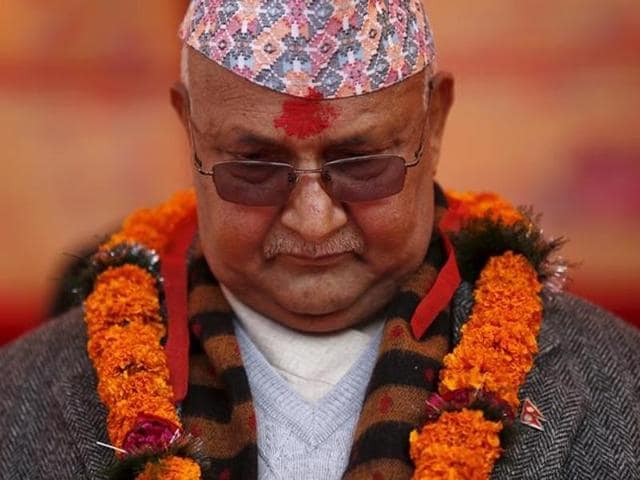
The motion came a day after the Communist Party of Nepal-Maoist Centre withdrew support to the government, reducing it to a minority. It was registered in parliament after Oli rejected a demand from both parties that he step down.
CPN-MC, the third largest party in parliament, and the Nepali Congress have agreed to form the next government, likely to be headed by Maoist chairman Pushpa Kamal Dahal Prachanda.
Though his nine-month-old government has been reduced to a minority, Oli has refused to quit and plans to face the no-confidence motion.
Oli has the support of other parties in the coalition, but their total votes add up to 252 while the CPN-MC and Nepali Congress have 342 votes - much higher than the 298 votes needed to prove majority.
The agitating United Democratic Madhesi Morcha, which comprises four Madhesi parties seeking amendments to the country’s constitution, has decided to support the no-confidence motion against Oli.
“We have decided to support the motion. Whether we join the government or not will depend on how the new coalition handles our demands,” senior UDMF leader Upendra Yadav told journalists.
Oli’s party, the Communist Party of Nepal-Unified Marxist Leninist, the second largest in parliament, has decided to garner support from allies in the government and other parties to defeat the no-confidence motion.
Earlier on Wednesday, CPN-MC and Nepali Congress gave an ultimatum to Oli to resign by 3 pm or face the no-confidence motion.
The CPN-MC said it had withdrawn support because of the government’s insincerity in implementing agreements signed with Oli’s party. The two agreements on power-sharing and implementing the constitution were signed in May after the Maoists threatened to oust Oli from office.