
 E-Paper



Myanmar: 7-year-old girl killed after security forces open fire in Mandalay
She became the country's youngest victim so far in a crackdown by the junta against opposition to last month's military coup.

 Prefer HTon Google


A 7-year-old girl died of bullet wounds in Myanmar’s second city Mandalay on Tuesday, after security forces opened fire in the Chan Mya Thazi township, one of the city's several suburbs.
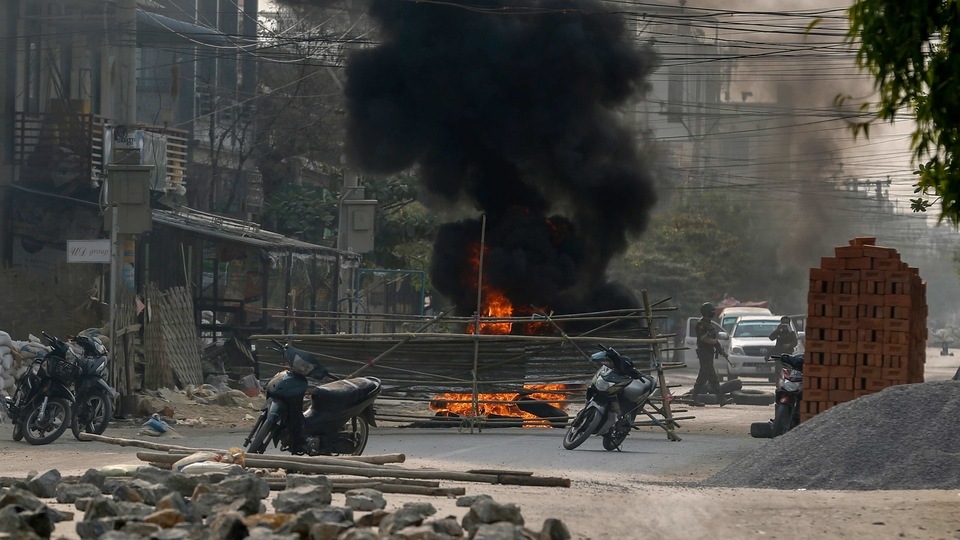
The girl, who had been shot inside her home, succumbed to her injuries yesterday, people working for a funeral service told news agency Reuters. She became the country's youngest victim so far in a crackdown by the junta against opposition to last month's military coup.
The ruling junta has accused pro-democracy protesters of arson and violence during the weeks of unrest and said it would use the least force possible to quell the daily demonstrations. Although the military has said that 164 protesters in total have so far died in the resultant clashes, the Assistance Association for Political Prisoners (AAPP) activist group says at least 275 people have been killed in the security forces' crackdown.
Soldiers shot at her father but hit the girl who was sitting on his lap inside their home, the deceased girl's sister told Myanmar Now media outlet. Two other men were also killed in the township, according to the network. The military had no immediate comment on the incident.
As night fell, candle-lit vigils were held in the country's commercial capital Yangon and other cities. At least 20 children aged under 18 have reportedly been killed since the junta took charge last month, according to AAPP and aid group 'Save the Children'. Human rights organisations have also expressed concern over the "hundreds of young people" being held in detention.
"We are horrified that children continue to be among the targets of these fatal attacks on peaceful protestors," read a statement issued by Save the Children.
The Myanmar office of the United Nations children's agency said "the continuing use of force against children, including the use of live ammunition, by security forces is taking a devastating toll on children in Myanmar." UNICEF added that since the crisis started at least 23 children had been killed and at least 11 others seriously injured.
Last month, twenty people were injured and two killed in Mandalay when security forces tried to disperse protesting opponents, according to the Parahita Darhi volunteer emergency service agency.
The junta has faced international condemnation for staging the coup that halted Myanmar's slow transition to democracy and for its lethal suppression of the protests that followed. It has tried to justify the takeover by saying a November 8 election won by Aung San Suu Kyi's National League for Democracy (NLD) was fraudulent - an accusation the electoral commission has rejected. Military leaders have promised a new election but have not set a date and have declared a state of emergency.
Many businesses in Yangon remained shut today and streets were deserted after anti-coup activists called for a silent strike, even as Myanmar's junta freed hundreds of detained demonstrators on Wednesday. Around 2,000 people have been arrested till now in the military crackdown on the protests against the February 1 coup, AAPP activists said.
The demonstrators are demanding the restoration of the elected government, the release of Suu Kyi and others and the scrapping of a 2008 constitution, drawn up under military supervision, that gives the army a major role in politics.
The military is pressing charges on Suu Kyi faces for allegedly violating a Natural Disaster Management Law as well as illegally importing six walkie-talkie radios.
The Myanmar leader, who won the Nobel Peace Prize in 1991 for her campaign to bring democratic civilian rule to Myanmar, has been in detention since the coup and faces the charges that her lawyer says have been cooked up to discredit her. The ousted leader was due to appear for another court hearing via video conferencing on Wednesday, but the head of her legal team Khin Maung Zaw said it had been postponed until April 1, marking the second successive delay due to internet issues.
(With inputs from Reuters)


