
 E-Paper



Nasa InSight lander reveals deep interior of Mars for first time
Three research papers based on InSight’s seismometer data have provided much-awaited details on the depth and composition of Mars’ crust, mantle, and core.

 Prefer HTon Google


The seismometer of Nasa’s Insight lander has revealed details about the deep interior of Mars for the first time. Before InSight’s touchdown on the Martian surface in 2018, Nasa’s study of the Red Planet through the rovers and orbiters was primarily concentrated on its surface. But three research papers based on InSight’s seismometer data have provided much-awaited details on the depth and composition of Mars’ crust, mantle, and core.
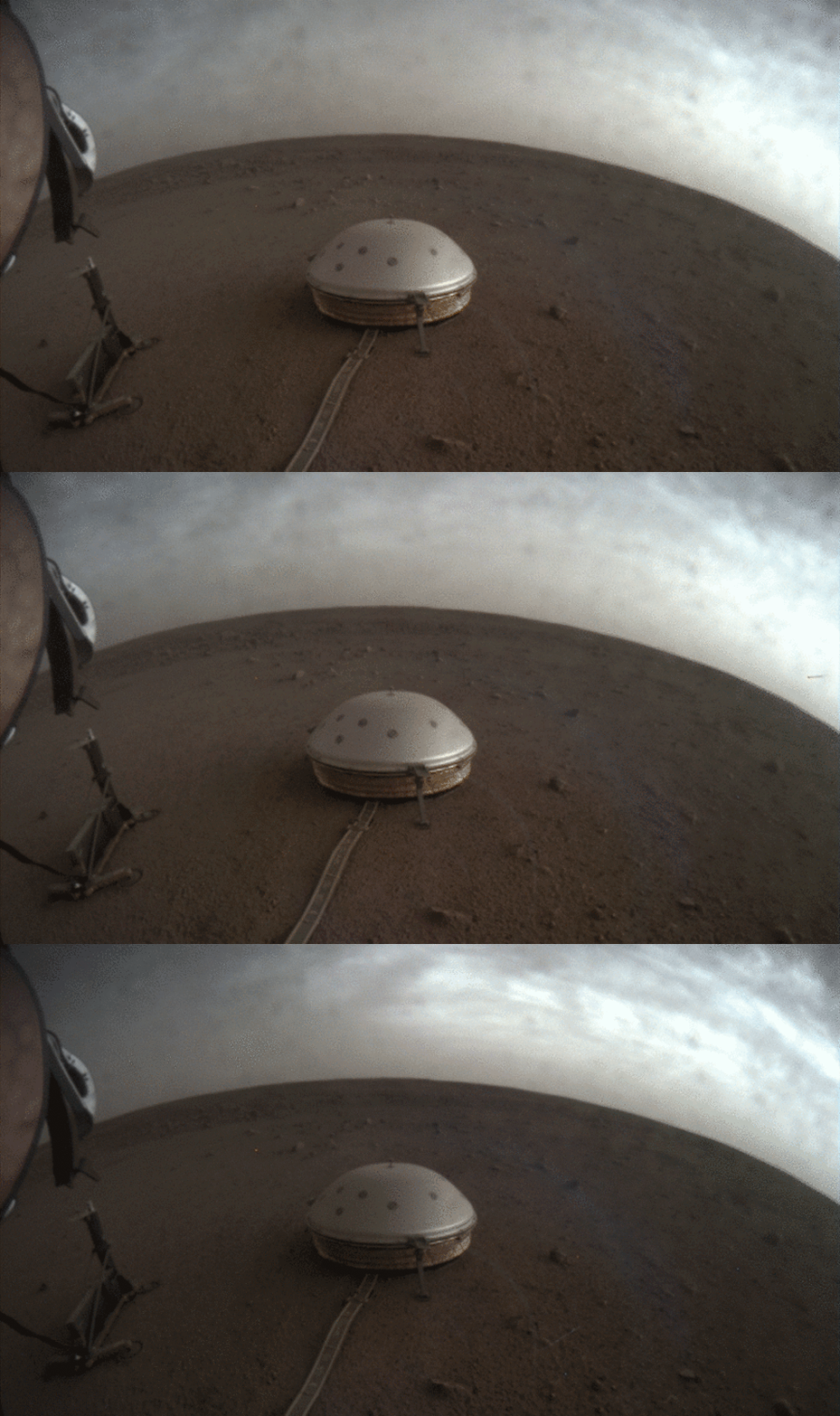
In the study, the scientists confirmed that Mars’ core, which has a radius of 1,830 kilometres, is molten. They will continue using InSight data to determine whether its inner core is solid like the Earth’s. The crust was thinner than expected and scientists believe that it may have two or even three sub-layers. The crust could be as deep as 20 kilometres with two sub-layers and 23 kilometres if there are three.
“This study is a once-in-a-lifetime chance,” Simon Stähler, lead author of the core paper, stated. “It took scientists hundreds of years to measure Earth’s core; after the Apollo missions, it took them 40 years to measure the Moon’s core. InSight took just two years to measure Mars’ core.”
InSight’s seismometer has recorded over 700 marsquakes and many of them between 3.0-4.0 magnitude, supporting the idea that the location is seismically active. While Mars has no tectonic plates unlike Earth, it does have volcanically active regions that can shake the surface.
“We’d still love to see the big one,” said JPL’s Mark Panning, co-lead author of the paper on the crust. “We have to do lots of careful processing to pull the things we want from this data. Having a bigger event would make all of this easier.”


