E-Paper



Ontario farmer used buried cotton briefs to gauge soil activity; he reported corn yields were 15 bushels per acre higher after red clover in 2012
Ontario farmer Blake Vince popularized burying cotton underwear to gauge soil activity. More decay may signal active microbes, though conditions affect results.

 Prefer HTon Google


What if a pair of white cotton underwear could reveal whether a farm’s soil was biologically active? For Ontario farmer Blake Vince, that idea became the basis of an unconventional soil-health experiment. By burying cotton briefs for about two months and then digging them up, Vince and other farmers behind the “Soil Your Undies” campaign created a simple visual test for biological activity. In healthier, biologically active soil, microorganisms break down the cotton more rapidly, leaving less fabric behind.
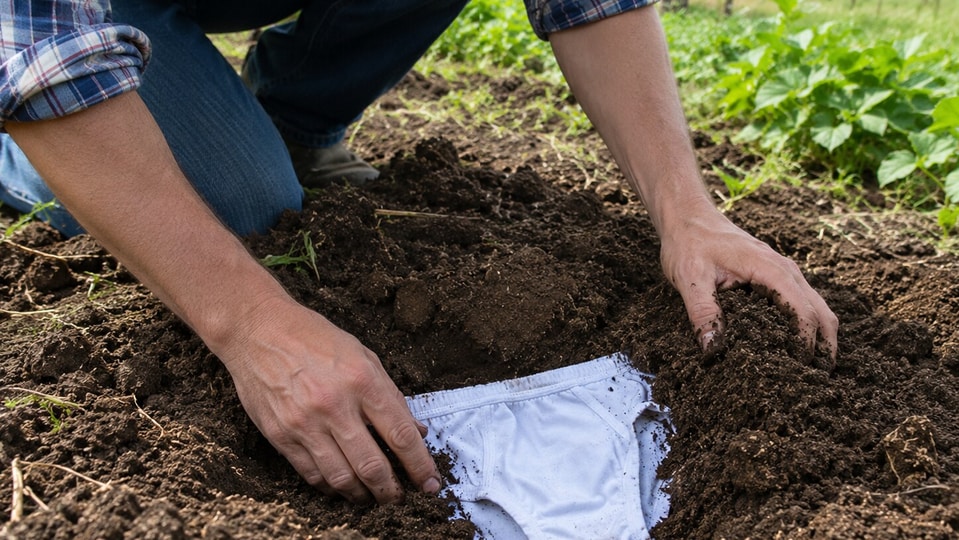
John Deere's The Furrow later reported that underwear buried in no-till fields with cover crops in southwestern Ontario typically had about 47% of the fabric missing, compared with about 2% in conventionally tilled fields. The test was not intended to replace laboratory soil analysis. Instead, it offered farmers an easy way to see that soil is more than a growing medium. Beneath the surface, bacteria, fungi, earthworms, and other organisms help decompose organic material and cycle nutrients.
From no-till roots to a simple cotton test
Vince farms near Merlin in southwestern Ontario, an area close to Lake Erie. His family adopted no-till practices in the 1980s, and Vince began strip-tilling corn in 2007. His current rotation has included corn, soybeans, and winter wheat, with cover crops such as red clover, oilseed radish, and Austrian winter peas. The idea behind the underwear experiment was straightforward. Cotton is an organic material that soil organisms can consume. If a buried pair shows substantial decomposition after several weeks, it suggests biological activity in the surrounding soil. If the fabric remains largely intact, the soil is showing less visible decomposition.
A comparison made by Vince himself showed a clear visual difference between conservation farmland and conventionally tilled land. Later, the movement urged farmers to experiment themselves. The study suggests a link between cover crops and soil biology. A 2020 meta-analysis in Soil Biology and Biochemistry found that cover cropping increased soil microbial abundance by 27% and microbial activity by 22%, although the effects varied with climate, tillage, and how cover crops were terminated. That makes the cotton test useful as an educational tool, but it should not be treated as a precise measurement of soil health. Many factors influence how quickly cotton decomposes, including moisture, temperature, soil conditions, and the composition of the microbial community.
Red clover also became part of the experiment
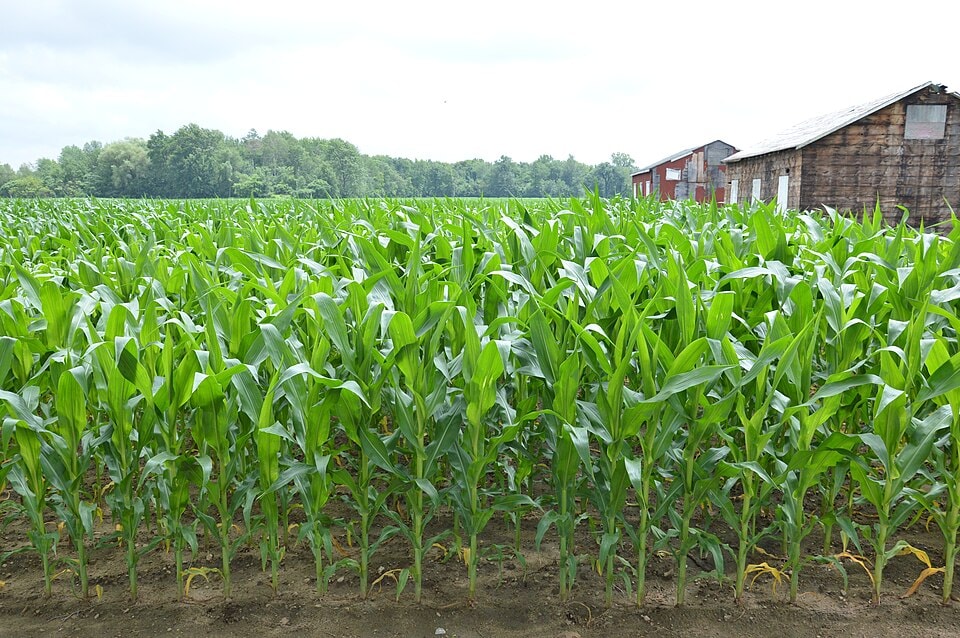
However, increased soil biological activity was only one of Vince’s goals. Other considerations included reducing tillage, conserving water, and lowering input costs. In his experience, corn yielded best when it was planted after winter wheat overseeded with red clover. According to Vince, in 2012 his strip-till corn yield after a double-cut red clover cover crop was 15 bushels per acre higher than conventionally tilled corn. However, he said his estimate was conservative because improved corn genetics made it hard to separate their effect from strip-tillage and cover cropping.
Red clover can provide more than just ground cover. As a legume, it can capture atmospheric nitrogen through nitrogen-fixing bacteria, potentially supplying part of the next crop’s nutrient needs. Recent Ontario research has found similar results. A Grain Farmers of Ontario project reported that red clover produced the highest corn yield among the cover-crop treatments in its 2022 results, at 11.35 metric tons per hectare, compared with 7.16 metric tons per hectare for the no-cover control. The researchers also found that results varied between years, showing how important establishment and growing conditions are.
A farming system built around living soil
Vince's strategy involves more than one cover crop or a single buried pair of underwear. With strip-till, most of the field remains undisturbed while planting zones are prepared. This means the soil surface remains largely covered with residue. Cover crops can keep living roots in the field when no cash crop is growing. Both biological and physical soil properties can be affected by the combination of cover crops and reduced tillage.
For Vince, the practical benefits include lower fuel use and fertilizer costs, alongside a focus on soil health. In a 2013 account, he said he had reduced fertilizer rates by about 33% after adopting strip-tillage, though he cautioned that higher yields could not be attributed solely to the practice because genetics and other management changes were also involved. The underlying science continues to develop.
A 2025 study in Applied Soil Ecology found that no-till systems with cover crops increased soil microbial populations compared with no-cover and tilled systems, while also improving microbial resilience during mid-season drought. A simple cotton brief is more a catalyst for discussion than a scientific tool. It gives farmers the chance to bury it, dig it up again, and see the results with their own eyes. Vince saw that soil is more than a growing medium; it is a living system.