
 E-Paper



Pakistan air pollution: Multan's AQI crosses 2,000-mark; Punjab closes parks, schools | Details
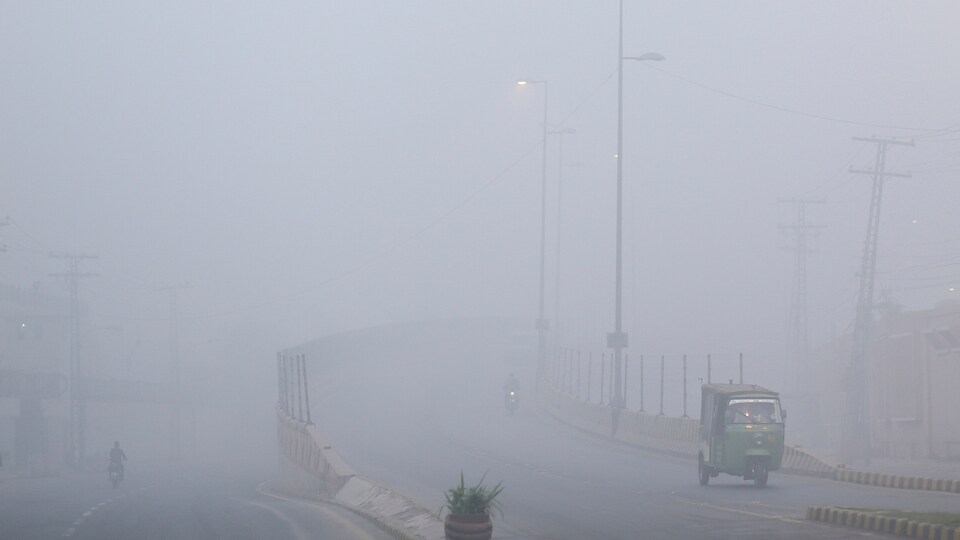
Pakistan experienced a surge in air pollution, with seven cities ranking among the world’s most polluted.

 Prefer HTon Google


The Punjab government in Pakistan has ordered the closure of amusement parks, museums and schools across several districts for 10 days, from November 8 to 17, amid hazardous smog levels, ARY News reported.
The ban, issued on Friday, impacts districts such as Lahore, Gujranwala, Faisalabad, Multan, Sheikhupura, Kasur, Nankana Sahib, Gujarat, Hafizabad, Mandi Bahauddin, Sialkot, Narowal, Chiniot, Jhang, and Toba Tek Singh, as well as Lodhran, Vehari, and Khanewal, which are also under smog-related restrictions.
Multan, the largest city in south Punjab, recorded an Air Quality Index (AQI) reading of 2,135 between 8am and 9am on Friday, according to IQAir, a Swiss air quality monitor.
The concentration of PM2.5 — fine particulate matter in the air that causes the most damage to health — was 947 micrograms per cubic metre, which is 189.4 times above the WHO guideline, according to IQAir.
The AQI in Multan reached 980 by 10pm, at least three times over the 300 mark considered “hazardous”, Dawn reported
Three air quality monitors in Multan at the WWF-Pakistan Office, Shamsabad Colony and Multan Cantonment showed AQI readings of 2,316, 1,635 and 1,527, respectively, at 10pm.
The Punjab education department has mandated the closure of tuition centres and academies. According to Geo News, private and public schools up to the higher secondary level across affected districts will remain closed until November 17, a government notification stated.
Earlier on Friday, Pakistan experienced a surge in air pollution, with seven cities ranking among the world’s most polluted. Meteorologists predict worsening smog, with wind speeds dropping to 11 km/h in Lahore and 7 km/h near Multan. The air quality index (AQI) recorded a staggering 2,135 in Multan and 676 in Lahore. Cities like Peshawar, Islamabad, Haripur, Rawalpindi, and Karachi were also labelled as having ‘hazardous air quality’.
Toxic smog in Lahore
Lahore, Pakistan’s eastern city, has been engulfed in a blanket of toxic smog for days, prompting authorities to restrict activities and form a panel to coordinate preventive measures.
On Thursday, Lahore topped the world’s pollution rankings with an air quality index (AQI) of 784, as reported by IQAir. The city’s air quality has been perilously high for weeks, frequently exceeding AQI levels of 1,000.
According to IQAir, which collects data from 14 regional monitoring stations, Lahore was rated the world’s most polluted city on Wednesday, with a shocking AQI of 1,165 – over 120 times the level recommended by the World Health Organization (WHO).
Geo News reported that prolonged exposure to poor air quality has led to a spike in hospitalisations for respiratory illnesses in Lahore and other heavily impacted cities, including Multan, Kasur, Sheikhupura, and Gujranwala.
Residents continue to struggle with the health impacts of the hazardous smog, which has made even daily activities difficult. Health experts are urging Lahore’s citizens to wear masks when outdoors to reduce exposure to the dangerous air.


