
 E-Paper



Pakistan done playing peacemaker? May end up on US-Israel side vs Iran due to Saudi defence pact
Pakistan and Saudi Arabia signed Strategic Mutual Defence Agreement last year, pledging that any attack on either nation would be treated as one on both.

 Prefer HTon Google


Iran's attacks on energy facilities in Saudi Arabia — its long-term nemesis which houses US military bases — on Tuesday put Pakistan's top civil and military leadership in a bind, at a time when it was trying to play peacemaker in a conflict that has created global ripples and is now in its second month.
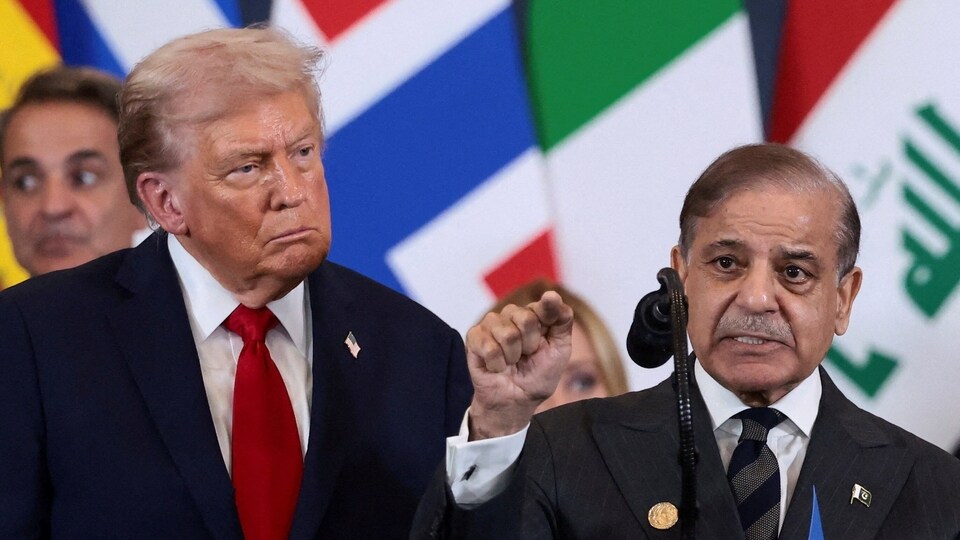
At the heart of the bind is a defence pact that nuclear-armed Pakistan has with its oil-rich patron Saudi Arabia.
Pakistan's tricky situation
For six weeks so far, Pakistan walked a precarious tightrope — condemning American and Israeli strikes on Iran, then also condemned Iran's retaliatory strikes on Gulf states as "blatant violations of sovereignty", while simultaneously reaffirming its defence obligations to Saudi Arabia; and all this while serving as a communication channel between Washington and Tehran. It even got Saudi along as a fellow mediator.
On Tuesday, that tightrope all but snapped.
"The Government of Pakistan expresses its deep concern and unequivocal condemnation of the missile and drone attacks carried out by the Islamic Republic of Iran last night against energy facilities in the Eastern Region of the Kingdom of Saudi Arabia," the Pakistan Foreign Office said on Tuesday, April 7.
This came as US President Donald Trump heightened threats just hours ahead of his 8pm ET (5:30 IST, Wednesday) deadline for Iran to reopen the global oil route Strait of Hormuz. Trump said the strait be opened or “a whole civilization will die tonight, never to be brought back again”.
Iran, facing attacks on its energy facilities, hit back with its own threat: of putting the entire Gulf region into “darkness”, and years of oil and gas shortage for the world.
Pakistan called Iran's attacks on Saudi infrastructure a "dangerous escalation" while there was no clarity if the peace process was still on. The US has put a 15-point proposal on the table, which Iran has rejected and countered with its own 10 points.

Munir-led army condemns Iran
Amid this, the Pakistan Army, which de factor runs the otherwise democratic country, issued a statement after a commanders' conference at its headquarters in Rawalpindi, chaired by Field Marshal Asim Munir.
"The Forum noted with concern and vehemently condemned the latest attacks on Saudi's petrochemical and industrial complex as an unnecessary escalation which spoils sincere efforts to resolve the conflict through peaceful means," it said.

"The restraint and calibration so far exhibited by Saudi Arabia, despite grave provocations, enabled mediation and diplomatic resolution; however, such unwarranted aggressions have serious repercussions, to spoil the ongoing peaceful options and conducive environment," it warned.
A Pakistani security source told news agency Reuters that if the Saudi kingdom were to retaliate, "the talks would be over", and Pakistan could be drawn directly into conflict against Iran.
Given its long land border with Iran, Pakistan has for long been a logistically possible launchpad for ground invasion by US troops. So far, it's been a war of airstrikes, while Pakistan has been fighting its neighbour Afghanistan in a stop-start war of its own.
Also read | Taliban-shaped albatross around Pakistan’s neck
A bitter irony is that at the very moment Iran struck Saudi facilities, Pakistan was engaged in an intensive phase of its mediation effort.
Field Marshal Munir had spent the night in direct contact with US Vice President JD Vance, US Special Envoy Steve Witkoff, and Iranian foreign minister Araghchi, working to finalise what sources had tentatively dubbed the "Islamabad Accord". It was to be a two-phase framework involving an immediate ceasefire, the reopening of the Strait of Hormuz, and in-person talks in Pakistan's capital, news agencies reported.
Iran had even formally submitted its 10-point counter-proposal to Washington via Pakistani intermediaries. Trump called it "significant" but “not good enough”. Negotiations were, by multiple accounts, at their most active.
Then came the strikes on Saudi Arabia.
'Attack on one is attack on both'
Pakistan and Saudi Arabia signed a Strategic Mutual Defence Agreement last year, pledging that any attack on either nation would be treated as an act of aggression against both.
In September 2025, Prime Minister Shehbaz Sharif and Saudi Crown Prince Mohammed Bin Salman signed the agreement in Riyadh. Its central clause is modelled on NATO's Article 5, which says any aggression against either nation shall be considered aggression against both.
Pakistan foreign minister Ishaq Dar had even asserted to Iranian FM Abbas Araghchi the pact's existence. Iran had until Tuesday largely spared Saudi Arabia from its most strikes.
Now that that restraint ends, Pakistan is struggling to claim total neutrality.
Shot at India too
Pakistan's army commanders, at their Rawalpindi meet on Tuesday, also took a neighbourly shot, blaming "persistent disinformation, baseless allegations, and false flag narratives attributed to India" among reasons for the peace process not following through.
India, which has so far stuck to its stance of “strategic autonomy” and called for dialogue, had lampooned Pakistan over trying to play peacemaker while being “a terror hub”.
The Indian government two weeks ago had slammed Pakistan at an all-party meeting in New Delhi on the West Asia crisis. External affairs minister S Jaishankar was reported to have said, “We are not a dalaal nation,” employing a near-pejorative term for ‘broker’ or mediator.
The Opposition in India had questioned the PM Narendra Modi-led regime's stance, and alleged an “immoral” pro-Israel bias against “centuries-old ally” Iran, particularly as Modi had visited Israel just two days before the war began and had pledged solidarity in general.
But the Indian government said at the meeting that PM Modi had conveyed to President Trump that the war must end soon. India has kept channels open with Iran too, even getting oil tanker passage via the Strait of Hormuz as a “friendly” gesture.
Pakistan has been cosying up to Trump's America by singing his praises, backing his demand for a Nobel Peace Prize, and backing the mercurial US President's claim that he brokered a ceasefire between Delhi and Islamabad during a military conflict in May 2025. India has firmly said it allowed no such mediation in bilateral matters.
Pakistan on Israel
On the Iran war, while Pakistan has maintained some level of neutrality, it continues to take an anti-Israel stance at large.
The Pakistan Foreign Office also on Tuesday condemned in the “strongest possible terms” the storming of the Al-Aqsa Mosque “by Israeli occupation forces” in Jerusalem. "This reprehensible act constitutes a direct assault on the sanctity and historical character of the holy site and is a violation of international law and relevant United Nations resolutions," it said.
(Inputs from AFP, Reuters, Iranian state media)


