
 E-Paper



Parents Are Spending Fortunes to Turn 6-Year-Olds Into F1 Drivers
Private tracks are popping up around America to support an influx of interest in youth karting—the onramp to joining a Formula One team.


 Prefer HTon Google


LANDRY DONAHUE knows what she wants to be when she grows up. Not a ballerina, not a veterinarian, not even a YouTube star. The 10-year-old has her sights set on Formula One—not just the track, but the podium.
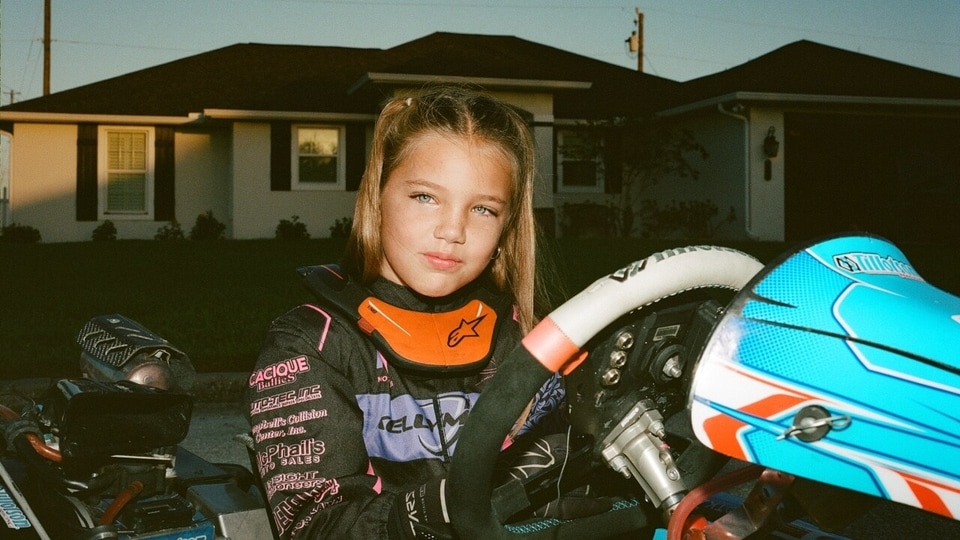
“I can easily do it,” Landry says. “I’m gonna go drive by Kimi Antonelli”—the champion Italian F1 Mercedes driver—“and I’ll be like, ‘Bye, loserrrrrr!’ ”
Landry is from Aspen, Colorado, and has been driving since she was 6. She used to horseback ride, but once she tried karting, “I was like, ‘Yeah, that’s better,’ ” she says. “I still like horses. But this is horse-powered.”
Minutes ago, Landry was loudly proclaiming to everyone in earshot at P1 Motor Club in St. Lucie, Florida, that she haaates karting and had stomped away from her vehicle after it stalled on the track.
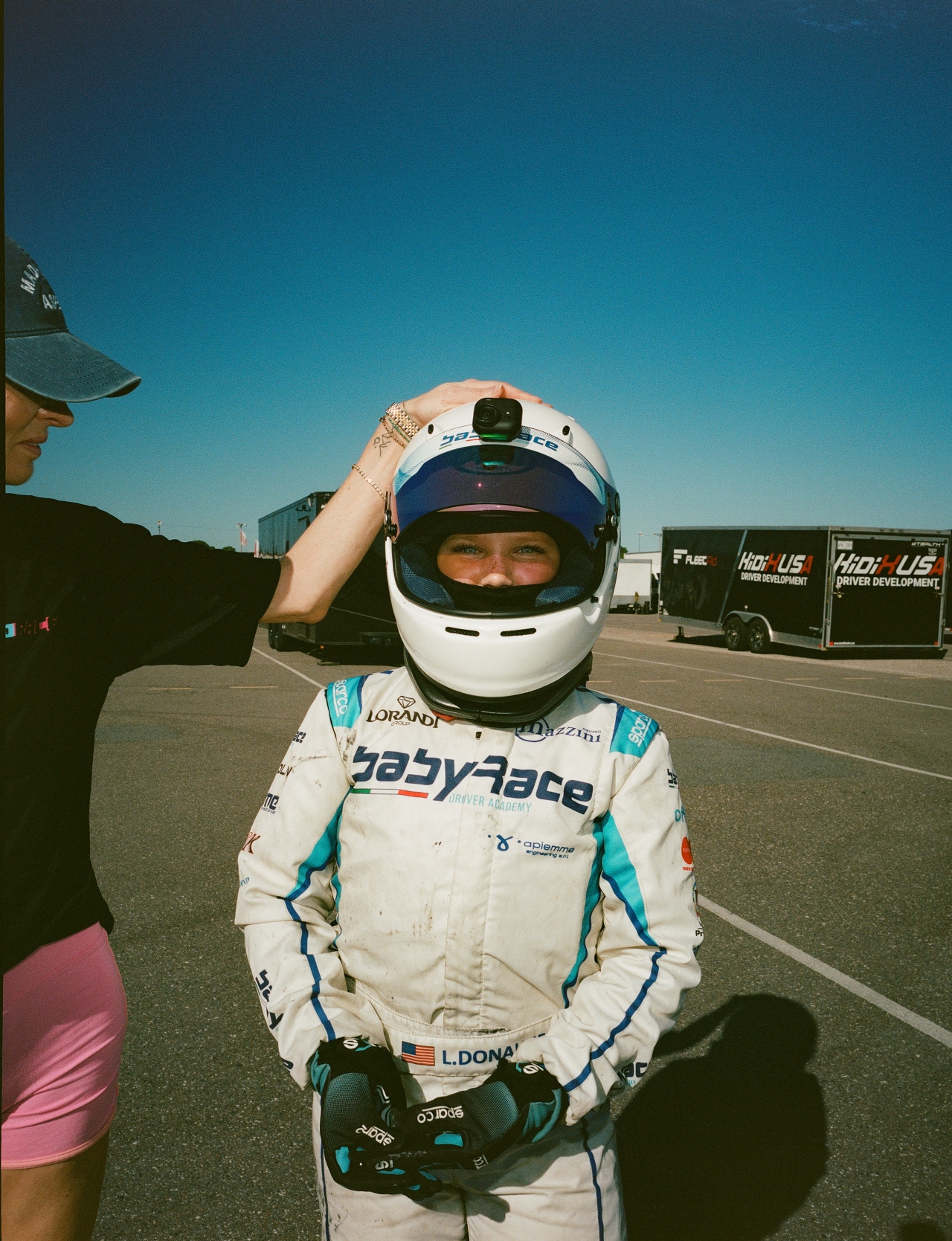
“With kids this age, the reactions tend to be enormous,” says Aurora Straus, co-owner and president of P1, standing nearby. “They are tiny, unfiltered versions of ourselves. You have to be like, ‘Calm down. You don’t hate this.’ ” Sure enough, once the club’s mechanics detailed and refueled Landry’s kart, she was zipping around the track at 60 miles per hour and is now gushing about her favorite driver. “Susie Wolff! She’s, like, a really good girl race-car driver. She even wrote a book.”
Straus, a professional race-car driver, is the latest entrepreneur to see the business opportunity in kids’ karting. With a five-year, $200 million build-out, she plans to turn 600-plus acres of undeveloped land into a family-friendly motorsports club, complete with children’s classes and on-site mechanics, chefs and butlers. Initiation membership is just shy of $200,000; 285 people have signed up, Straus says, including Donahue’s parents, who are currently house-hunting in the area.
Over the past decade, Formula One has gone from a European motorsport to a lifestyle brand that has spread throughout American culture. Karting, where drivers zoom around in open-cockpit racing vehicles, is seen as an on-ramp for children who dream of becoming the next Lewis Hamilton. Private tracks in South Florida, Arizona and the New York tri-state area are seeing an influx of families with kids picking up the sport, and facilities are reporting record reservations. Some American families are uprooting to be close to tracks and programs where their kids can get the best shot at going pro.
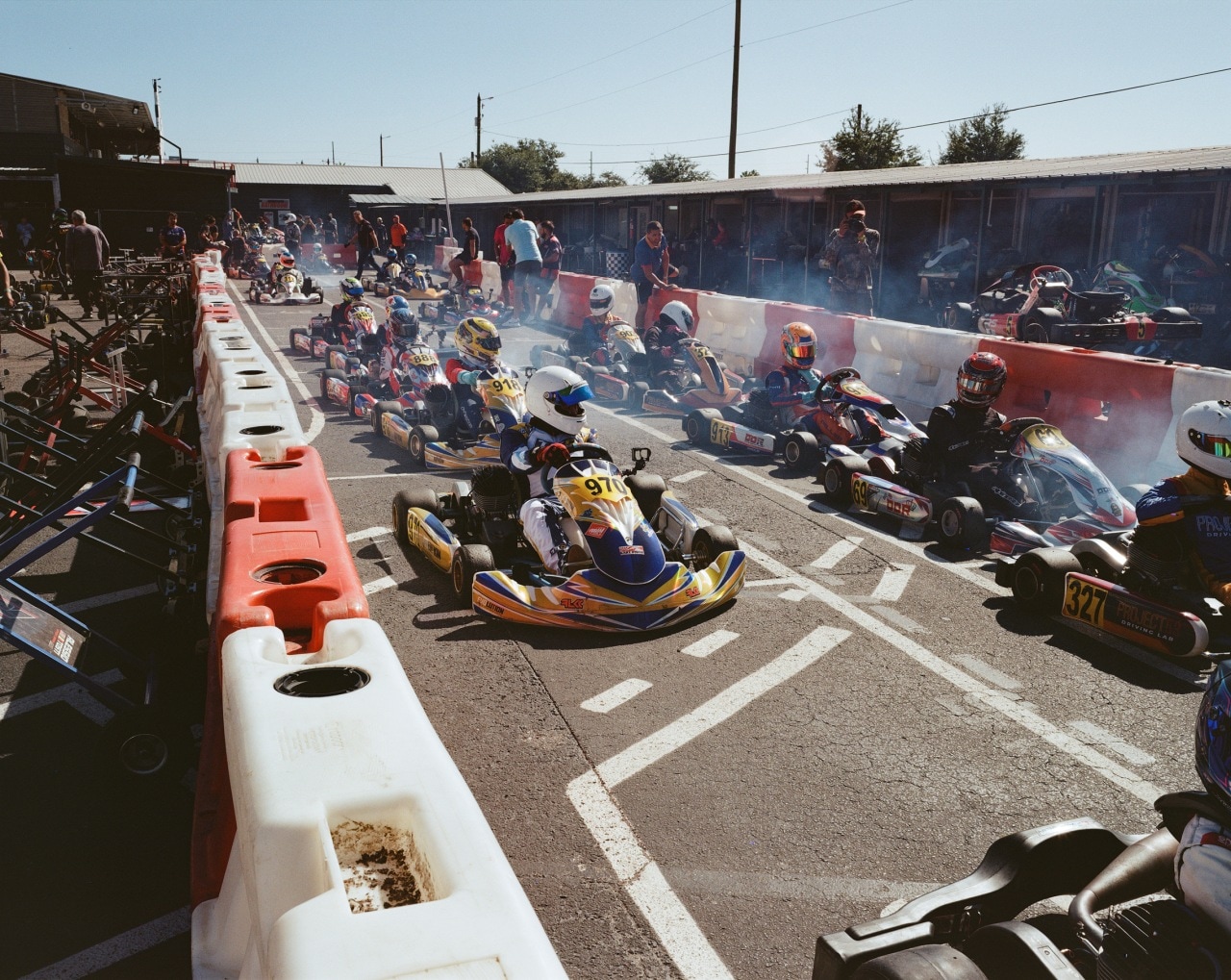
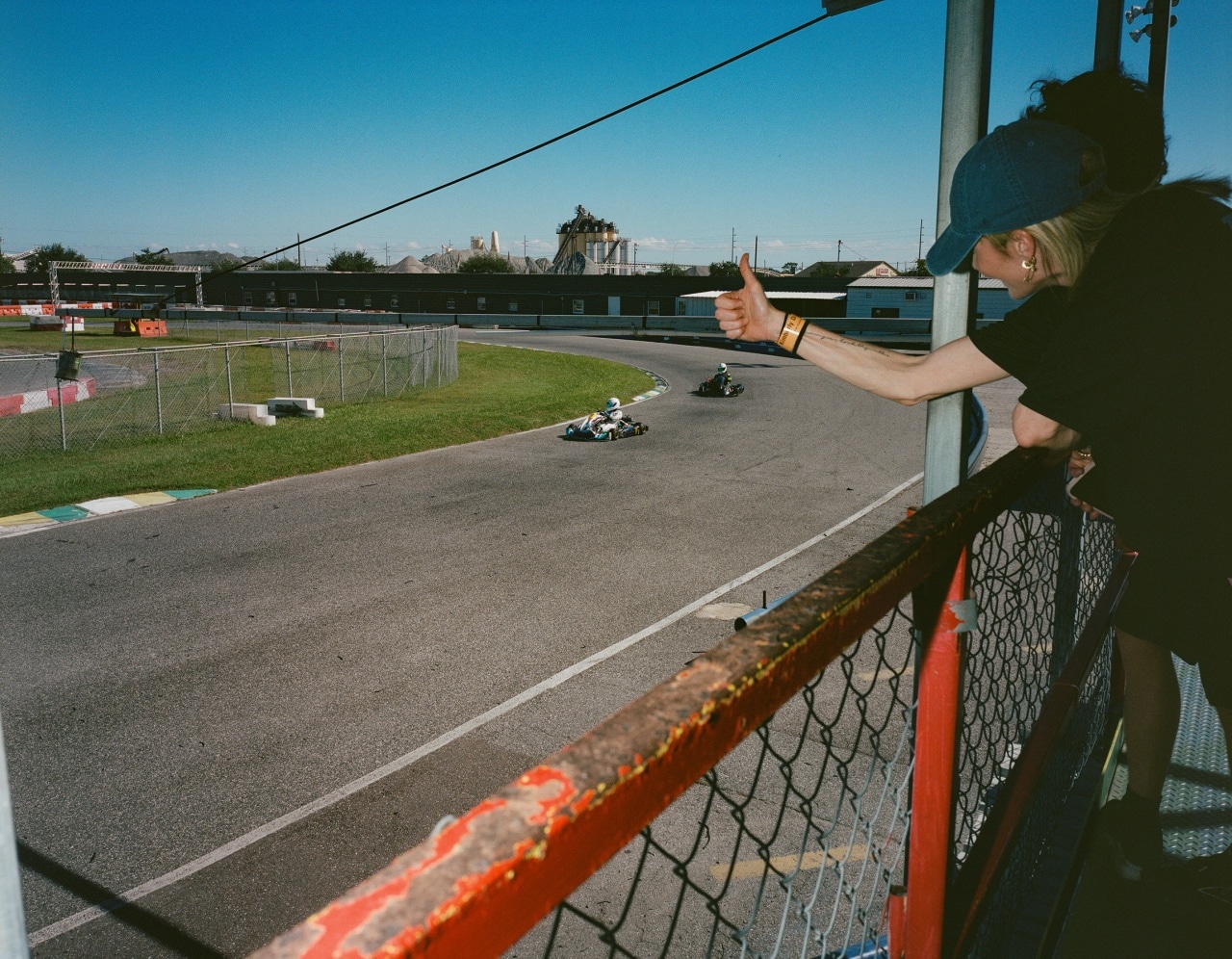
“Two years ago, it was a handful of kids on weekends, but today it’s so busy,” says Ionel Porumb, general manager and chief operating officer of Monticello Motor Club, a private automotive country club in New York’s Catskill region where families pay $175,000 for membership. Children’s karting reservations at the club have grown by 84% since 2024. “Everyone wants to see their kids become the next F1 driver,” Porumb says.
Like any youth sport, karting presents ample potential for injury and requires of its athletes a fearlessness that comes naturally for certain children. Parents too need nerves of steel to watch their kids hit 70 miles per hour on the track. It helps that many of them are enthusiasts themselves—fans of the sport if not drivers themselves.
Nick Donahue, Landry’s father, owns a real estate company and openly admits he has a “car problem.” Donahue, 41, started racing when his wife, Kim, gave him lessons for his 30th birthday. He’s gotten all five of their kids involved, though Landry takes it the most seriously. He says he spends about $80,000 a year on Landry’s F1 aspirations. The family pays for a karting coach and a mechanic.
“I want to support her dream, but I don’t want her to be living my dream,” he says. “But she really seems to be into it. She never gives up.”
YOUTH SPORTS have gotten more expensive and competitive as parents look to distinguish their children at a time when college NIL deals can earn athletes serious cash. But the $10,000 some families spend annually on travel baseball can sound modest compared to what it costs to kart competitively.
“You can easily rack up $300,000 a season,” says Straus, calculating the costs of track reservations, coaching, tires, fuel, gear, equipment, mechanics, racing fees and travel. Straus has run summer camps for $20,000 a week and says some top coaches charge $3,000 a day.
For those who plan to cruise down the path of F4, F3 and F2 to eventually get to F1, the costs can go up to $8 million, at least according to retired Dutch F1 driver Robert Doornbos. “My biggest concern is that we’re no longer necessarily finding the most talented drivers, but often the most financially supported ones,” he said in an email.
Alex Popow Jr. says the majority of kids he sees at the tracks in South Florida are middle class, and they are spending “a couple thousand.” But he’s also encountering “people with all the money in the world.” Those tend to be “people in Miami who you can say have new money from tech, fintech and real estate,” the 20-year-old driver and coach says. Popow charges about $450 a day for his kart coaching services while he puts himself through college.
He’s at P1 today with his protégé Colton Bruck, a 12-year-old Tampa resident with the demeanor of a Marine. Straus is driving the kids around the newly paved track in a Mercedes G-Wagen: Colton is next to Landry, and sitting shotgun is Mila Welborn, a soft-spoken 7-year-old whose giant blue eyes sparkle like a Pixar character’s.
The kids begin to casually discuss complex concepts in physics: g-force, apex, throttle input, when to brake on that third turn. I think of my 9- and 6-year-old boys back at home, who howl at poop jokes, refuse to sit very long for meals and fight like hell over who gets which Lego. What kind of child can be trusted to drive a kart at highway speed?
“Colton is super mature,” says Popow. “He packs his own bag. He wants to work hard. I treat him like an adult.”
That morning, he and Colton ran three and a half miles, stopping for push-ups, burpees and mountain climbers. “The actual racing is extremely physical. There’s a lot of force, heat and mental strain,” Popow says. “Not every 11-year-old is running in the morning, writing notes after every session. They learn to take accountability. The sport really makes you grow up.”
Karting teaches kids the “conditioning, the endurance, the mental fortitude” of racing, says Dicky Riegel, president and CEO of Lime Rock Park, a motorsports and racing venue in Lakeville, Connecticut. He describes it as a good activity for kids who don’t excel in group sports. “It is for an individual that is more cerebral,” he says.
Riegel’s track offers karting lessons starting at age 14. He describes the parents focused on kids starting as young as 3 as cases of “insanity.” He feels it’s an “incredibly misguided focus”—kids trying “lots of different sports is better for achieving coordination.”
Others believe the F1 track has to start as young as possible. Early exposure to karting teaches kids to “internalize and execute feedback,” Straus says. “I’ve put kids in go-karts who are 3, and I’ve said no to kids who are 8. It’s a maturity thing.”
Marc Hynes, chief racing officer of Cadillac’s F1 team, says that by the ages of “8 or 9, you need to be in serious competitions. You can certainly come to it later, but by 12, 13, you’ve missed your peer group.”
Landry’s parents say karting is helping with her development. “She could get really frustrated and then has to communicate professionally with a mechanic about what’s bothering her about the kart,” Donahue says. “That’s pretty good for a 9-year-old.”
Karting gives kids the sensation of speed and establishes reflexes. But close contact with the road and high-speed driving can also cause “catastrophic” injuries, says Dr. Daniel Green, chief of pediatric orthopedic service at New York City’s Hospital for Special Surgery, who has treated rib, wrist and leg fractures in the sport.
Green says gear like fire-safe suits and rib protectors that kids training with professionals wear is a “best-case scenario,” but he is concerned about the popularity of the sport leading to fatalities.
“Can it be done safely? The folks on the track say yes, but the question is, Why isn’t the speed lower?” he says. “When is the speed too high? And who is challenging this?”
Families and kids insist they’re taking precautions.
“It’s just like any other kids’ sport,” Landry says nonchalantly with a shrug. She points at her protective neck brace and bionic chest vest. “This protects my chest so I don’t break my ribs. And this is so I don’t snap my neck.”
COLTON’S FATHER, Chas Bruck, estimates he spends $10,000 on race weekends for his son, who usually competes once a month.
Bruck, 43, is the co-founder of a real estate developing firm, as well as a car collector. He raced cars himself in 2017 and 2018 and got Colton started with karting when he was 5.
“There are so many other things you can do in motorsports, and as a parent, I’m doing my best to let him see that,” he says. “I take him to car shows to meet car designers, car engineers, the corporate sales [people] of car manufacturers. Can he be a car engineer? Can he be a car designer?”
Karting race fees can go as high as $1,700 if they’re bundled with add-ons like tires or fuel. While some kids enter solo, others join teams that can charge as much as $15,000 for racing events in exchange for handling the kart, engineering, equipment, data gathering and access to the team’s tent.
“The logistics behind professional racing is like transporting a mini circus,” says Straus.
The industry is quick to note that money can’t buy kids a seat in F1. “You can’t just be a rich kid with a dream,” says Riegel. “You have to have the talent, the coaching, the development.”
“We basically gave up our lives,” says Alex Bergman, the mother of 11-year-old Josh Bergman. The family moved from Miami to Italy’s Lake Garda in 2025, and Josh is now on the F1 Red Bull Junior Team. “We wouldn’t be doing it if we didn’t have the belief he’s on the right path.”
Josh says he misses his older siblings in Miami and stays in touch with his friends through Fortnite, No Hesi and Forza Horizons. “Most people are really nice,” he says about his new life in Italy, where he’s typically karting four days a week while being homeschooled. “When you go out there, it’s all about who’s fastest, but also, how can you improve?”
Josh’s father, James, works in real estate and credit card payment processing. He believes the move to Italy was crucial for his son’s future. “The pinnacle of world motorsports at this age is Europe, and Italy specifically,” Bergman says.
KEVIN WELBORN, 35, was raised in Sebring, Florida’s racing capital, where his family lives now. “If I was the kind of parent to force my kids into any sport, they’d have a bat and ball in their hands,” says Welborn, who played college baseball.
His 7-year-old, Mila, became passionate about karting after attending a hometown speedway race a few years ago. She loves the way it makes her feel. “You know the air, when it comes to your face? I like that feeling a lot,” she says.
She’s spinning around in a swivel chair in her bedroom. There’s a math quiz tomorrow and dance practice in an hour, but all Mila wants to do is hop on the karting simulator next to her bed. “It’s funner than homework,” she says.
Hanging above her bed, which is dressed in butterfly linens, is a framed photograph of the champion McLaren F1 driver Lando Norris. A children’s book about his life sits on her nightstand. “I like him because he’s fast and he’s good,” she says. Two nights ago, she adds, “I dreamed I high-fived him.”
Welborn, a financial adviser, and his wife, Ingrid, a public school psychologist, aren’t trying to move to Europe. Instead, they’re spending $12,000 a year to help their daughter go pro in the U.S. Welborn says he’s scrappy about it: Mila races in-state, and he saved money by learning how to be his daughter’s mechanic. Mila also has sponsors, including the Porsche professional sports car racing team Kellymoss.
The family garage has an old orange Nissan sports car Welborn used to work on for fun, but the space is now crammed with old karts, Welborn’s dreams of the past shuffled to the back to make room for new ones.
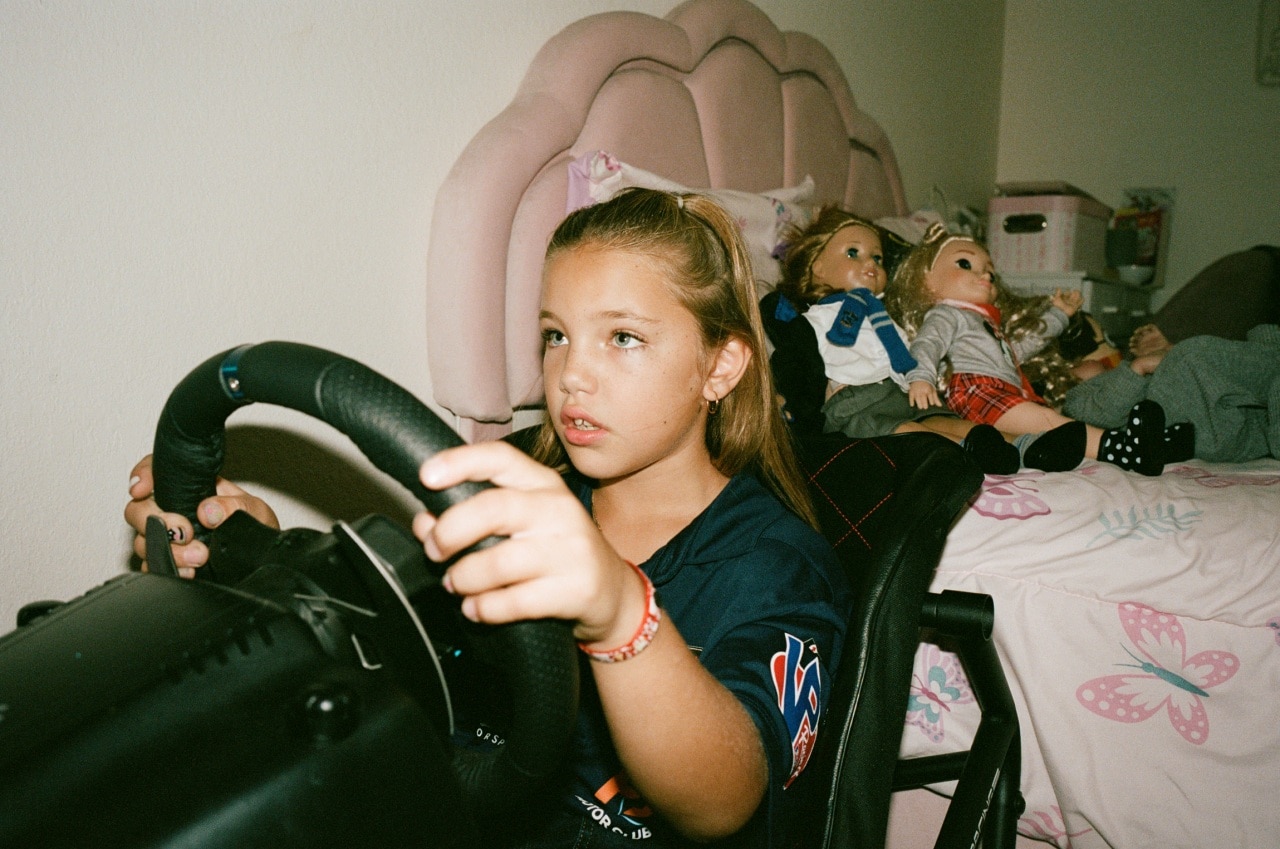
The Welborns can’t afford to become members at a private club, but have a deal with Straus to get limited access to her P1 track and her coaching in exchange for using Mila for promotion. She’s “very marketable,” says Straus, who has an agenda to bring more girls into karting in general.
When she grows up, Mila says she wants to be an F1 coach on weekends and a “baby doctor” during the week, or maybe a dancer. She says it’s hard for her to sit at school, though it’s a breeze to drive her kart for hours on end, flying around the track until the place wants to turn the lights off.
“When you’re on a really good turn or lap, I feel the apex in my tires,” she says, “and it makes me excited.”


