
 E-Paper



Pfizer-BioNTech Covid vaccine: Canada issues advisory on adverse reaction
Health Canada has updated the product information about very rare reports of Bell’s Palsy (typically temporary weakness or paralysis on one side of the face) following vaccination.

 Prefer HTon Google


Canadian health authorities have updated the labelling for the mRNA Covid-19 vaccine manufactured by Pfizer-BioNTech, warning of an adverse reaction related to a condition called Bell’s Palsy.
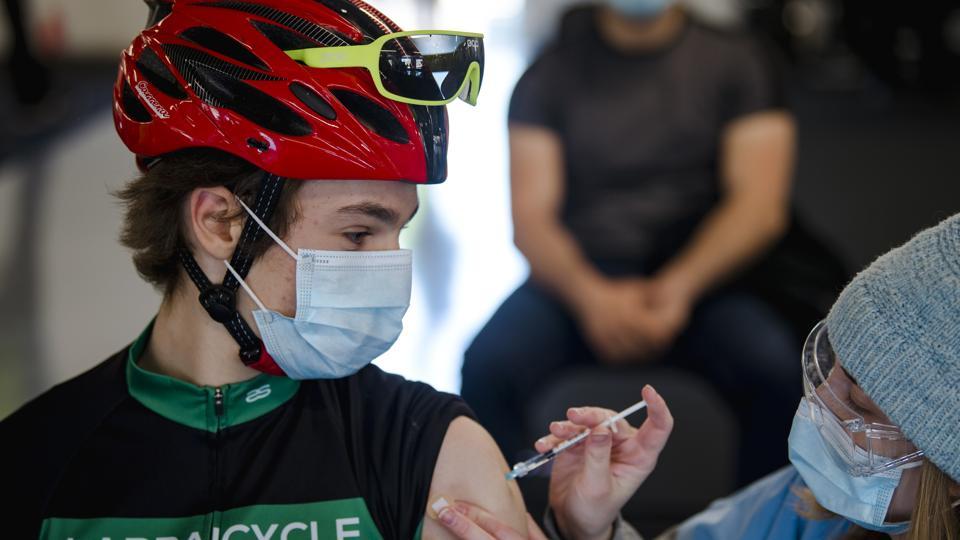
In an advisory issued on Friday, Health Canada said it “has updated the product information” for the Pfizer-BioNTech Covid-19 vaccine to “describe very rare reports of Bell’s Palsy (typically temporary weakness or paralysis on one side of the face) following vaccination”.
Such cases, it said, had been reported in Canada and internationally. According to the outlet Global News, there have been 206 such cases reported in Canada, a small fraction of the number of doses of the vaccine administered in the country.
Health Canada added that the vaccine label for the other mRNA vaccine authorised in the country, manufactured by Moderna, “already contains safety information” about this possible outcome and that it is “continuing to assess this issue for all authorised Covid-19 vaccines in Canada”.
Bell’s Palsy, it noted, is an episode of facial muscle weakness or paralysis and the condition is typically temporary. Symptoms appear suddenly and generally start to improve after a few weeks. The exact cause is unknown. It’s believed to be the result of swelling and inflammation of the nerve that controls muscles on one side of the patient’s face.
Despite these adverse events, it stressed that Covid-19 “vaccines continue to be safe and effective” and their benefits “continue to outweigh their potential risks”.
In fact, the number of cases reported of adverse reactions to all vaccines approved in the country is tiny. According to data from the Public Health Agency of Canada of the total 11,471 individual reports of reactions, 8,622 were considered non-serious while 2,849 were considered serious but comprised just 0.006% of all doses administered.


