
 E-Paper



Rare praise for Delhi Police in UK’s Sanjeev Chawla judgment
After his case went through the Westminster Magistrates Court, the high court of England and Wales and the European Court of Human Rights in Strasbourg, Chawla was finally extradited and escorted to India by a team of the Delhi Police.


The quality of paperwork or evidence submitted by Indian law enforcement agencies in extradition cases has often been questioned in British courts, but the Delhi Police’s investigation in the Sanjeev Chawla case came in for rare praise.
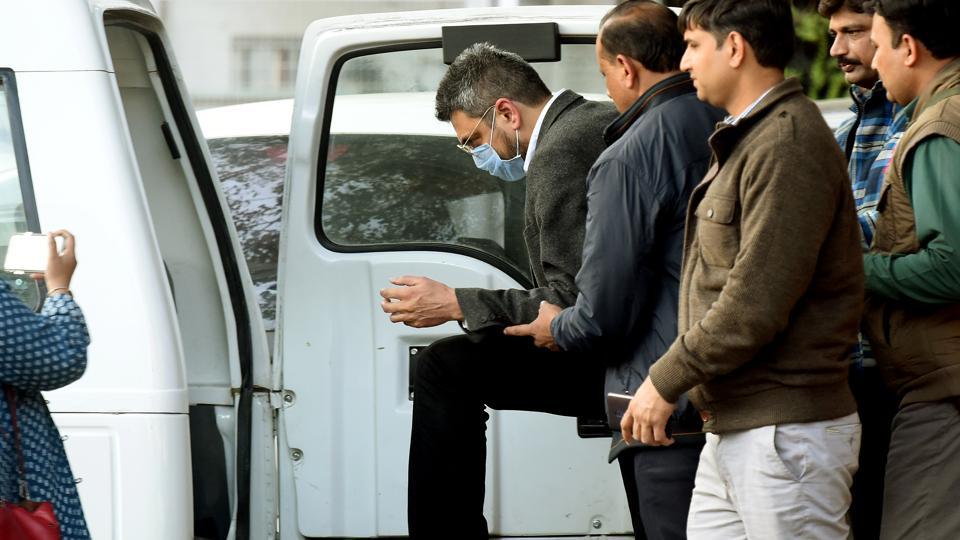
After his case went through the Westminster Magistrates Court, the high court of England and Wales and the European Court of Human Rights in Strasbourg, Chawla was finally extradited and escorted to India by a team of the Delhi Police on Thursday.
District Judge Rebecca Crane of the magistrates court had refused India’s request to extradite him on human rights ground, but lauded the investigation into match-fixing during South Africa’s 2000 tour of India, ruling that Chawla indeed had a prima facie case to answer.
She ruled: “I am satisfied that there is a prima facie case, based on evidence by the JA (judicial authority: India), in 4 bundles labelled Requests 1-4 with annexures A-W2. The affidavit of Bhisham Singh, the Deputy Commissioner of Police, dated 18.05.15, also contains a very detailed summary of the evidence.”
“There is clear evidence sufficient to make a case requiring an answer that the RP (requested person: Chawla) acted with others to fix the outcome of cricket matches by providing money to members of the South African cricket team,” she added.
Singh’s affidavit included evidence of Chawla “shadowing” South Africa captain Hansie Cronje by staying in the same hotels during the tour; phone records between the two discussing match-fixing; phone records of Chawla’s frequent contact with conspirators/co-accused, particularly around match times.
It also included testimony of co-conspirators Rajesh Kalra, Krishan Kumar and Sunil Dara, which names Chawla and details his involvement in match-fixing, Crane’s 17-page judgement summarising the evidence noted.
“Evidence from Shri Arun Gonbare who worked at the Taj Mahal Hotel in Mumbai, where both the South African cricket team and the RP were staying. He observed Hansie Cronje going into RP’s room empty handed and leaving the room with a bag,” it added.
Crane initially rejected the sovereign assurance submitted by the Union home ministry about conditions in the Tihar Jail, but the high court later accepted the third such assurance that contained details about the cell and facilities to be provided to Chawla.
The third assurance bound Indian authorities to provide Chawla conditions complying with human rights law, including medical care. He is to be the sole occupant in one of the Tihar cells identified: cells 1 or 2 of Ward 9 in Central Jail 1, and cells 6 or 7 of Ward 4 in Jail 3.
The cell is located in a ward that is not a high security ward, with inmates who had not violated any prison rules and had satisfactory conduct. The assurance included photos and dimensions of the cell and detailed measures to ensure Chawla’s safety from violence.
Justice Leggatt and Justice Dingemans ruled: “In these circumstances, having regard to all of the information available to this Court about Tihar prisons, the terms of the third assurance (which was not before the District Judge) are sufficient to show that there will be no real risk that Mr Chawla will be subjected to impermissible treatment in Tihar prisons”.
Prison conditions have been one of the major grounds to resist extradition to India, including in high-profile cases such as the ongoing ones of controversial businessman Vijay Mallya and diamantaire Nirav Modi.


