
 E-Paper



Sri Lanka crisis: Finance minister quits after govt loses majority in parliament
Sri Lanka's crisis has been triggered by a mountain of debt. By some estimates it has $51 billion in foreign debts, of which $4 billion is due this year, including $1 billion in July.

 Prefer HTon Google


Sri Lanka finance minister Ali Sabry resigned Tuesday - a day after being sworn in - amid public unrest over a worsening economic crisis. "I hereby tender my resignation from the post of Minister of Finance with immediate effect," Sabry said in a letter, seen by Reuters, to president Gotabaya Rajapaksa, who appointed Sabry after dropping his brother, Basil Rajapaksa, as finance minister.
"Whilst I regret the inconvenience caused, I believe I have always acted in the best interests of the country," Sabry said, adding 'fresh and proactive and unconventional steps' were needed to solve the country's problems.
Sabry was previously the justice minister.
He was due to visit the United States later this month to discuss Sri Lanka's economic crisis with the International Monetary Fund (IMF), which expressed concern and said it is ‘very closely' monitoring the situation.
Sabry's resignation follows the ruling coalition losing its majority after the opposition rejected Rajapaksa's offer of a 'unity government'.
READ: Sri Lanka ruling coalition loses majority amid unrest
"Our party is on the side of the people," Maithripala Sirisena, leader of the Sri Lanka Freedom Party that withdrew its support for Rajapaksa's coalition, said.
The Sri Lanka government can still function -with help from independent lawmakers - but its ability to combat the crisis has been further weakened.
On Monday, faced with protests over surging food and fuel prices and a crushing foreign debt, all 26 ministers of prime minister Mahinda Rajapaksa's cabinet quit. The Sri Lanka central bank's governor, Ajith Nivard Cabraal, also quit.
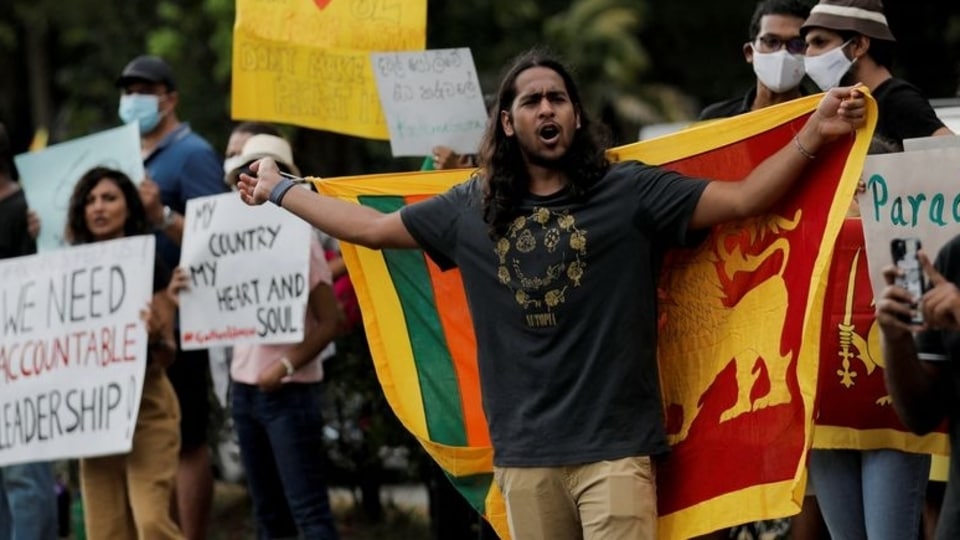
Discontent against the powerful Rajapaksa family that controls the government had been simmering for days till it erupted last week with hundreds of people trying to storm the president's Colombo home.
READ: Armed cops at Colombo fuel stations as shops re-open amid emergency
Violence between protesters and cops left over a dozen injured and led to Rajapaksa declaring an emergency and giving the military sweeping powers.
A nationwide curfew was also imposed over the weekend.
Sri Lanka's crisis has been triggered by a mountain of debt.
It has $51 billion in foreign debts, of which $4 billion is due this year, including $1 billion in July. The country has only $2.31 billion in reserves.
Essentially Sri Lanka is running out of foreign currency and is unable to pay for essential goods like food, fuel, medicines, etc.
Explained: Sri Lanka economic crisis and India's $2.5 billion line of credit
India has stepped in with lines of credit worth over $2 billion and fuel aid worth an additional $500 million. Sri Lanka has also approached China for assistance.
With input from AP, Reuters, AFP


