
 E-Paper



Taliban play the Gestapo to consolidate Afghan rule
The heavily armed Taliban cadre are conducting door to door searches to identify and eliminate all Afghans, who worked for the National Security Directorate, Afghan army and police or helped the US forces as scouts or interpreters.

 Prefer HTon Google


The Taliban are consolidating their hold on Kabul by identifying and eliminating those involved with the security set-up of the previous regime while trying to work out a face-saver transitional government in lieu of recognition from the west. Reports reaching from Kabul are very grim with gun-toting Taliban cadre playing the Gestapo to segregate and eliminate all Afghans who worked with the National Security Directorate (NDS), army or helped US and allied forces as interpreters.
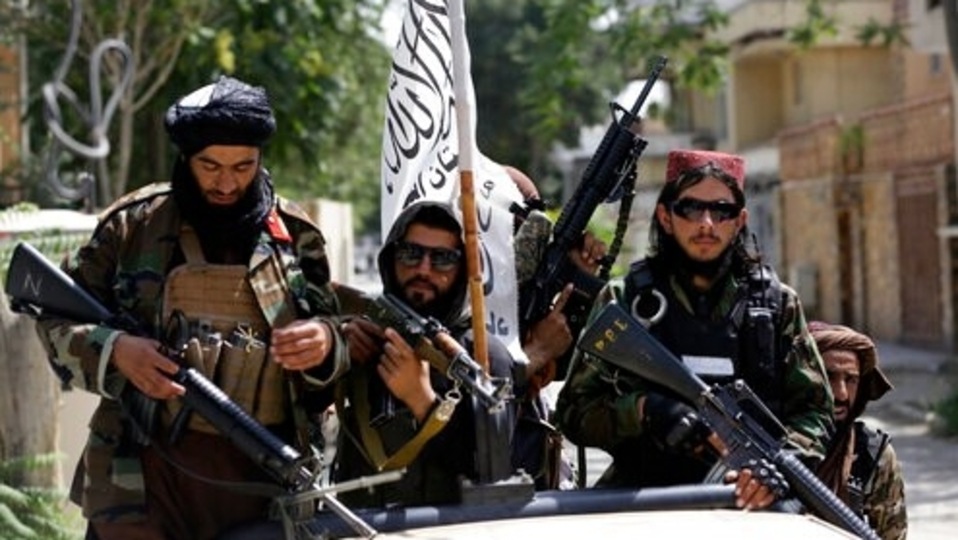
While those associated with the past regime are being targeted, the Taliban are neither sparing children nor women through their heavily armed moral police. Beauty parlours have been shut and billboards and ads with women's faces have been blackened in the capital city. On Thursday as the country marked its independence day, several people were killed when Taliban militants fired on a crowd in the eastern city of Asadabad. The Taliban also fired into the air near a rally in Kabul.
Also read | Taliban wanted India to retain its diplomatic presence in Afghanistan
“Door to door searches are being conducted by heavily armed Haqqani Network cadre in Kabul and Kandahar to exact revenge by publicly shooting those associated with the Ashraf Ghani regime. Particular emphasis is being paid to those associated with former NDA chief Amrullah Saleh, who now leads the resistance against the Taliban from Panjshir Valley along with Ahmad Massoud,” said a source who refused to be identified from Kabul.
Also watch | Afghans celebrate Independence Day in India amid Taliban takeover back home
While the UN-designated terrorist group is dictating the people with seized US-made M-4 carbine and machine guns, the political face of the Taliban is trying to negotiate a deal with the US at the behest of the UK and Pakistan to install a transitional government in return for recognition. Adversaries of the US like China, Russia and Iran are already taking perverse pleasure at the humiliation of the Biden regime in the fall of Kabul and are expected to recognise the Taliban government when it is installed.
Also read | Taliban conduct raids at closed Indian embassies in 2 cities: Intel
“A puppet transitional government will give both the Taliban and the West to sell the disastrous top-secret Taliban-US deal to the public and one of the biggest gainers will be Pakistan, who still has the top Taliban religious leader Haibatullah Akhundzada in its custody. Akhundzada, said to be in Karachi, has not been seen in public for the past five months and questions are being asked whether he will be installed as Emir-ul-Momeen or commander of the faithful,” said a Kabul watcher.
Even though it is early days, there are signs of nascent resistance building up to the ultra-conservative Sunni Pashtun force in Afghanistan with the ferment in the Panjshir Valley and beyond Mazar-e-Sharif. However, given that neither US nor Russia has an appetite for military conflict and China works through its proxy Pakistan, little support is expected from Central Asian republics or neighbouring Iran. In the 1990s, it was Russia, Iran and the bordering Central Asian Republics which pushed the resistance against the Taliban regime (1996-2001) before the US intervention after 9/11. This time around, the Central Asian Republics are wary of even giving a base for US special forces for a worst-case scenario in Afghanistan.
Also read | China can play a very big role in rebuilding Afghanistan: Taliban
With the power of the Taliban only flowing out of assault rifles, there are huge question marks on their governance of Afghanistan as they have the only experience of jihad and exporting terror. The future is very bleak for Afghanistan.


