
 E-Paper


Follow the latest breaking news, major developments and agenda-setting stories from India and around the world with the newsdesk at Hindustan Times. Operating round the clock, the desk brings together experienced editors, reporters and correspondents to deliver fast, accurate and contextual reporting across subjects that influence public policy, governance, business, society and international affairs. The HT News Desk covers politics, elections, government policies, the economy, business and markets, science and technology, the environment, law and order, infrastructure, education, climate issues and geopolitics, while closely tracking developments across states, institutions and global capitals. The team also leads coverage of major breaking news events, policy announcements, court proceedings, natural disasters, public emergencies and significant international developments. Reports published by the newsdesk are based on information gathered from reporters on the ground, official statements, government agencies, court records, regulatory filings, recognised institutions and other authoritative sources. Stories undergo editorial scrutiny and verification processes to ensure accuracy, fairness and relevance, and are updated as events evolve and additional information becomes available. Whether covering a key political decision in New Delhi, an economic policy shift affecting millions, a landmark court ruling or a major global event, the HT News Desk aims to provide readers with reliable, fact-based journalism that delivers not only the latest developments but also the context and analysis needed to understand their wider implications.
 Trending News
Top oil producers agree on record output cuts amid coronavirus crisis
OPEC producers, dominated by Saudi Arabia, and allies led by Russia met via videoconference for an hour Sunday.


Top oil-producing countries agreed Sunday to record output cuts in order to boost plummeting oil prices due to the new coronavirus crisis and a Russia-Saudi price war.
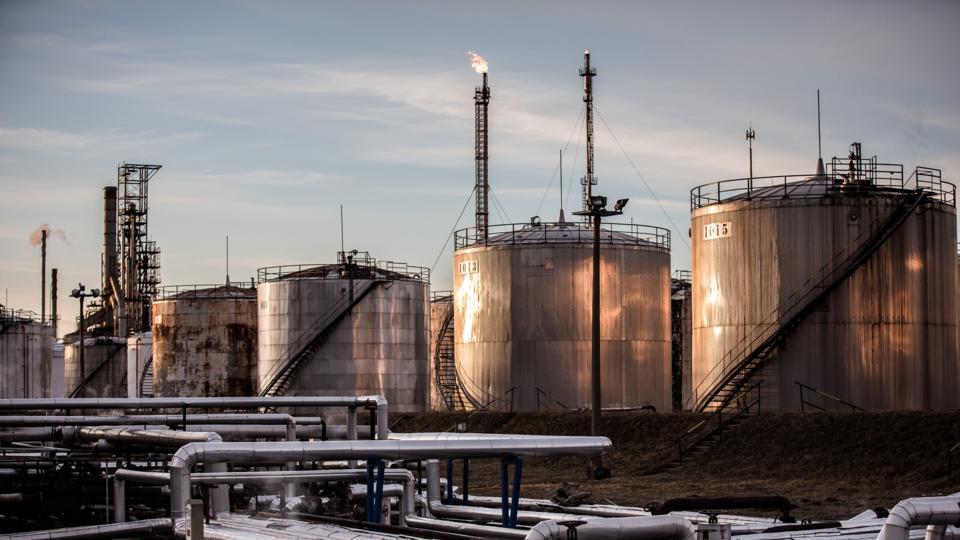
OPEC producers, dominated by Saudi Arabia, and allies led by Russia met via videoconference for an hour Sunday in a last-ditch effort to cement an accord struck early Friday that hinged on Mexico’s agreement.
Click here for Covid-19 full coverage
In a compromise, Mexico came onboard Sunday to an agreement to cut 9.7 million barrels per day from May, according to its Energy Minister Rocio Nahle, down slightly from 10 million barrels per day envisioned earlier.
Kuwait Oil Minister Khaled al-Fadhel tweeted that, following extensive efforts “we announce completing the historical agreement”.
Saudi Energy Minister Prince Abdulaziz bin Salman, who chaired the meeting together with his Russian and Algerian counterparts, also confirmed that the discussions “ended with consensus”.
‘Great deal for all’
US President Donald Trump welcomed a “great deal for all”, saying on Twitter it would “save hundreds of thousands of energy jobs in the United States”.
He added he “would like to thank and congratulate” Russian President Vladimir Putin and Saudi Crown Prince and de facto leader Mohammed bin Salman, both of whom he had spoken to.
Initial reticence from Mexico to introduce output cuts had led to a standoff that cast doubt on efforts to bolster oil prices, pushed to near two-decade lows.
Oil prices have slumped since the beginning of the year due to the COVID-19 pandemic that has sapped demand as countries around the world have put their populations under lockdown.
Compounding the problem, key players Russia and Saudi Arabia had engaged in a price war, ramping up output in a bid to hold on to market share and undercut US shale producers.
‘Temporary relief’
Rystad Energy analyst Per Magnus Nysveen said Sunday’s agreement provided “at least a temporary relief” as fuel consumption was expected to fall globally by 27 million barrels per day in April and 20 million barrels per day in May.
His colleague Bjornar Tonhaugen said, however, that even though the deal made “the single largest output cut in history”, prices were still expected to see “renewed downwards pressure”.
“The oil market will see enormous stock builds in April as the deal is only in effect from 1 May, while gradual shut ins and production declines will already happen during the current month,” he said.
Top oil producers struggled to finalise production cuts during a virtual summit held by G20 energy ministers on Friday, despite Trump’s mediation efforts to end the standoff with Mexico.
The OPEC-led agreement foresees deep output cuts in May and June followed by a gradual reduction in cuts until April 2022.
Russian Energy Minister Alexander Novak was quoted by Russian news agency TASS as saying he expected oil markets not to recover before “end of the year, in the best case”.


