
 E-Paper



Trump wants to command bosses like Xi does. He is failing
His dealings with business borrow from China’s playbook


 Prefer HTon Google


Ignore for a moment Donald Trump’s shakedown of Nvidia, in which he has allowed the world’s most valuable firm to resume limited exports of its artificial-intelligence (AI) chips to China in return for a 15% cut of the proceeds for Uncle Sam. Think instead of the argument about whether it is wise to let China have access to one of America’s most coveted technologies.
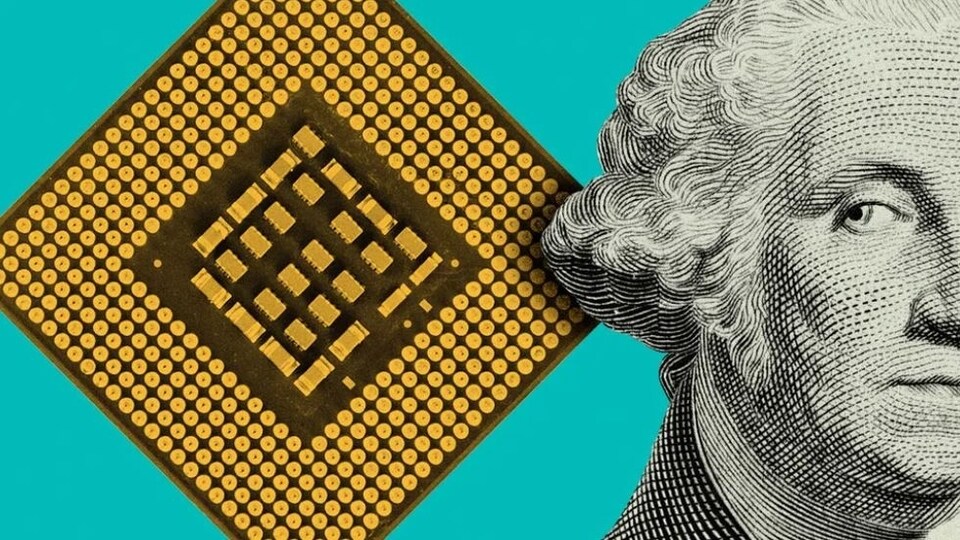
One side of the debate wants to flood China’s market. By permitting Nvidia to resume exports of its dumbed-down H20s to China, the argument is that it will reduce the incentive for China’s own chipmakers, such as Huawei, to develop substitutes. That will keep Chinese developers of generative AI hooked on American hardware, and make China less likely to invade Taiwan, where the bulk of the world’s cutting-edge chips are made. The other side takes a tougher approach. Its advocates, including this newspaper, contend that choking off access to the H20s, which are hot stuff in China even if sub-par by American standards, would slow the development of Chinese technology just enough for the US to secure an insurmountable lead in the AI race.
Mr Trump alluded to neither of these arguments when he confirmed on August 11th that Nvidia would resume selling H20s to China (AMD, a rival, will sell some of its AI chips, too). Instead he boasted of the haggling that took place between himself and Mr Huang to determine how big a cut America should get in return for the favour (and floated a similar approach for Nvidia’s “super-duper-advanced” Blackwell chips). Contrast that with the quieter way China has used one of its most sought-after resources—rare earths—as a bargaining chip. When it comes to meddling with markets, America’s nickel-and-dimer-in-chief has much to learn from Xi Jinping.
A lot about the way Mr Trump has handled chip exports to China pales besides the way America’s rival has used rare earths for leverage. The American president’s strategy is capricious and confusing. In the space of three months, H20 sales have been banned and unbanned. His export levy probably violates Article 1 of the constitution, so it may face a legal challenge. By contrast, China’s approach is becoming more sophisticated. In recent months it has established a system of export controls that tries to track the end customer of commodities and spans hundreds of products, from sensors to manufacturing equipment.
So far Mr Trump’s approach appears neither to help America nor to hurt China. He has surrendered an important part of America’s national-security strategy for a pittance. Assuming H20 sales generate $20bn of revenues to Nvidia, the 15% surcharge would net $3bn—less than the cost of a new nuclear-powered submarine. He has also given away one of America’s biggest sources of leverage before a proper deal is reached with China. Meanwhile Mr Xi still has the rare-earths cudgel in hand, even if in the long run its use will spur efforts around the world to reduce dependence on Chinese supplies.
Mr Trump’s H20 gambit, moreover, is muddle-headed. If his intent is to undercut Huawei and make China dependent on American chips, it would make more sense to dump cheap Nvidia products there rather than raising their price through an export tax. That is the approach China has taken with great effect in its exports of solar panels, electric vehicles and drones (as well as, on occasion, rare earths). It knows the implications. Perhaps that is why it is pressing Chinese firms to shun the H20 chips.
Mr Trump’s ham-fisted approach to chips is not the only way in which he is proving to be a poor student of Mr Xi. Consider the pair’s efforts to assert themselves over their countries’ chief executives. When Jack Ma, co-founder of Alibaba, a Chinese e-commerce giant, became too big for his boots in 2020, Mr Xi’s government did not just reprimand him. He was purged from public life for five years. Such was Mr Xi’s paranoia about the balance of power shifting from China’s Communist Party to its internet billionaires. Mr Trump is similarly determined to keep America’s bosses under his thumb. In the past week he has called directly or indirectly for the resignations of Lip-Bu Tan, the new boss of Intel, a chipmaker, and David Solomon, chief executive of Goldman Sachs, an investment bank. But he is more easily won over than Mr Xi. After Intel’s boss visited the White House on August 11th, Mr Trump hailed his career as an “amazing story”.
Mr Xi has likewise been more effective at whipping up patriotic fervour among companies in order to get them to do his bidding. China installs party cells to ensure they adhere to the government’s objectives. Mr Trump has used the threat of tariffs to encourage companies like Apple to reshore manufacturing to America. Yet America’s president receives mostly lip service. When Apple’s boss, Tim Cook, unveiled a $600bn, four-year investment pledge into America this month, it was more of an update than a change of plan. Not for nothing did he embellish it with a 24-carat gold gift to Mr Trump.
No big dealmaker
It is perhaps unsurprising that Mr Trump, who lacks Mr Xi’s authoritarian power, has been less effective at making his country’s businesses subservient to his political goals. It is also a relief. China’s approach of state capitalism may seem attractive to politicians in countries held back by democratic processes that make it difficult to effect change. But its model is creaking. Growth in China has slowed and venture-backed entrepreneurial activity has waned in recent years. Businesses are mired in a brutal price war.
Thankfully, Mr Trump only dabbles in state capitalism. Even so, his approach is damaging. These days businesses in China can at least rely on a degree of coherence and consistency in policymaking. America Inc will not thrive amid chaos.


