
 E-Paper



UK-EU trade talks back on the table after the bloc’s olive branch
UK Prime Minister Johnson declared the talks at an end last week, accusing the bloc of expecting Britain to make all the concessions to get a deal. He said they could only proceed if the bloc made a “fundamental” change of policy.


The British government and the European Union will resume stalled trade negotiations in London, the UK government said -- days after Prime Minister Boris Johnson declared the talks over.
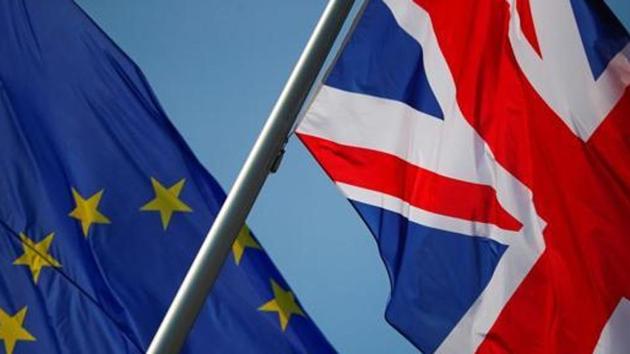
Johnson declared the talks at an end last week, accusing the bloc of expecting Britain to make all the concessions to get a deal. He said they could only proceed if the bloc made a “fundamental” change of policy.
Since then, the EU has agreed to “intensify” talks — a key UK demand — and to discuss the legal text of an agreement. But Johnson’s Downing Street office said Tuesday that it wasn’t a big enough change to resume negotiations.
EU chief negotiator Michel Barnier struck a further conciliatory note on Wednesday and said compromise would be needed from both sides to get a deal. That turned out to be the key.
Johnson’s office said that on the basis of Barnier’s words it was “ready to welcome the EU team to London to resume negotiations later this week” for “intensified” talks.
Barnier told the European Parliament on that “despite the difficulties we’ve faced, an agreement is within reach if both sides are willing to work constructively, if they are willing to compromise.”
Barnier spokesman Daniel Ferrie said EU negotiators would travel to London on Thursday.
Downing Street seized on Barnier’s words about compromise and his acknowledgement that a deal would have to respect the UK’s “sovereignty,” a key word for British Brexit supporters.
The two sides have been trying to strike a trade deal since the UK left the EU on Jan 31. They must do so within weeks if an agreement is to be ratified by the end of the year, when a post-Brexit transition period ends.
Barnier played down the chance of ground-shaking change after all these months when talks on key issues moved at a glacial pace.
“May I remind you that the European Union’s attitude in this negotiation has in no way shifted and it will not shift,” Barnier told EU legislators. “We will also remain firm and determined when it comes to defending the principles and the interests of each of the EU member states.”
But Barnier’s emollient tone contrasted with the combative stance of European Council President Charles Michel, who rejected Britain’s insistence that the EU fundamentally change its negotiating stance and cede more to UK demands. Michel told the European Parliament that if Britain wants vast access to the 27-member bloc’s markets, it will have to keep its waters open to EU fishermen, something the UK is refusing to do.
Michel said: “Yes, we want to keep access to UK waters for our fishermen. Exactly like the UK, too, want to keep access to our huge and diversified markets for its companies.”
Any trade deal needs to go through legal vetting and legislative approval before Jan 1, so it makes the real deadline for a deal closer to the first week of November instead of New Year’s Eve.
EU officials have said such time pressure made the UK decision to delay further talks even more baffling.
The bloc accuses Britain of seeking the kind of unfettered access to its markets usually reserved for EU members.
“The UK wants access to a single market while at the same time being able to diverge from our standards and regulations when it suits them,” Michel said. “You can’t have your cake and eat it too.”
EU leaders also remain angry over the UK’s plans to disregard some parts of the legally binding withdrawal agreement it signed with the bloc.
If passed, the Internal Market Bill will allow the British government to override parts of the legally binding Brexit withdrawal agreement relating to trade with Northern Ireland, the only part of the UK to share a border with the EU.
Johnson’s government says it needs the legislation as an insurance policy in case the EU behaves unreasonably after a post-Brexit transition period ends on Dec 31 and tries to impede the flow of goods between Northern Ireland and the rest of the UK
The bloc sees it as a flagrant breach of an international treaty that could undermine the delicate foundations of Northern Ireland’s peace settlement, created by the 1998 Good Friday accord.
It further feeds a general sense of mistrust of Britain, and complicates any trade deal since the EU will look at every single, tiniest paragraph to make sure the UK will be respecting it.
Michel used it to highlight the need to respect high environmental and social commitments in any trade deal.
“Our UK friends say they want to maintain the highest standards. If that’s the case, why don’t they commit to them? We don’t need words. We need guarantees,” he said.


