
 E-Paper



Ukraine war: US sanctions Putin’s daughters, Lavrov’s wife
The US called the sanctions the “most impactful, wide-ranging and coordinated economic restrictions in history”

 Prefer HTon Google


Announcing a fresh set of measures in its continued effort to isolate Russia from the international economic system over its invasion of Ukraine, the US on Wednesday restricted new private sector investment in Russia, cut off its ability to use central bank reserves to fulfil debt obligations, and sanctioned the largest financial institution and private bank as well as key members of the governing elite – including President Vladimir Putin’s daughters and foreign minister Sergei Lavrov’s wife.
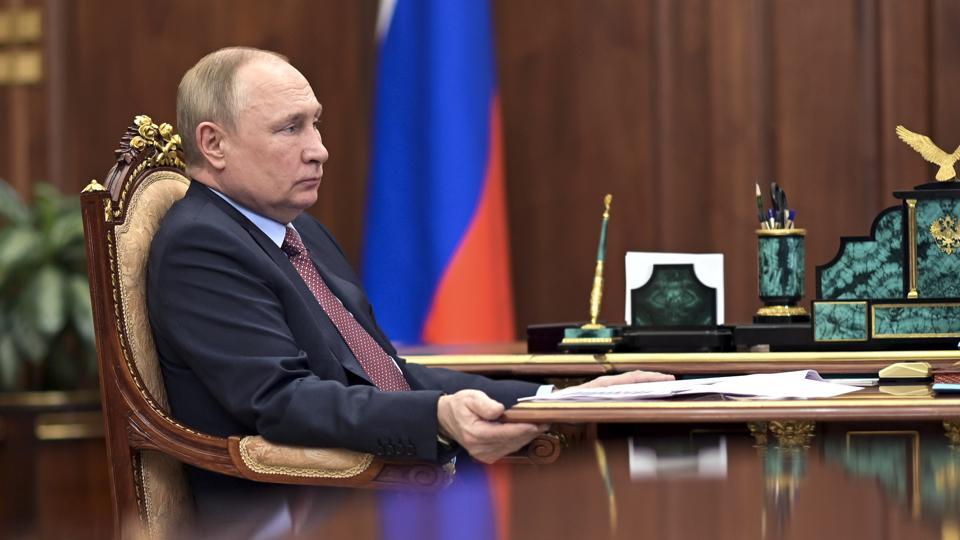
The measures come in the wake of what a senior US administration official, while briefing reporters on Wednesday, called the “sickening brutality of Bucha” reflecting the “despicable nature of the Putin regime”. The European Union, separately, was considering a ban on coal imports from Russia in a bid to reduce its energy dependence and cut off a source of revenue for Moscow.
The US on Wednesday imposed full blocking sanctions on Russia’s largest financial institution, Sberbank, which holds one-third of Russian banking assets, and the country’s largest private bank, Alfa Bank.
“This action will freeze any of Sherbank and Alfa Bank’s assets touching the US financial system and prohibit US persons from doing business with them,” an official factsheet explaining the measures said.
Additionally, by prohibiting any investment from any Americans in Russia, the US also aimed to make the exit of over 600 private sector multinational companies from Russia in the wake of the war a more enduring phenomena.
“The exodus of the private sector includes manufacturers, energy companies, large retailers, financial institutions as well as other service providers such as law and consulting firms,” the factsheet said, which the official said this will deprive Russia of capital, technology and talent.
The US treasury also prohibited Russia from making debt payments with funds subject to US jurisdiction. “Russia is a global financial pariah – and it will now need to choose draining its available funds to make debt payments or default.”
After already having sanctioned 140 Russian oligarchs and 400 officials, the US sanctioned Putin’s daughters, Mariya Putina and Katerina Tikhonova, and other members of the Russian national security council, including former president and prime minister Dmitri Medvedev.
The senior administration official said the US had reason to believe that Putin’s assets, as well as those of his “cronies”, were parked with family members and placed in the global financial system.
The US called the sanctions the “most impactful, wide-ranging and coordinated economic restrictions in history”. According to the senior administration official, the US expects its far-ranging measures to wipe out the last 15 years of economic gains in Russia with the economy contracting by up to 15%, pushing Russia down from the 11th largest economy to possibly outside the top 20 global economies.
The sanctions are also expected to boost inflation to above 20%; cripple Russian growth; make it harder for Russians to travel and access goods and services; cause economic, financial and technological isolation; and push Russia “back to the living standards of Soviet Union of the 1980s”.
However, the official added, the sanctions were not permanent, and depended entirely on Putin’s choices.
When asked about sanctions as a deterrent mechanism, as well as the long-term consequences of pushing out Russia from the global economic system to this extent, the official acknowledged that sanctions are not a “standalone solution” and have to be embedded in a broader strategy to work. They are also flexible.
“We can escalate or de-escalate depending on circumstances,” the official said.
Sanctions, the official said, were meant to act as a negative feedback loop, and if Putin were to change course, this negative loop could “slow or even reverse”.


