
 E-Paper



Ukraine’s army gets a performance review
New defence minister Mykhailo Fedorov is trying to reform the army. The generals are unimpressed


 Prefer HTon Google


TENSIONS SIMMERED barely below the surface at a war-council meeting in early July. Ukraine’s military leaders had mostly good news for their president. Middle- and long-range drone operations were seeing continued successes. A campaign to isolate Russian-occupied Crimea was running ahead of schedule. But as Power Point slides were shown to the testosterone-filled room, the generals griped about missile and ammunition procurement. The focus of their criticism, Mykhailo Fedorov, the 35-year-old tech-savvy defence minister who is known—and occasionally mocked—for his Silicon Valley style presentations, responded in kind. If it wasn’t for his emergency drone-purchasing decisions at the beginning of the year, which required borrowing money earmarked for salaries, there would be no Crimean operation to speak of. A witness to the proceedings describes “two different co-ordinate systems” in a clinch: “No common language, even if holding back from direct conflict.”
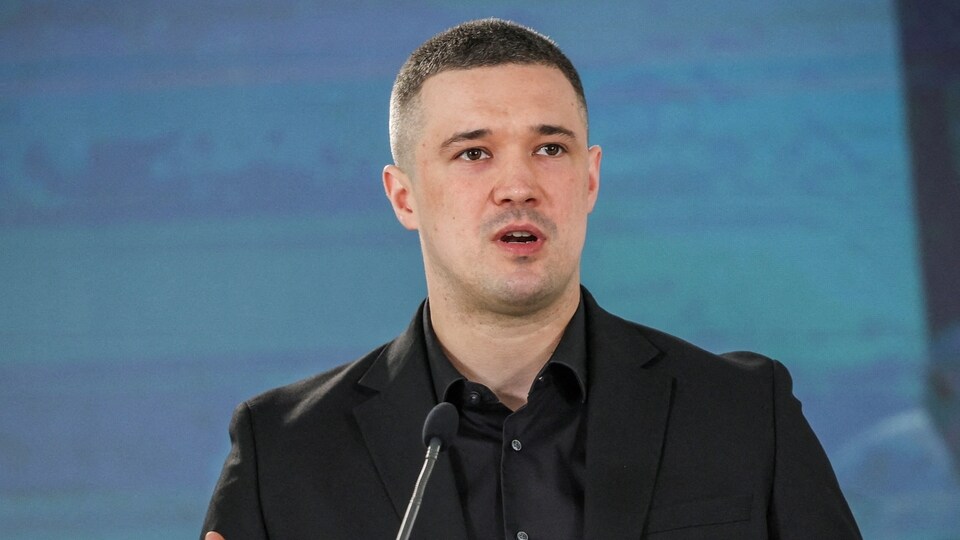
Mr Fedorov, known to colleagues simply as “Misha”, arrived at the defence ministry in January with expectations riding high. The youngest member of Volodymyr Zelensky’s team, he came with a reputation as an effective, technologically minded reformer. As digital-transformation minister, he had implemented Diia, a highly regarded app that put state services and digital passports on smartphones. After Russia’s full-scale invasion in 2022, he helped drive the development of Ukraine’s “drone army,” introducing market mechanisms to boost production of everything from small battlefield drones to larger bomber and interceptor drones. To his supporters, Mr Fedorov’s presence at the defence ministry offered hope the army could be modernised—and taught to imagine victory once again.
The war is also intensely personal. A native of currently occupied lands in southern Ukraine, Mr Fedorov has relatives who were directly caught up in the fighting. Before his appointment, he was almost alone among senior officials in believing Mr Putin could and should be defeated on the battlefield. He was convinced he could reform the hardware of war in the same way he had reformed software of the government. The generals were, however, always far less certain.
His first six months in the job were characterised by hyperactivity and a pugnacity that put many noses out of joint. From the start, he ordered an audit of the defence ministry and army brigades that uncovered overspending of 300bn-hyrivna ($6.6bn). He subjected ministry officials to lie detectors; those who refused or failed were dismissed. And he moved some procurement to an open-tender system, which he says cut the cost of 155mm artillery shells by 16% almost immediately. At the same time his deep differences with the more traditionalist military leaders, especially its commander-in-chief, Oleksandr Syrsky, have rarely been far from view. It is widely known the minister angled for the general’s removal, but failed to win the president’s approval or find another way of doing it.
Mr Fedorov’s first big reform package only began to be implemented in June, after months of haranguing and waiting for sign-offs. On paper, it tackles the most urgent manpower problems. A new deal for frontline infantry will raise monthly pay from roughly $2,500 to $7,000 and even higher; introduce fixed contracts of six, ten, 14 and 24 months; and begin limited demobilisation for the longest-serving soldiers by the end of 2026. There will also be more money for recruiting foreigners. Most controversially, intermediary companies will receive a $7,000 signing fee for each soldier they enlist. One target is for foreigners to eventually provide 20-50% of new recruits. The estimated 300,000 Ukrainians listed as absent without leave will also be given a 100-day window in which to return to the army without punishment. Previously, those caught were forced into so-called reserve battalions, then sent to the hottest spots on the frontline where the chances of surviving were slim.
Mr Fedorov’s critics in the army accept he has improved drone procurement and digitalisation. But they argue his lack of military experience leaves him unqualified to plan a war. The more charitable say his flagship reforms amount to a “PR repackaging” of work that was already under way. The defence minister is the equivalent of a football “goalhanger”, says one senior general, seizing others’ ideas and credit when the efforts were collective. Some liken him to a modern day Robert McNamara, the late American defence secretary who discovered the managerial methods he had honed running Ford did not transfer well to the Pentagon. They criticise his gamification reforms, which, they argue, encourage battleground “kills” over less sexy but no less important operations like monitoring an important road. “To reform something you have to understand how it works,” says another Ukrainian general. “Would you really sit in an aeroplane if you saw that the pilot was a shopkeeper?”
Mr Fedorov’s team says there is always resistance, at first, to change. Andriy Hrytseniuk, head of Brave1, a government military-technology hub, has watched him from close quarters since 2019. He says the minister has always been a “dreamer” and suggests the army will eventually learn to understand him. “When we introduced the Diia app, every classical state official said it would be impossible. Now it has become an inseparable part of life.” Mr Fedorov admits that many in the army are sceptical of his plans, and says he has made some mistakes in selling his changes. A lot of work has gone on behind the scenes without huge fanfare, he continues: “Sit the generals across from me—and if they listen to me and understand what I’ve done, they’ll become my supporters.”
The minister does have followers within the armed forces, especially among younger officers and units that rely heavily on technology. Oleksandr “Flint” Nastenko, the commander of Code 9.2, one of the most effective assault units in the army, says Mr Fedorov deserves credit for shifting resources to the technology that saves soldiers’ lives. “The truth is we have grown stale and need to change.”
Yet even those sympathetic to Mr Fedorov’s intentions wonder if he will be allowed to stay in post long enough to see his ideas through. “Right now, he has the position, but he doesn’t have full political support from the president,” says Maryna Bezrukova, who was head of the armed forces’ independent procurement agency before being ousted in early 2025. A senior intelligence source says Mr Fedorov stands little chance in any serious confrontation with the generals. “Syrsky is experienced, knows the system much better than Misha, and will outfox him.” It is possible the defence minister has already picked one fight too many. On June 5th, Trukha, one of the country’s most popular social-media publications with 3m subscribers, posted a cryptic message promising an investigation into corruption in drone deals supposedly overseen by the minister. That publication has yet to materialise, but is already widely interpreted as a political attack on Mr Fedorov. He denies any wrongdoing.
Mr Fedorov’s future depends on Mr Zelensky, his political patron and a man with whom he shares a taste for brave decisions, PR and stubbornness. The two are close—the defence minister also acts as the president’s main elections manager—but that does not make his position secure. On July 12th, Mr Fedorov’s name was one of three floated for the newly vacant prime minister’s post. In usual circumstances that would count as a promotion; here it would be read as a defeat for his project. So far, the defence minister appears to have held his ground. “When I began in the job, the president told me to act according to my conscience,” Mr Fedorov said a few days before news of the potential reshuffle. “Plenty of people are yapping at me, and yes it worries me, but what can I do? I don’t want to leave this post knowing that I ever bent to suit anyone.”


