
 E-Paper



US births drop to the lowest level since the 1970s
Fears of contracting the virus while pregnant, or while in hospital to give birth, combined with job insecurity and government measures limiting social contact and business activity, dissuaded Americans from having babies, according to surveys by Ovia Health, a women’s health technology company.


The years-long U.S. baby drought worsened last year, with births dropping 4% from 2019 to the lowest level since 1979.
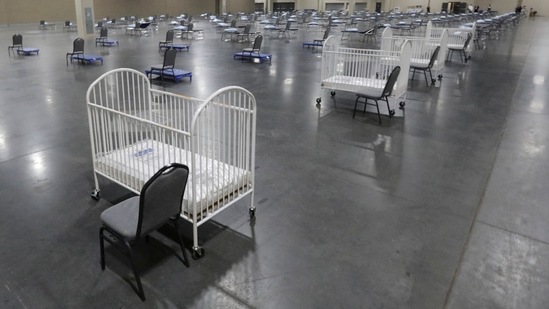
The provisional data for 2020, at 3.6 million births, marks the sixth annual drop in a row. The decline will likely continue in 2021, when the brunt of the impact from the Covid-19 pandemic will be recorded -- with a nine-month delay.
Fears of contracting the virus while pregnant, or while in hospital to give birth, combined with job insecurity and government measures limiting social contact and business activity, dissuaded Americans from having babies, according to surveys by Ovia Health, a women’s health technology company.
“There are several factors that go into family planning, and an entire ecosystem of support that enables and empowers parents and parents-to-be,” said Paris Wallace, chief executive of Ovia Health. “In 2020, nearly all of those factors were turned on their head, and many of those support systems came crashing down.”
Births fell for women in all age groups between 15 and 40 in 2020, according to the Centers for Disease Control and Prevention. The declines were steeper in states where Covid-19 hit the hardest, such as California and New York. And the exodus from crowded urban centers exacerbated declines in places such as New York City.
Here are some of the other key findings from the national CDC data released Wednesday:
- Births in Florida surpassed those in New York last year -- by just 440. It’s still significant given that the differential in favor of New York was about 1,500 and 5,000 in 2019 and 2018, respectively.
- Fewer than 10,000 babies were born in Alaska, Vermont, Washington D.C., and Wyoming in 2020.
- The number of births fell 3% for Hispanic women, 4% for both non-Hispanic White and non-Hispanic Black women, and 8% for non-Hispanic Asian women.
A separate report from the CDC helps assess the impact from people moving out of big metropolitan areas.
The percentage of births to New York City residents that occurred outside of the city increased for all months from March through November, the report found. Non-Hispanic White residents were 2.5 times more likely to give birth outside of the city in April and May 2020 than in the same period a year earlier.
Almost one-third of women decided to stop or delay trying to getting pregnant because of the Covid-19 crisis, according to a survey of users of Ovia Health’s fertility tracker app. The company polled about 20,000 users regularly since the start of the pandemic.
“The chief concerns derailing conception plans centered around health,” said CEO Wallace. Still, “one particularly telling statistic for us at Ovia was that nearly a quarter of couples stopped or delayed trying to conceive because of concerns over finances and job security.”


