
 E-Paper


Cruisers to cones: How police officers across the US are using ice cream to reach kids, build trust
Cops across US are trading in sirens for sprinkles, rolling into neighborhoods in ice cream trucks designed to thaw tensions and bring smiles to kid's faces.

 Prefer HTon Google


On a humid afternoon in Norwich, Connecticut, the familiar jingle of an ice cream truck floated through the air. But when children dashed outside, they didn’t find a neighborhood vendor - they found uniformed police officers, scooping out free Italian ices and popsicles from a van plastered with the words “Copsicle Patrol.”
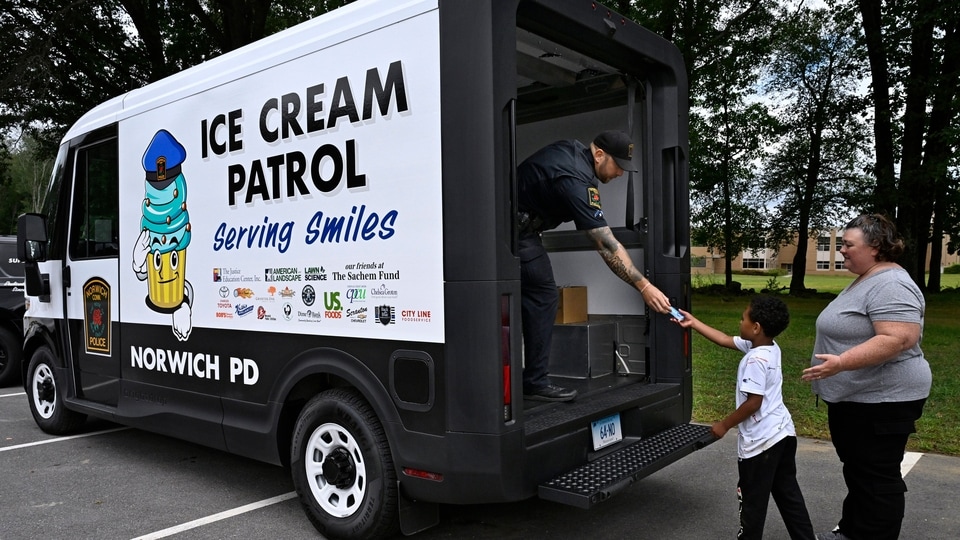
Across the country, police departments are trading in cruisers for cones, rolling out ice cream trucks with playful slogans like “To Protect and Soft Serve” and “Freeze! You have the right to remain frozen.” Behind the whimsy lies a serious purpose: repairing strained relationships with communities, one ice cream sandwich at a time.
With the mission, police is aiming to win back the trust bring eroded as headlines often highlight police misconduct.
"There is no better way to draw the community to approach the police and let them know that we are approachable, we’re humans as well, than by handing out free ice cream to the kids," Lt. Kyle Besse of Norwich police told news agency Associated Press. "The smiles on the kids' faces are really what make you realize that this is a great community outreach service."
Hit with kids and parents
Norwich unveiled its all-electric Chevy BrightDrop van in August, largely funded by donations from local businesses. On a recent day, the truck stopped at a school sports camp, where children eagerly lined up for sandwiches, popsicles, and Italian ices.
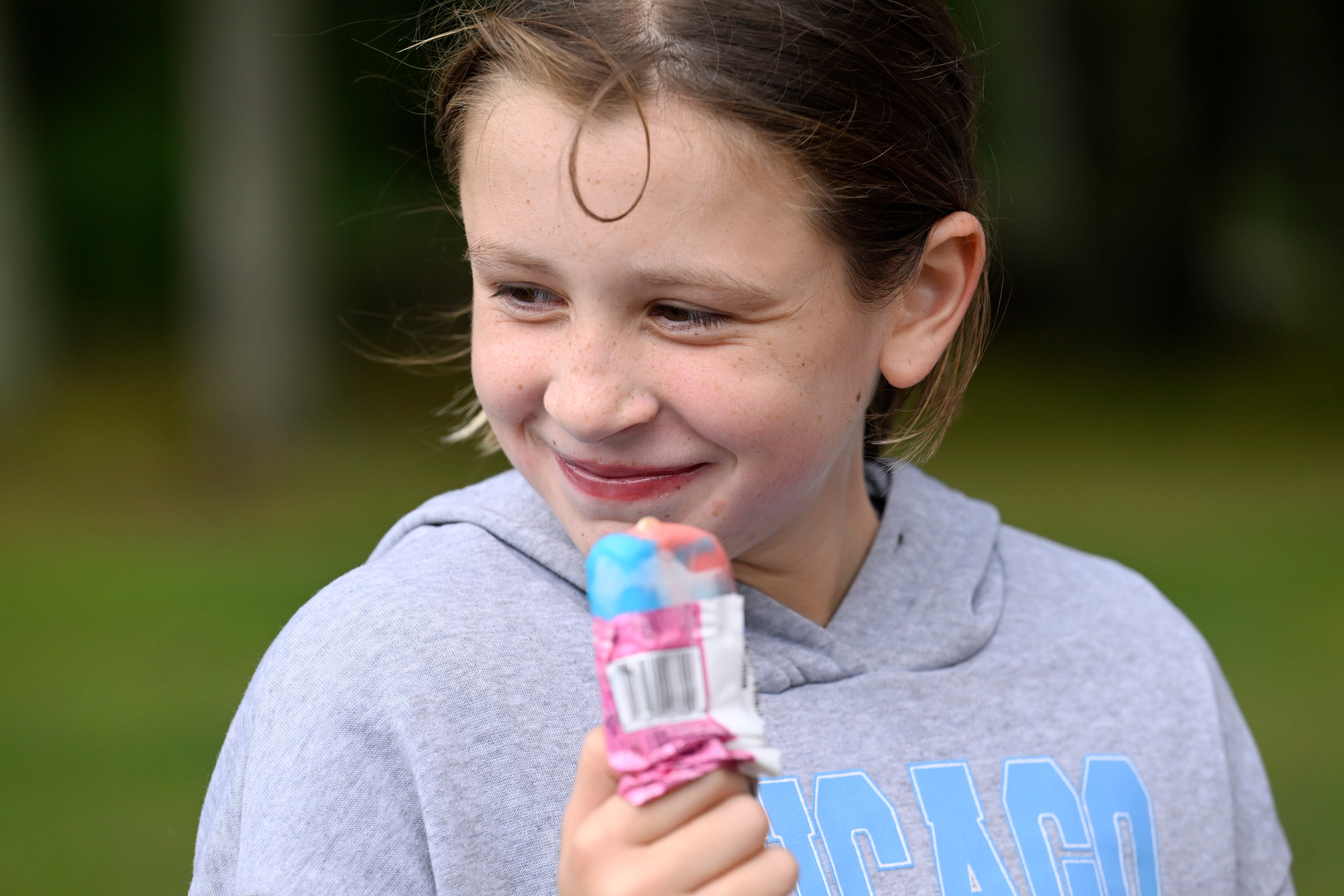
“Instead of seeing people in jail, they’re seeing kids be happy,” an 11-year-old Rozzy Constant told AP, gripping a bubble gum-flavored pop.

Parents were equally enthusiastic. “It’s a great idea. Not everybody can afford it,” said local resident Angela Pires, who rushed out with her grandchildren when she heard the truck’s music. “Police get a lot of bad publicity. It’s about time that they get good things said about them.”
Who pays for the treats?
Funding models vary. Danbury police used tax revenue from legal marijuana dispensaries to buy their truck, while Chicopee, Massachusetts, dipped into assets seized during criminal arrests - an approach some criminal justice advocates criticize. Other departments rely on grants, donations, or, in Barnstead, New Hampshire, even a chief’s personal investment.
Paul Poirier, Barnstead’s police chief, bought and refurbished a truck himself before donating it to his department. Today, he runs Copsicle Ice Cream Trucks, a side business restoring vehicles for departments nationwide. “I figured, you know what, this would be a great opportunity for the kids and families to get free ice cream and make those connections,” Poirier said.
Boston led the way
The idea traces back to Boston, where Operation Hoodsie Cup launched in 2010. With donations from the HP Hood dairy company, police have handed out the iconic half-vanilla, half-chocolate cups at more than 400 events each year.
“Each interaction is an opportunity for our officers to build trust with community, and to make some smiles in the process,” Boston Police Commissioner Michael Cox said.
Will it melt skepticism?
Community ice cream programs add to a long list of policing outreach efforts like Coffee with a Cop and youth sports leagues. But experts caution that the impact of such efforts on long-term public perceptions of law enforcement remains unclear.
“I like that it is bringing the police out in the community, sort of showing them in a different light, that they are humans,” said Kenneth Quick, a former NYPD inspector and now professor at John Jay College told AP. “But is this an actual meaningful interaction that’s really going to shape somebody’s long-term perceptions? Or will it just be, ‘I got a free ice cream sandwich from some cop in an ice cream truck’?”
For now, the answer may be somewhere in between - but at least on hot summer days, the kids don’t seem to mind.


