
 E-Paper


Day after Biden-Modi meet, US govt proposes ban on Chinese developed software from smart cars
Following Biden and PM Modi's meeting, the US govt announced it's seeking a ban on the sale of smart vehicles quipped with Chinese technology.

 Prefer HTon Google


Following Joe Biden and PM Narendra Modi's meeting at the POTUS' residence in Delaware, the Commerce Department said Monday it's seeking a ban on the sale of connected and autonomous vehicles in the U.S. that are equipped with Chinese and Russian software and hardware with the stated goal of protecting national security and U.S. drivers.
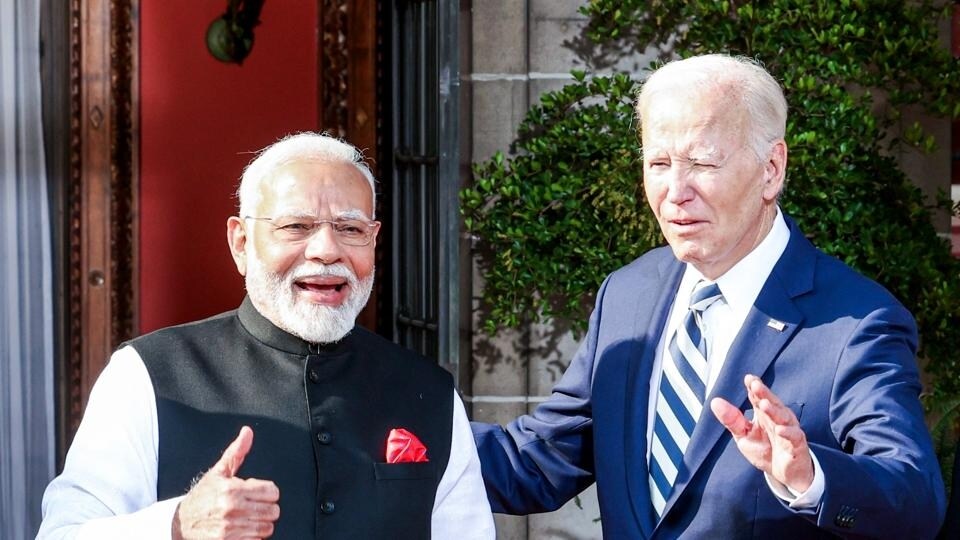
After a bilateral meeting with Biden, PM Modi stated that the discussions were fruitful and that they covered global and regional problems. One of the significant takeaways from the bilateral meeting was Biden's statement that the United States supports India's bid for a permanent seat on the UN Security Council. He also congratulated PM Modi for his historic travels to Poland and the UK.
All you need to know about ban on Chinese and Russian software & hardware
While there is minimal Chinese and Russian software deployed in the U.S, the issue is more complicated for hardware. That’s why Commerce officials said the prohibitions on the software would take effect for the 2027 model year and the prohibitions on hardware would take effect for the model year of 2030, or Jan. 1, 2029, for units without a model year.
The measure announced Monday is proactive but critical, the agency said, given that all the bells and whistles in cars like microphones, cameras, GPS tracking and Bluetooth technology could make Americans more vulnerable to bad actors and potentially expose personal information, from the home address of drivers, to where their children go to school.
In extreme situations, a foreign adversary could shut down or take simultaneous control of multiple vehicles operating in the United States, causing crashes and blocking roads, U.S. Secretary of Commerce Gina Raimondo told reporters on a call Sunday.
“This is not about trade or economic advantage,” Raimondo said. “This is a strictly national security action. The good news is right now, we don’t have many Chinese or Russian cars on our road."
But Raimondo said Europe and other regions in the world where Chinese vehicles have become commonplace very quickly should serve as “a cautionary tale” for the U.S.
Concerns around software-driven functions in Chinese vehicle
Security concerns around the extensive software-driven functions in Chinese vehicles have arisen in Europe, where Chinese electric cars have rapidly gained market share.
“Who controls these data flows and software updates is a far from trivial question, the answers to which encroach on matters of national security, cybersecurity, and individual privacy,” Janka Oertel, director of the Asia program at the European Council on Foreign Relations, wrote on the council’s website.
Vehicles are now “mobility platforms” that monitor driver and passenger behavior and track their surroundings.
A senior administration official said that it is clear from terms of service contracts included with the technology that data from vehicles ends up in China.
Raimondo said that the U.S. won't wait until its roads are populated with Chinese or Russian cars.
“We're issuing a proposed rule to address these new national security threats before suppliers, automakers and car components linked to China or Russia become commonplace and widespread in the U.S. automotive sector,” Raimondo said.
It is difficult to know when China could reach that level of saturation, a senior adminstration official said, but the Commerce Department says China hopes to enter the U.S. market and several Chinese companies have already announced plans to enter the automotive software space.
The Commerce Department added Russia to the regulations since the country is trying to “breathe new life into its auto industry,” senior administration officials said on the call.
The proposed rule would prohibit the import and sale of vehicles with Russia and China-manufactured software and hardware that would allow the vehicle to communicate externally through Bluetooth, cellular, satellite or Wi-Fi modules. It would also prohibit the sale or import of software components made in Russia or the People's Republic of China that collectively allow a highly autonomous vehicle to operate without a driver behind the wheel. The ban would include vehicles made in the U.S. using Chinese and Russian technology.
The proposed rule would apply to all vehicles, but would exclude those not used on public roads, such as agricultural or mining vehicles.
Commerce officials met with all the major auto companies around the world while it drafted the proposed rule to better understand supply chain networks, according to senior administration officials, and also met with a variety of industry associations.
The Commerce Department is inviting public comments, which are due 30 days after publication of a rule before it's finalized. That should happen by the end of the Biden Administration.
The new rule follows steps taken earlier this month by the Biden administration to crack down on cheap products sold out of China, including electric vehicles, expanding a push to reduce U.S. dependence on Beijing and bolster homegrown industry.


