
 E-Paper


Gunman Who Targeted NFL Cited Grievances Over Football-Connected Brain Disease
The brain disease commonly known as CTE, caused by repeated head trauma, has prompted a long reckoning at all levels of football.


 Prefer HTon Google


Shortly after Shane Tamura was identified as the shooter at the NFL’s Park Avenue headquarters building in New York on Monday, investigators found a clue that spoke to his potential motive.
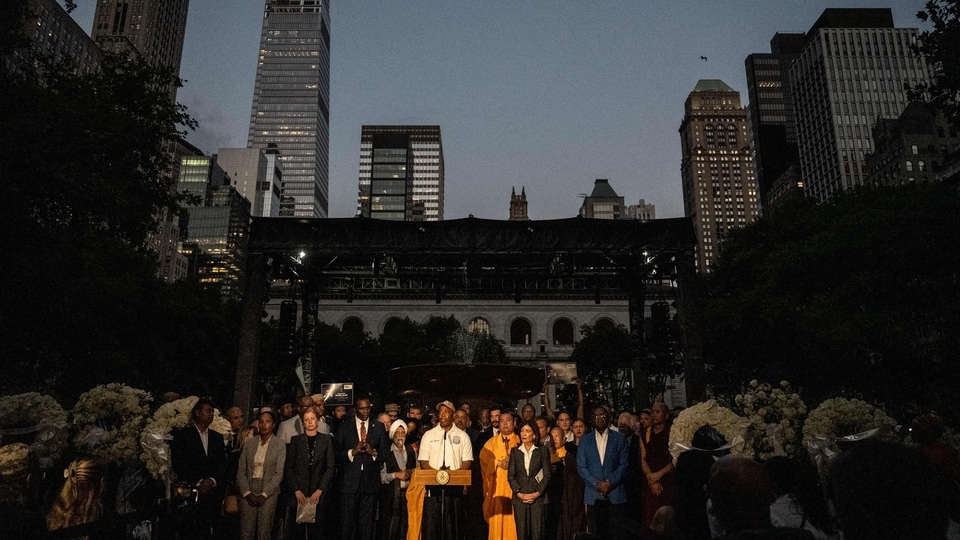
Tamura wrote in a note that he believed he had chronic traumatic encephalopathy, commonly known as CTE, a brain disease associated with head injuries and often found in former football players.
CTE can only be definitively diagnosed postmortem, and it isn’t clear whether Tamura, who played in high school, actually had the disease—a diagnosis can take weeks after someone’s death. New York Police Commissioner Jessica Tisch said Las Vegas police reported he had mental-health issues. Tamura, who shot himself in the chest, asked in the note for his brain to be studied.
That message instantly threw the spotlight back on CTE. The issue has grown over the past two decades into a threat to football, from the youth level to the pros. In response, the NFL has paid money to former players suffering from cognitive issues and overhauled its rules and protocols in a bid to make the game safer.
The disease, which stems from repeated head trauma, has been found by researchers in the brains of scores of former football players. The symptoms, according to the Boston University CTE Center, can include impulse-control problems, dementia and memory loss.
Those symptoms overlap with conditions such as Alzheimer’s—but Alzheimer’s can be detected in living patients using PET scans and blood tests.
Some former players, including the retired superstar running back Bo Jackson, have said they would have reconsidered ever playing football had they been aware of CTE and its risks during their playing days. A number of former players who have died by suicide were found to have the disease, including the former All-Pro linebacker Junior Seau. Many deceased players or their families later donated their brains to scientific research on the disease.
Tamura’s note cited Terry Long, a former offensive lineman for the Pittsburgh Steelers whose 2005 death was ruled a suicide. An autopsy concluded that Long had the degenerative disease.
The debilitating, incurable condition can only be definitively diagnosed after death, when an examination of the brain tissue reveals lesions in the outermost layer of the brain, which are a hallmark of the disease.
“The surface of the brain has hills and valleys,” said Chris Nowinski, a co-founder of the Concussion Legacy Foundation and a member of the research team at Boston University’s CTE Center. “The lesions appear at the bottom of the valleys and usually around blood vessels.”
In the 2010s, widespread awareness of the risks associated with the disease led to a drop in high-school football participation and larger doubts about its future as America’s dominant sport.
Simultaneously, the NFL began rigorous overhauls of its policies in a bid to make the game safer and alleviate concern that fans might have about playing—or even watching—football.
The league has beefed up standards for helmet testing, with players encouraged to use the safest models while those that don’t meet particular standards are phased out of use. Now, during practice and sometimes even games, some players wear what is known as a Guardian Cap, a soft-shell pad that goes over the helmet.
The NFL and its owners have also committed huge chunks of money to not just research and innovation on the safety front but also paying out former players who competed in a bygone era when vicious hits were widely celebrated. In 2017, the league agreed to a billion-dollar settlement fund with former players found to have qualifying diagnoses, such as CTE, amyotrophic lateral sclerosis (Lou Gehrig’s disease), Alzheimer’s disease and Parkinson’s.
Beyond that, the NFL now has concussion protocols to diagnose and treat head injuries, along with a phased process that only allows players to return to certain activities and playing once they have cleared certain thresholds. On the field and in the booth during games, there are independent neurotrauma experts who watch the action looking for signs of a concussion or other potential brain injuries.
While these changes have undoubtedly made the game safer and curbed concerns about the sport’s future, the systems in place aren’t infallible. In 2022, the NFL and players union adjusted its protocols to address a gap after Miami Dolphins quarterback Tua Tagovailoa suffered a pair of violent hits in less than a week, the second of which sent him to the hospital with a concussion.
“We have come a long way over the past 15 years,” then-NFL Players Association President JC Tretter said at the time. “But the last week proves how far we have left to go.”
Write to Andrew Beaton at andrew.beaton@wsj.com and Jo Craven McGinty at jo.mcginty@wsj.com


