E-Paper


In Boston, Trucks Keep Crashing Into Low Bridges
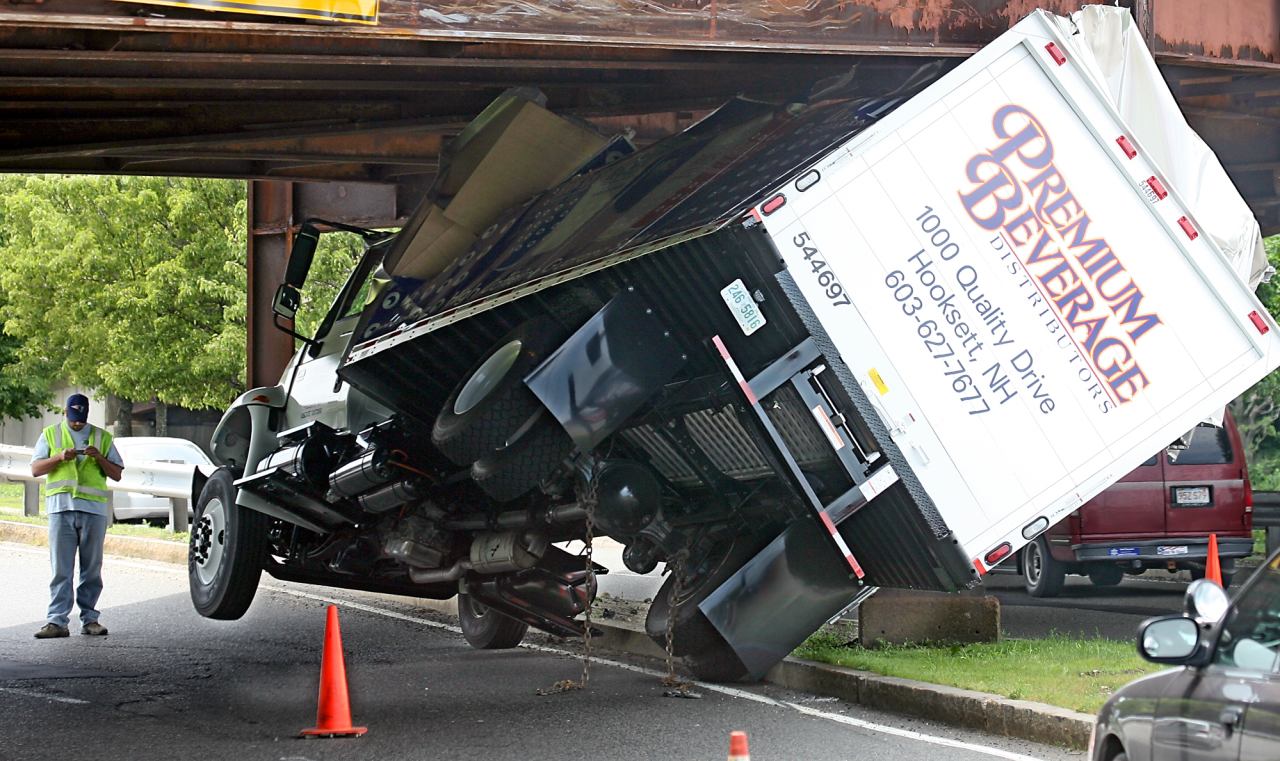
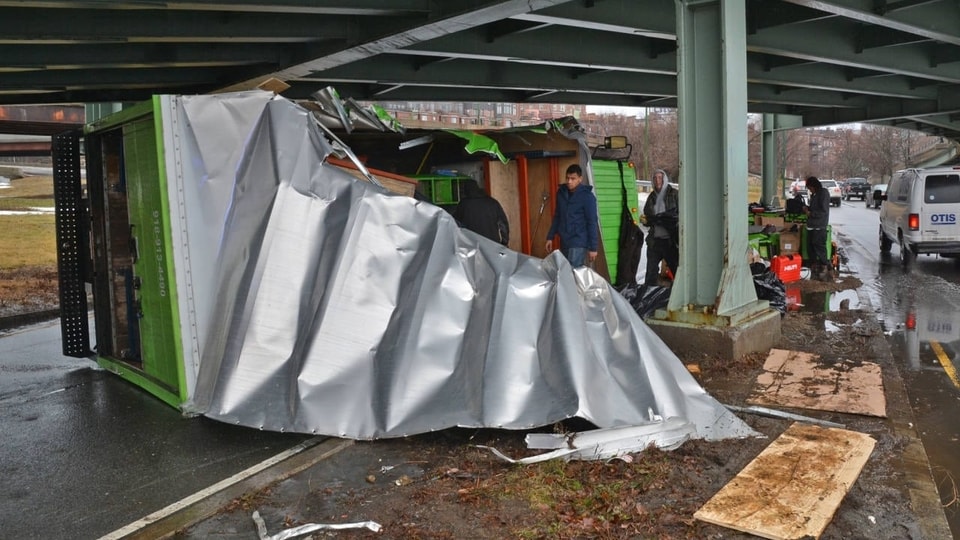
Every year, roads along the Charles River are dotted with trucks with their roofs peeled back.


 Prefer HTon Google


BOSTON—For years, the largest city in New England has wrestled with a problem that seems easily fixable: People keep crashing tall trucks into low bridges.
Nobody knows this better than the team at Trillium Brewing.
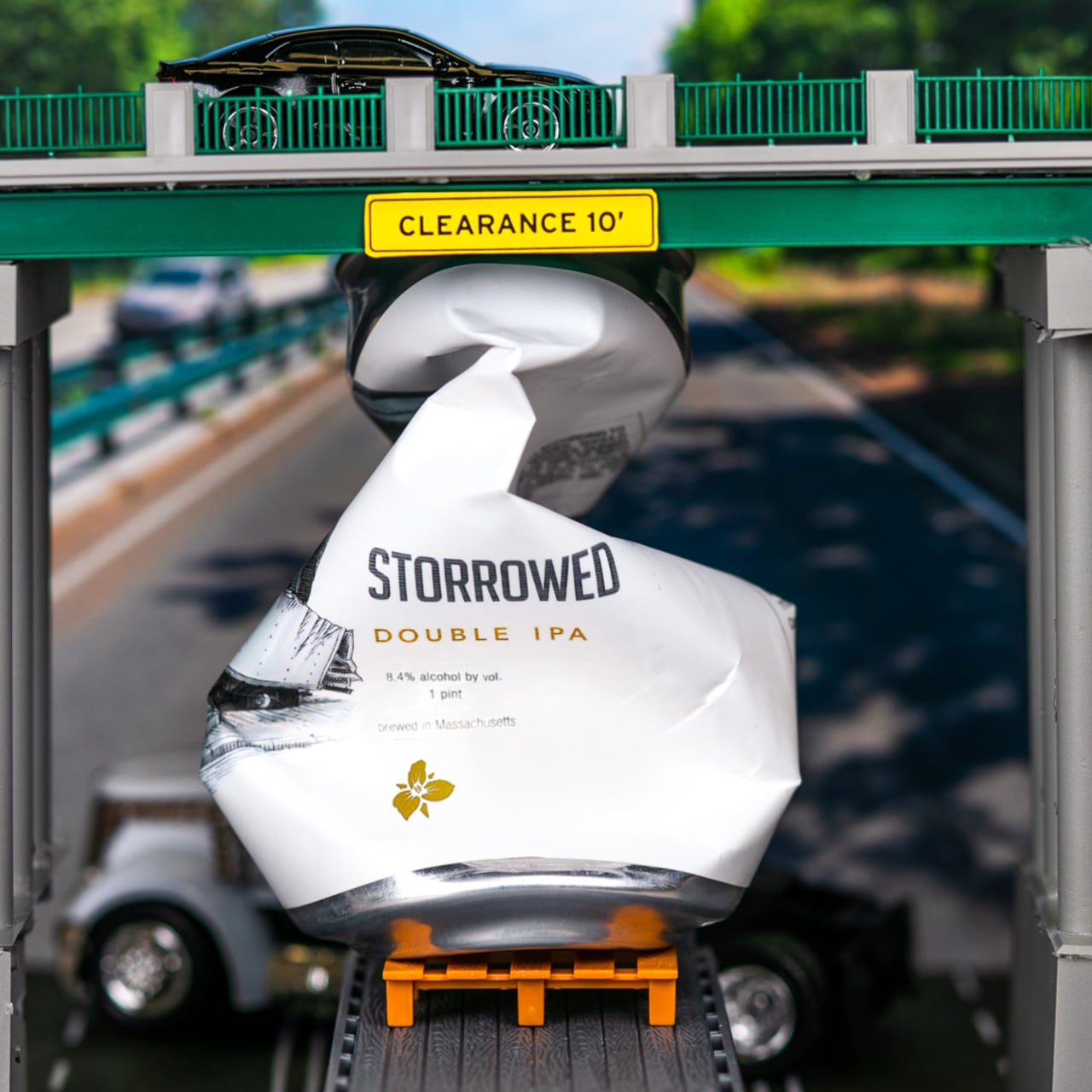
Almost a decade ago, the local brewery launched its Storrowed beer, named after the local term for the frequent incidents along Storrow Drive. The seasonal double IPA was meant to be a public-service announcement to warn drivers against wedging box trucks under low-clearance bridges.
But then, last May, the brewery’s own truck got Storrowed. A new out-of-town driver was relying on their own GPS, instead of the company-provided one showing truck-specific routes, when the Trillium vehicle crashed into a low bridge. No one was hurt, but the truck’s top crumpled and some chicken wings had to be tossed.
Trillium Brewing’s Storrowed beer logo highlights the problem.
It was one of three bridge collisions that day.
“How is that possible?” said Jason Santos, director of transportation engineering at the Massachusetts Department of Conservation and Recreation, which oversees some of the bridges. “If you talk about irony, how does the driver of a brew called Storrow get Storrowed?”
So far this year, there have been 36 Storrowings requiring police intervention on the three main roads along the Charles River, according to Santos. Actual bridge strikes accounted for just under half of those. The data also includes situations where trucks reversed out before impact—maneuvers that trigger significant traffic backups.
“There’s a lot of eye rolling that happens because if you’ve lived in the city for any amount of time, it’s a huge annoyance,” said JC Tetreault, Trillium Brewing’s co-founder and a Boston-area resident for 28 years. “You wonder why somebody hasn’t fixed it by now.”
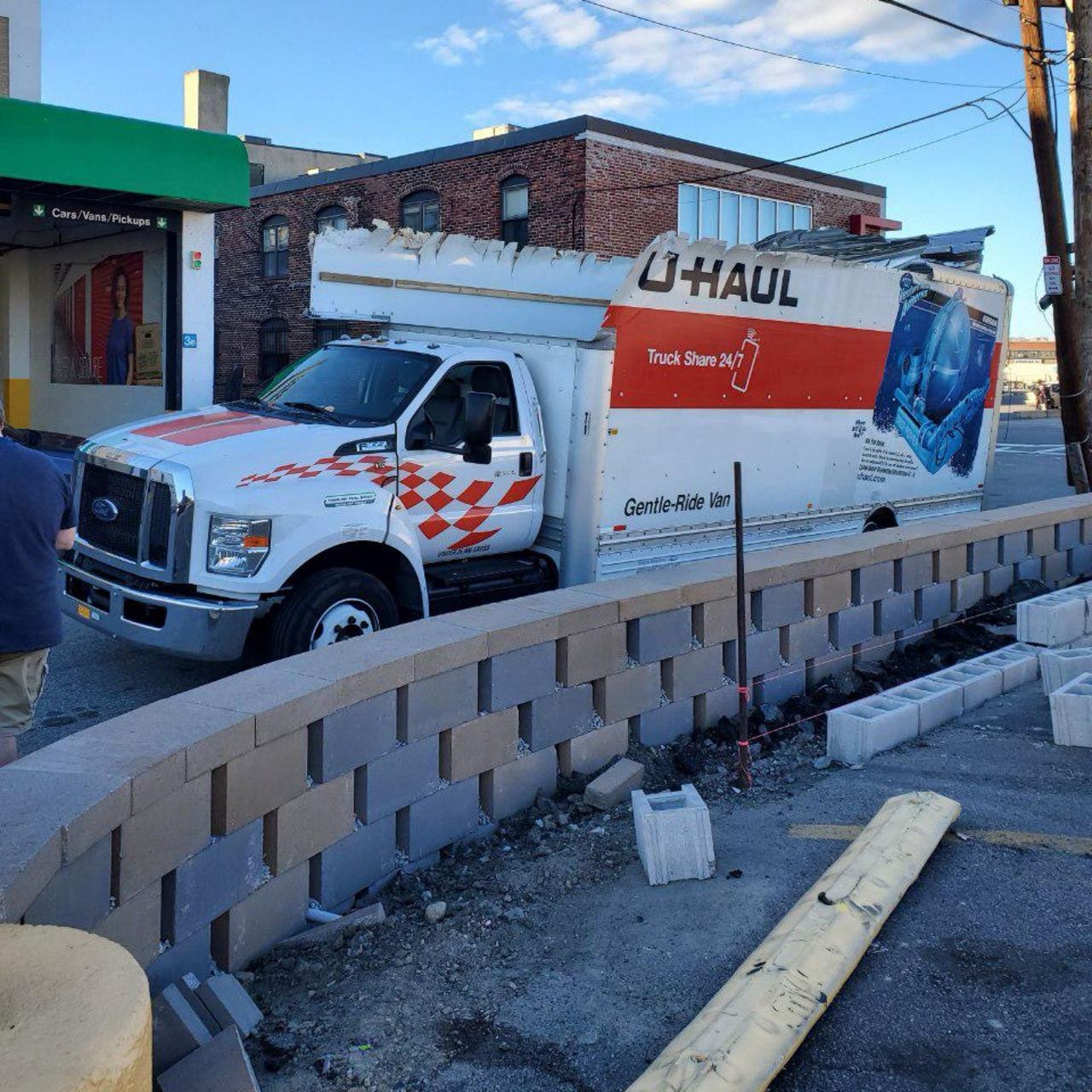
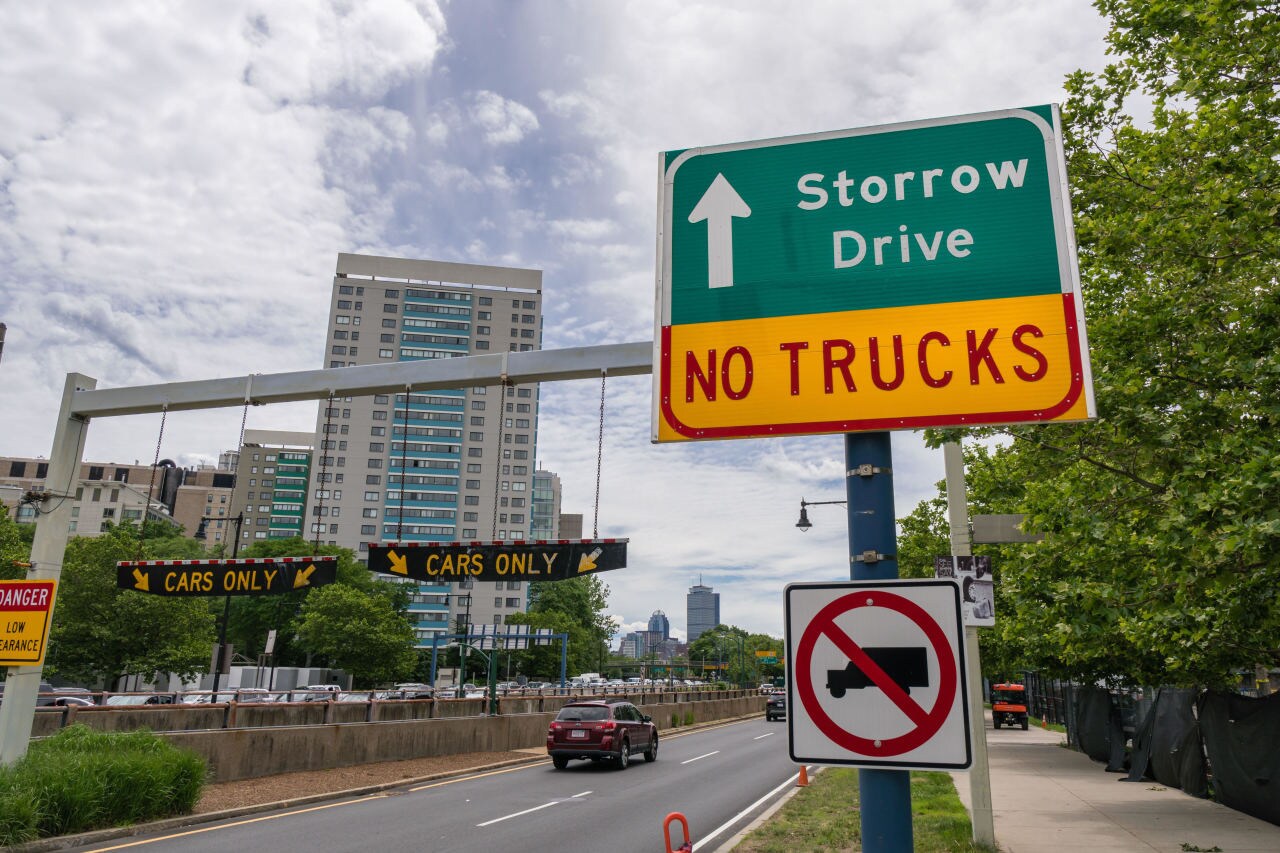
The dilemma persists despite more than 40 “Cars Only” signs, government-run social-media campaigns, and reminders from local universities. It’s particularly acute this time of year, when the Boston area’s many college students and their parents—most of whom don’t normally drive big trucks—use rentals for apartment moves. One August, a local social-media account tallied 34 bridge strikes or back-outs.
Officials have placed more than 40 ‘Cars Only’ signs along the roads to warn drivers.
“If I’m a newbie driver, I’m still just trying to handle the U-Haul since it’s my first time driving it,” said Jinhua Zhao, director of MIT’s Transit Lab. “I probably will not notice all these signs.”
Zhao learned that from personal experience this summer, when he almost drove an RV into a low bridge in northeastern Massachusetts. He realized the vehicle was too high just in time and backed out.
Storrowings aren’t exclusive to college-moving season, and often don’t involve rental trucks. Typical culprits include local delivery drivers and out-of-town commercial truckers unfamiliar with Boston’s infrastructure quirks; big semi-trucks aren’t allowed on the roads. While some drivers manage to reverse before any real damage is done, others create what locals call a full wedge, or the “tin foil” effect, when the truck’s top peels off.
“It’s not always an absolute can-opener,” said Santos. Most Storrowings only cause superficial damage to the bridges, he added, but structural engineers still check they are safe.
Some experts say it’s a matter of chance that there haven’t been more serious incidents. In 2013, more than 30 people were injured when a bus hit a low bridge in Boston.
Straightforward solutions have proved elusive. More than a dozen low bridges span Storrow Drive and Soldiers Field Road in Boston, plus Memorial Drive in Cambridge. Most were built decades ago when planners didn’t necessarily consider vehicle heights on parkway routes, and the cost of raising the clearance height of so many bridges would be immense.
Because the majority of collisions are from box trucks, whose soft tops crumple like cardboard, damage to the bridge is generally superficial, experts say.
The state hired a consultant several years ago to canvass the globe for solutions, according to Santos. Ideas included a beam positioned in front of bridges to absorb impact or electronic height-detection sensors.
New signs now have hanging sheets of rubber attached to the bottom to grab truck drivers’ attention. But other physical changes have yet to be implemented.
The problem isn’t unique to Boston. Anil Agrawal, a City University of New York professor of civil engineering who has studied bridge strikes, estimates that trucks hitting low bridges costs the country about $1 billion annually.
New York had 350 bridge strikes statewide last year, the governor’s office said. A bridge in Lansing, Mich., has googly eyes and teeth because it’s known for taking a bite out of semi-trucks. Another in Durham, N.C., called the “can opener,” has its own website where fans can buy art pieces made from left-behind scrap metal. Artwork titles include “Abridged.”
Suggestions for fixes in Boston continue to abound. Some locals have suggested round-the-clock police at major parkway entrances, or steep fines for rental companies whose trucks are involved in accidents.
College moving day in Boston can be particularly problematic, as students and parents drive trucks they aren’t used to. A Storrowed U-Haul is pictured in an image provided by a Reddit user.
Offramps before bridges might give wayward trucks escape routes, experts say. Adding bridge-height warnings or “truck mode” features to Google and Apple Maps would help, too. A Google spokesperson said their maps are designed for standard-size vehicles, and encouraged truckers to use other specialized navigation tools.
For Bostonians, Storrowings are both frustrating and a source of dark humor. Last year’s Halloween dog parade featured a family dressed up as a U-Haul getting Storrowed.
But for Santos, it’s serious business. “Sometimes it’s like, how in the world did that happen?” he said. “But at the same time, I try to go figure out how in the world it happened. That’s part of the gig here.”
Write to Roshan Fernandez at roshan.fernandez@wsj.com