E-Paper


Insurrection Act vs Martial Law: What Trump's announcement means for Minneapolis
President Donald Trump on Thursday threatened to invoke the Insurrection Act to deploy military forces in Minnesota

 Prefer HTon Google


President Donald Trump on Thursday threatened to invoke the Insurrection Act to deploy military forces in Minnesota after days of protests and two different shooting incidents in Minneapolis.
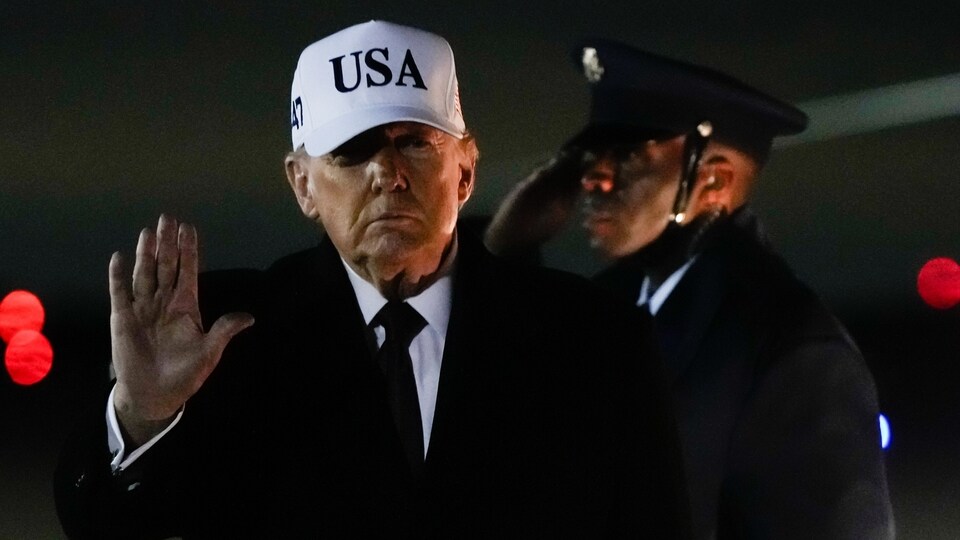
"If the corrupt politicians of Minnesota don't obey the law and stop the professional agitators and insurrectionists from attacking the Patriots of I.C.E., who are only trying to do their job, I will institute the INSURRECTION ACT," Trump wrote on social media.
The Trump admin has already deployed nearly 3,000 federal officers into the Minneapolis area. These officers have clashed with protestors, who have been on the streets since an ICE agent, Jonathan Ross, fatally shot a woman, identified as Renee Nicole Good, in a residential neighborhood. On Wednesday, another ICE-involved shooting left a Venezuelan migrant and an officer injured.
Read More: North Minneapolis shooting today: Why ICE agent opened fire; 'shovel' attack details emerge
What is the Insurrection Act?
The Insurrection Act of 1807 is a law allowing the president to deploy the military or federalize soldiers in a state's National Guard to quell rebellion, an exception to laws that prohibit soldiers being used in civil or criminal law enforcement.
It has been used 30 times in US history, according to New York University's Brennan Center for Justice. The Supreme Court has ruled that the president alone can determine if the act's conditions have been met.
Insurrection Act vs Martial Law
The Insurrection Act and martial law are two legal mechanisms that allow the US federal government to deploy military forces domestically, but they differ significantly in scope, legal basis, process, and effect.
Read More: Did Renee Nicole Good lose custody of her children after Minneapolis shooting? What we know
Insurrection Act (1807, amended multiple times)
Legal basis: 10 U.S.C. §§ 251–255 - a specific federal statute passed by Congress.
Purpose: Enables the President to deploy active-duty US military or federalized National Guard troops to suppress:
Insurrection, domestic violence, unlawful combination, or conspiracy that prevents the execution of federal or state laws.
When requested by a state governor (or legislature if the governor cannot act).
When the president determines unrest hinders federal law enforcement or deprives citizens of constitutional rights (even without a state request).
Process: The president issues a proclamation ordering insurgents to disperse. If they do not comply, he can deploy troops. No congressional approval is required (though Congress can repeal or limit it afterward).
Historical use: Invoked by Presidents Eisenhower (Little Rock 1957), Kennedy (Ole Miss 1962, Alabama 1963), Johnson (Detroit riots 1967), Bush (LA riots 1992), and Trump (considered but not used in 2020 protests).
Martial Law
Legal basis: No single statute; rooted in the President's inherent Article II powers as Commander-in-Chief and the suspension clause (Article I, Section 9) allowing habeas corpus suspension in cases of rebellion or invasion.
Purpose: Temporary military government replaces civilian authorities in a defined area when civil government cannot function (eg due to war, invasion, or extreme unrest).
Process: Declared by the president or Congress; the military takes over executive, legislative, and judicial functions in the affected area.
Scope: Civilian courts and local government are suspended; military tribunals may replace civilian courts. It is a last-resort measure.
Historical use: Lincoln during the Civil War (suspended habeas corpus), Hawaii during WWII (declared by the governor, later ratified by Congress). Never declared nationwide.