
 E-Paper


SpaceX Starship destroyed during 7th test flight; Elon Musk reacts, posts video
SpaceX mission control in Texas lost contact with Starship eight minutes into flight after it separated in space from its Super Heavy first stage booster.

 Prefer HTon Google


SpaceX launched its Starship rocket on its latest test flight Thursday, but the spacecraft was destroyed following a thrilling booster catch back at the pad. The rocket lifted off from the company's Boca Chica, Texas, launch facilities at 5:38 pm EST in the company's seventh test mission, and first such test this year.
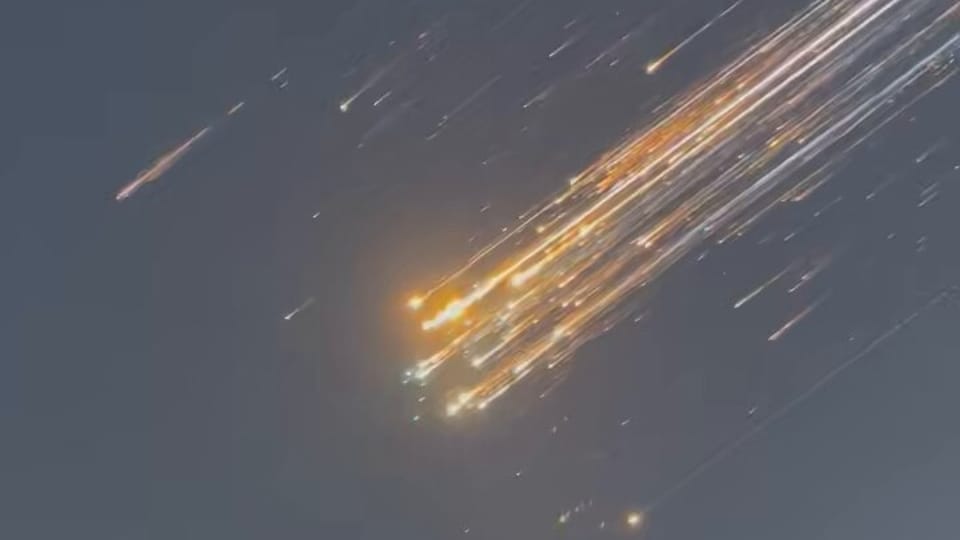
SpaceX mission control in Texas lost contact with Starship eight minutes into the flight after it separated in space from its Super Heavy first stage booster, SpaceX Communications Manager Dan Huot said on a live stream.
"We did lose all communications with the ship - that is essentially telling us we had an anomaly with the upper stage," Huot said, confirming minutes later that the ship was lost.
A video of the Starship pieces raining down from the sky was doing rounds on social media.
The company's CEO Elon Musk shared the video of the falling debris and joked that "entertainment is guaranteed".
Before the loss, SpaceX for the second time used giant mechanical arms to catch the booster back at the pad minutes after liftoff from Texas. The descending booster hovered over the launch pad before being gripped by a pair of mechanical arms dubbed chopsticks.
What went wrong with SpaceX Starship Flight 7?
The spacecraft was supposed to soar across the Gulf of Mexico on a near loop around the world similar to previous test flights. SpaceX had packed it with 10 dummy satellites for practice at releasing them. It was the first flight of this new and upgraded spacecraft.
The 400-foot (123-meter) rocket thundered away in the late afternoon from Boca Chica near the Mexican border. The late hour ensured a daylight entry halfway around the world.
According to a Reuters report, the loss of the Starship was due to an upper stage anomaly.
SpaceX has not seen a Starship second stage fail since its second test mission in March last year, when the rocket was reentering Earth's atmosphere and broke apart.
The company has beefed up the catch tower after November’s launch ended up damaging sensors on the robotic arms, forcing the team to forgo a capture attempt. That booster was steered into the gulf instead. This time though, that wasn't a problem.
The company also upgraded the spacecraft for the latest demo. The test satellites were the same size as SpaceX’s Starlink internet satellites and, like the spacecraft, meant to drop into the Indian Ocean to close out the mission. Contact was lost about 8 1/2 minutes into the flight.
Musk plans to launch actual Starlinks on Starships before moving on to other satellites and, eventually, crews.
It was the seventh test flight for the world’s biggest and most powerful rocket. NASA has reserved a pair of Starships to land astronauts on the moon later this decade. Musk’s goal is Mars.
Hours hours earlier in Florida, another billionaire’s rocket company — Jeff Bezos’ Blue Origin — launched the newest supersized rocket, New Glenn. The rocket reached orbit on its first flight, successfully placing an experimental satellite thousands of miles above Earth. But the first-stage booster was destroyed, missing its targeted landing on a floating platform in the Atlantic.


