
 E-Paper





Follow the latest breaking news, major developments and agenda-setting stories from India and around the world with the newsdesk at Hindustan Times. Operating round the clock, the desk brings together experienced editors, reporters and correspondents to deliver fast, accurate and contextual reporting across subjects that influence public policy, governance, business, society and international affairs. The HT News Desk covers politics, elections, government policies, the economy, business and markets, science and technology, the environment, law and order, infrastructure, education, climate issues and geopolitics, while closely tracking developments across states, institutions and global capitals. The team also leads coverage of major breaking news events, policy announcements, court proceedings, natural disasters, public emergencies and significant international developments. Reports published by the newsdesk are based on information gathered from reporters on the ground, official statements, government agencies, court records, regulatory filings, recognised institutions and other authoritative sources. Stories undergo editorial scrutiny and verification processes to ensure accuracy, fairness and relevance, and are updated as events evolve and additional information becomes available. Whether covering a key political decision in New Delhi, an economic policy shift affecting millions, a landmark court ruling or a major global event, the HT News Desk aims to provide readers with reliable, fact-based journalism that delivers not only the latest developments but also the context and analysis needed to understand their wider implications.
 Trending News
Police fire tear gas, rubber bullets at students protesting in Bangladesh
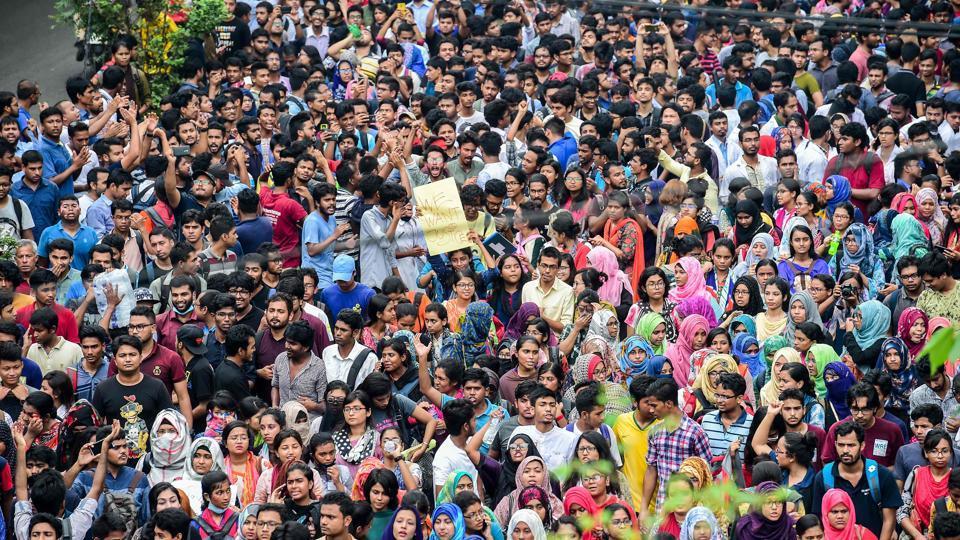
The protests, set off by the deaths of two students killed by speeding buses, grew last week to tens of thousands of people, becoming a major embarrassment to Hasina’s government.


Police in Bangladesh’s capital fired tear gas and rubber bullets Monday to disperse hundreds of demonstrating students, while a prominent human rights group demanded the release of an activist arrested for criticizing the government during more than a week of protests.
Shahidul Alam, a well-known photographer and activist, was arrested Sunday by plain-clothed police after giving a television interview in which he said prime minister Sheikh Hasina had no credibility and was using “brute force” to cling to power.
A court in Dhaka ordered him to be confined for seven days for questioning on charges of spreading false information and propaganda against the government.
Amnesty International called for Alam’s immediate release, with deputy South Asia director Omar Waraich saying in a statement that the arrest “marks a dangerous escalation of a crackdown by the government.”
The traffic chaos of the past week began easing on Monday, as immense demonstrations gave way to sporadic protests, though hundreds of students clashed with police in Dhaka’s Bashundhara area where some private universities are located. Police fired rubber bullets and protesters said at least 40 people, mostly students, were injured.
Elsewhere, police used tear gas against protesters at Dhaka’s East West University and students marched through the Dhaka University campus chanting anti-government slogans and demanding justice.
The protests, set off by the deaths of two students killed by speeding buses, grew last week to tens of thousands of people, becoming a major embarrassment to Hasina’s government, which faces a general election later this year.
On Monday, Bangladesh’s Cabinet endorsed a draft law that would increase the maximum punishment for an accident leading to death to five years in jail, up from the current three years.
Cabinet Secretary Mohammad Shafiul Alam said the bill will be submitted to Parliament soon for passage.
The student protesters have demanded tougher punishment for offenses involving road accidents.
On Sunday, pro-government youth groups attacked protesters and at least five journalists, including an Associated Press photographer.
Hasina’s party is blaming the main opposition party, led by former Prime Minister Khaleda Zia, and its main ally Jamaat-e-Islami, saying they are manipulating student anger to foment trouble.
Authorities have warned of tougher measures if the protests are used to create chaos.
(This story has been published from a wire agency feed without modifications to the text. Only the headline has been changed.)


