
 E-Paper



Was there a security lapse in Donald Trump’s assassination attempt?
A top Indian VVIP security expert gave 6/10 marks to Trump’s security detail as the VVIP was exposed 360 degrees with poor access control.

 Prefer HTon Google


The assassin bullet missed Republican Presidential candidate Donald Trump’s head by a whisker but the security provided to the former US president raises a lot of questions on the protection detail.
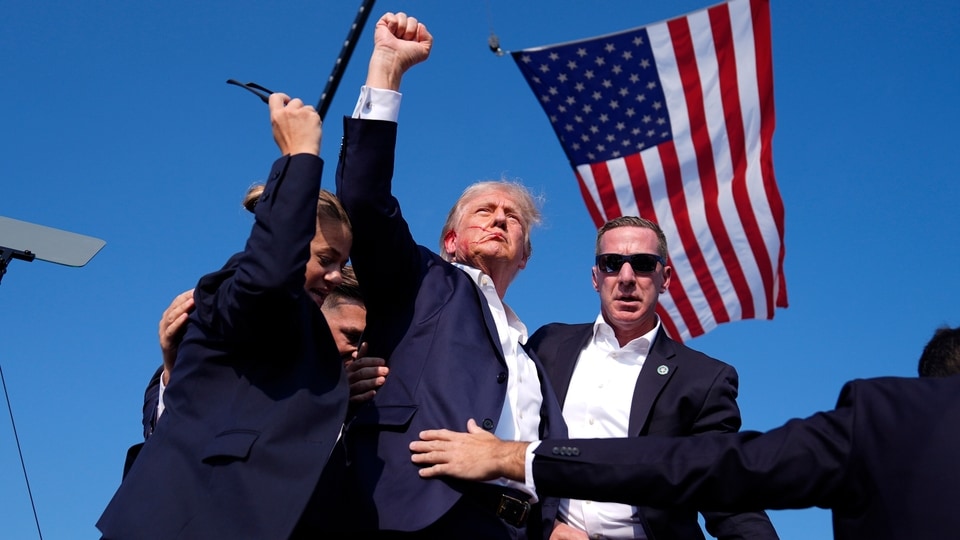
While the Indian Special Protection Group (SPG) allows only 180-degree exposure to Prime Minister Narendra Modi, whose threat level is multiple times more than Trump's, the Republican candidate was exposed 360 degrees at the rally in Butler, Pennsylvania with the assassin allowed to take no less than five shots from his AR-15 assault rifle. There were other lacunae too.
The Indian SPG does a 200 square meter sweep from the dais when PM Modi speaks with a gap of nearly 50-100 meters between the public and the speaking VVIP. At the Butler rally, the assassin was spotted a mere 120 yards from the dais with the Secret Service sniper neutralizing him after the assassin Thomas Mathew Crooks had taken his five shots. Had Trump not turned at the last millisecond, the bullet would have found its target.
A review of the footage of the assassination attempt shows the protection details were on the side of VVIP as the shots were fired with one tall officer standing with his chest giving protection to hit Trump. The security detail also pulled him down to the bullet-resistant sheet on the ground till the time the identified attacker was neutralised. However, the security detail did not have bullet-resistant shields or any protection from sniper fire. The effective range of the AR-15 rifle used by the assassin is 400 meters.
“ I would give 6/10 marks to the US Secret Service in handling the assassination attempt. The access control was faulty and the VVIP’s head was unprotected while he was being moved to his vehicle. This made him totally vulnerable to the assassin bullet had there been a team of attackers,” said a top Indian security expert.
Although the US Secret Service managed to extricate Donald Trump, the personnel appeared panicked and not in command of the situation with taller male officers guarding Trump from the back and a shorter female officer protecting the tall Republican candidate from the front with Trump’s head exposed.
While everything appears 20/20 post-event, the Trump assassination attempt reminds one of the assassination of former Japanese Prime Minister Shinzo Abe on July 8, 2022 due to lax security detail. That the assassin was standing behind Abe and carrying a country-made weapon without any intervention was rather shocking. The Japanese security detail that day was virtually caught unawares and allowed the assassin to target one of the tallest Japanese right-wing leaders.
On October 27, 2013, the Indian Mujahideen group targeted then-BJP Prime Ministerial candidate Narendra Modi at Gandhi Maidan through multiple IEDs as a result of which six persons were killed and another 85 were injured. Had the then Intelligence Bureau chief Asif Ibrahim and his joint director (operations) Tapan Deka (present IB Chief) not alerted PM Modi to the possibility of him being targeted, there would have been total mayhem at the rally. After a timer device was found on the bomb that exploded in a public toilet at Patna railway station at 10 am, the BJP candidate was alerted by DIB Ibrahim and Joint Director (Patna) Vivek Shrivastava and persuaded not to go to the rally. However, Narendra Modi overruled them and addressed the rally with bombs going off in the vicinity. He told the crowd not to panic and quietly leave the venue as ambulances were rushing dead and injured to the Patna hospital.
On January 5, 2022, PM Modi’s convoy was exposed to militant farmers as he was stuck on the Ferozepur flyover for 20 minutes during the Charanjit Singh Channi Congress government. With the state police and intelligence ostensibly unaware of the situation, PM Modi and his SPG found the road blockaded by farmers who had the support of the then-ruling party and Akali Dal.


