
 E-Paper



What is the China-Taiwan divide and US’ role in it?
Just in the past one month, a lot has happened with talks about China invading Taiwan and other military provocations; Washington’s help to Taipei and Beijing’s beefing up of coastal forces.


According to defence observers cited by the South China Morning Post, the presence of the People’s Liberation Army (PLA) has been increasing in China’s Southeast coast as it prepares for a possible military invasion of Taiwan. Just in the past one month, a lot has happened with talks about China invading Taiwan and other military provocations; Washington’s help to Taipei and Beijing’s beefing up of coastal forces.
A brief history of Taiwan
Taiwan has enjoyed de-facto independence since the end of the civil war in 1949 in which the losing Kuomintang faction fled to Taiwan and its leader Chiang Kai-shek established a self-rule with hopes of retaking mainland China. But gradually in the late 1980s, Taiwan moved to becoming a democracy. The economy is highly export oriented and the per capita GDP is extremely high as well. Their excellent response to the coronavirus pandemic further improved their global status.
Presidential election and Tsai Ing-Wen
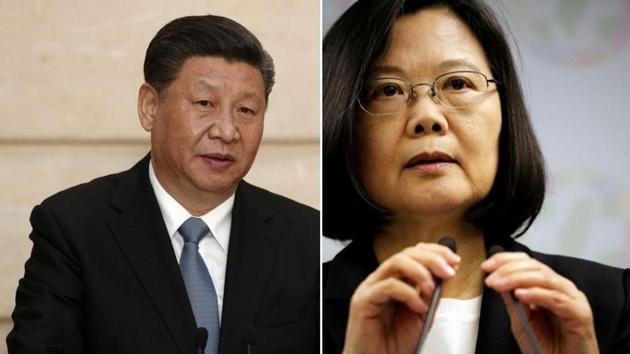
In presidential election held in January this year, Taiwanese voters re-elected incumbent president Tsai Ing-Wen in a landslide election with 57.13 per cent of the votes. This upset Beijing as Tsai defeated her opponent Han Kuo-yu whose party promotes closer ties with Beijing. This month, Time magazine put Tsai on its 100 most influential people list and after its Hong Kong dilemma, Beijing has been irked by the changes in Taipei with President Xi asserting that “reunifying” Taiwan with China is his focus even if force is required to do the same.
Also Read: Chinese aggression, censorship brings India and Taiwan closer, says report
President Xi Jinping’s reasons for Taiwan push
Gaining “lost” territory, reduced support among Taiwan’s public for China, rise of Hong Kong like pro-independence sentiment in Taiwan, wanting the world to recognise “One China” policy and Washington’s increasing ties with Taipei are all reasons for President Xi Jinping’s bellicose moves in Taiwan.
US’ role in Taiwan
The US is Taiwan’s most important friend and ally even though in 1979 President Jimmy Carter ended diplomatic recognition of Taipei. Taiwan Relations Act passed by the US Congress promises to supply Taiwan with defensive weapons and any attack by China on the island is considered very serious by USA. For decades, the US has sold weapons to Taiwan and this week, the White House moved forward with drones and missile sales to Taipei. The increasing hostility between the US and China over the past years has resulted in Washington being closer to Taipei, thus playing a major role in the divide between Taiwan and China.


