
 E-Paper



When lockdowns led Newton, Darwin, Milton to new highs
It was not called ‘lockdown’ in their time, but Isaac Newton, Charles Darwin, John Milton and Lord Byron spent long spells in isolation, when medicine was not as developed as now.


Millions across the globe are finding creative and not-so-creative ways to face the challenge of being hunkered down in homes, but there have been times when such periods of isolation and quarantine helped discover field-defining knowledge and create art.
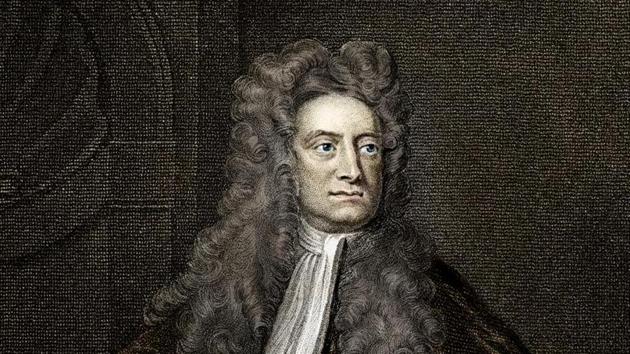
For example, Isaac Newton, Charles Darwin, John Milton and Lord Byron used the time to add to their formidable body of work in science and literature. It was not called ‘lockdown’ in their time, but they spent long spells in isolation, when medicine was not as developed as now.
The University of Cambridge, where they studied, delved into its archives to collate their activities during such periods of isolation centuries ago. It has also asked its alumni to send accounts of how they are spending time in the coronavirus pandemic.
Isaac Newton (Trinity College): Considered Trinity’s most accomplished alumni, he was also a poster-child for productivity during a pandemic. Like many in Cambridge during the Great Plague of 1665-6, he retreated to the countryside to escape the disease-ridden city and spent two extended periods at his family home in rural Lincolnshire, Woolsthorpe Manor.
Newton thrived in isolation, and later described it as one of the most productive times in his life, finding the space to reflect on and develop his theories on optics, calculus, and the laws of motion and gravity. It was during this time that he conducted his famous prism experiment.
“Probably to his parents’ displeasure, he bored a hole through his window shutters to produce a single, thin beam of light to pass through two prisms, proving for the first time that prisms did not create colours, but merely separated colours that were already there made up of a colour spectrum”, the university’s researcher Alisha Matthewson-Grand wrote.
“Indeed, Newton was so intellectually transformed by his period of isolation that later commentators have referred to his time away from Cambridge as his annus mirabilis, or his ‘year of wonders’.”
Charles Darwin (Christ’s College): Darwin’s experience with isolation was not the result of a pandemic but his own chronic ill health. He suffered from a myriad of unexplained symptoms, including vertigo, vomiting, cramps, fatigue, anxiety and visual disturbances.
He noted in his autobiography of 1876 that “few persons can have lived a more retired life than we (Darwin and his wife Emma) have done. Besides short visits to the houses of relations, and occasionally to the seaside or elsewhere, we have gone nowhere.”
Darwin believed that periods of isolation and ill health helped his career. At home, he was free from the demands placed on other scientists (teaching, administrative work), and thus able to devote himself entirely to research; he wrote: “Ill-health, though it has annihilated several years of my life, has saved me from the distractions of society and amusement.”
Lord Byron (Trinity College): In 1811, Lord Byron was forced to quarantine in Malta after returning from a cholera-ravaged Greece. He was furious at the prospect of spending 40 days in lockdown, a measure he considered to be draconian and unnecessary.
While confined, he wrote ‘Farewell to Malta’, a satirical poem attacking the island for (among other things) ‘its smoky towns and cloudy sky’ and its ‘cursed street of stairs’. He references his quarantine explicitly in the first verse ‘Adieu, thou damned’st quarantine, / That gave me fever, and the spleen!’.
John Milton (Christ’s College): The author of ‘Paradise Lost’ and ‘Aeropagitica’ spent some time away from Cambridge as a first year undergraduate in 1626, when the town was hit by bubonic plague. He was home in London when he wrote ‘Elegia Prima’, his first Latin elegy. The work is an early example of his aptitude for verse composition, as well as his impressive comedic flair.
A letter in verse form, the elegy was written for his closest friend Charles Diodati, and details how Milton was enjoying his unexpected period away from Cambridge while also anticipating his return to ‘the reedy fens of the Cam’ and ‘the hum of the noisy school.’


