
 E-Paper



Who was Mujibur Rahman, Sheikh Hasina's father who founded Bangladesh?
Sheikh Mujibur Rahman's assassination in 1975 marked the first direct military intervention in Bangladesh's civilian politics.

 Prefer HTon Google


Amid protests in Bangladesh, Sheikh Hasina resigned as Prime Minister and traveled to India for safety. Nearly 48 years ago, she spent time in exile after her father, Sheikh Mujibur Rahman along with her mother and three brothers were assassinated on August 15, 1975.
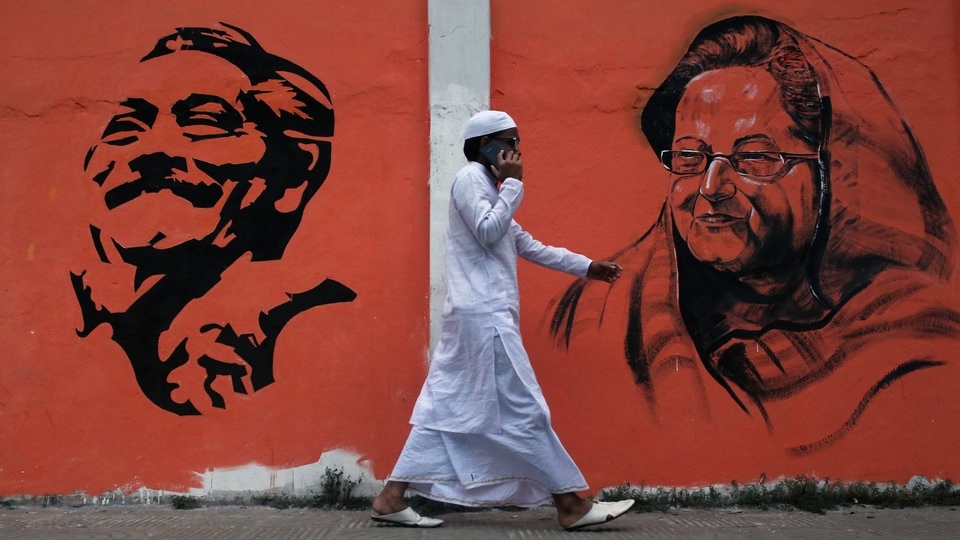
Rahman, revered as ‘Bangabandhu’ who became the first president of independent Bangladesh, was assassinated by a group of Bangladesh Army personnel who stormed his Dhanmondi 32 residence as part of a coup.
His assassination marked the first direct military intervention in Bangladesh's civilian politics and then commerce minister Khondaker Mostaq Ahmad had seized power, declaring himself head of the interim government, a position he held from August 15, 1975 to November 6, 1975.
Throughout his political career, Mujib served as either the president or a prime minister of Bangladesh from April 1971 until his assassination.
In the 1970 undivided Pakistan general election, Sheikh Mujib's Awami League party won nearly all the seats in what was then East Pakistan, which later became Bangladesh.
Read: Why Sheikh Hasina chose India after fleeing Bangladesh
Despite delays from the Pakistani military in handing over power, Mujib effectively led East Pakistan. At the start of the Bangladesh Liberation War in 1971, he was arrested by Pakistani soldiers on March 25, just after declaring Bangladesh's independence.
After the Pakistani forces surrendered on December 16, Mujib was released in London then flew to India and returned to Bangladesh. He served as prime minister for three years after the country gained independence.
It is claimed that Mujib's nephew Sheikh Fazlul Haque Mani received high-ranking positions in the government established by the former. Despite a ban on private trade with India imposed to curb inflation, Haque continued these activities with Mujib's approval. This has been interpreted as an effort by Mujib to establish a political dynasty.
Many media reports also suggest that Mujib's brother Sheikh Nazir was allegedly involved in smuggling in the southeast, his wife profited from World Bank contracts, his son Sheikh Kamal was linked to criminal activities, and his nephew Sheikh Moni was rapidly gaining power and wealth.
Also read: Who is Waker-Uz-Zaman, Bangladesh army chief who announced Sheikh Hasina's ouster?
Sheikh Mujib was a popular and charismatic leader in the early 1970s. He spent over 12 years in prison under British and Pakistani rule. He managed to build good relationships with many countries, promoting a policy of friendliness and avoiding hostility.
Media reports also reveal that four military units disgruntled with Mujib's government entered Dhaka. The first group attacked Sheikh Mujib's residence, where they killed him following a confrontation and proceeded to murder all family members and staff present, including a pregnant daughter-in-law.
At the time of the attack, Hasina was abroad and spent the following six years in exile. During her time away, she was elected to lead the Awami League, the political party founded by her father, which had become the largest political organisation in Bangladesh.


