
 E-Paper



Will Gen Z unseat Madagascar's leader of 26 yrs? President no stranger to a coup
The protests are reportedly led by a group calling itself “Gen Z Madagascar,” and the United Nations says the demonstrations have left at least 22 people dead

 Prefer HTon Google


Madagascar President Andry Rajoelina, who took power in a military-backed coup in 2009, is now facing demands to quit from a youth-led protest movement backed by an army unit.
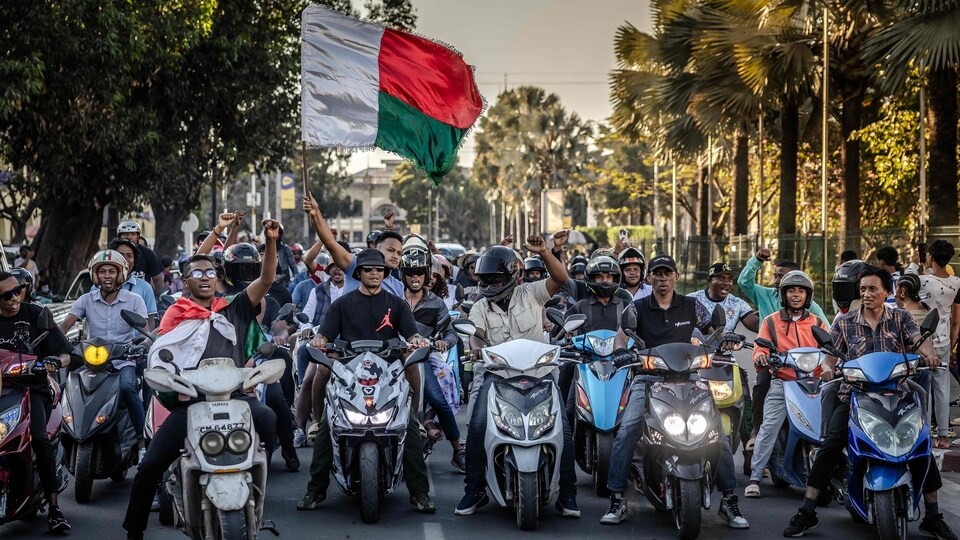
Madagascar's armed forces minister also recognised an officer chosen by a military contingent siding with protesters as the new head of the army.
What are the ‘Gen Z’ protests in Madagascar?
The protests are reportedly led by a group calling itself “Gen Z Madagascar”, and the United Nations says the demonstrations have left at least 22 people dead and dozens injured, a number which the government has disputed, Associated Press reported.
After a military contingent CAPSAT sided with the demonstrators on Saturday, Rajoelina warned that "an attempt to seize power illegally and by force" was underway. As a power grab by the military is underway, here is a look back at the 51-year-old Rajoelina's accession to power and the protests it experienced.
Protest in 2009 led by Rajoelina
Rajoelina was appointed as the mayor of the capital Antananarivo in 2007 and quickly established himself as the leading voice of the opposition and denouncing attacks on freedoms under then-president Marc Ravalomanana.
In 2009, widespread protests were witnessed in the capital when Rajoelina gathered more than 20,000 protesters. Violent protests were seen as his supporters defied the government with the tacit support of the military.
Around 100 people lost their lives in the deadly clashes in January and February due to clashes between supporters and the presidential guards. Having lost the support of the army, Ravalomanana eventually resigned in March.
Also read: After Nepal, Gen-Z protests rock Madagascar and Peru: Here's why
Following this, Rajoelina took over with the help of backing from CAPSAT, a military unit based on the outskirts of Antananarivo, in what the international community called a coup, freezing foreign aid and investment for nearly four years.
This is the same military unit, CAPSAT, which joined protestors in the city centre on Saturday and Sunday, saying they would not take action against the protesters.
In 2013, under international pressure, Rajoelina did not contest the elections.
Protests in 2018 over electoral laws
In April of 2018, protests erupted against the new electoral laws introduced by President Hery Rajaonarimampianina, who came to power after winning in 2013 elections. The opposition claimed that the laws could prevent some candidates from standing in elections by the end of the year.
Supporters of Ravalomanana and Rajoelina, both in the running, were behind the demonstrations. In the November 2018 election, neither candidate secured enough votes to win outright, forcing another round in which Rajoelina emerged victorious.
Ravalomanana petitioned the Constitutional Court over alleged voting irregularities but later accepted defeat.
As the country prepared for the election in November 2023, media reports revealed in June that Rajoelina had acquired French nationality back in 2014. This led to calls for him to be disqualified from running for president.
Recent protest erupted last month
The youth-led protests that are ongoing first erupted last month over electricity and water outages, but have escalated into larger dissatisfaction with the government and the leadership of Rajoelina. A range of issues have been brought up in the protests, including poverty and the cost of living, access to tertiary education, and alleged corruption and embezzlement of public funds.
Protests have intensified across Madagascar, with civic groups and trade unions joining the movement, prompting authorities to impose nighttime curfews in the capital, Antananarivo, and other major cities.
In an attempt to quell the unrest, President Rajoelina dismissed his entire government, including the prime minister, on September 29. However, his decision to appoint a military general as the new prime minister has only fueled public anger.
(With input from agencies)


